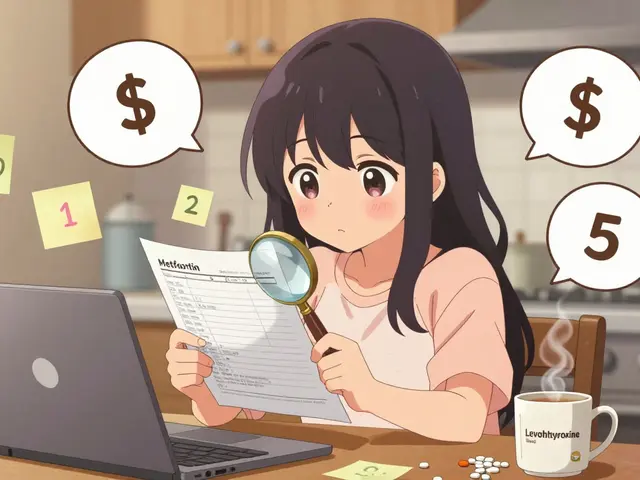
When you pick up a prescription, you might see two options: the familiar brand name or a cheaper generic version. Many people wonder if switching to a generic could change how the drug interacts with other medications they’re taking. Could it cause unexpected side effects, make another drug less effective, or even be more dangerous? The short answer is this: drug interactions depend on the active ingredient - not whether the drug is generic or brand.
What Makes a Generic Drug the Same
Generic drugs aren’t copies. They’re required by law to contain the exact same active ingredient, in the same strength, and delivered the same way as the brand-name version. The U.S. Food and Drug Administration (FDA) doesn’t allow a generic to hit shelves unless it proves it delivers the same amount of medicine into your bloodstream at the same rate. This is called bioequivalence. For most drugs, that means the generic’s absorption must fall within 80% to 125% of the brand’s. For drugs with a narrow therapeutic index - like warfarin or levothyroxine - the range is tighter: 90% to 111%.That might sound like a big window. But here’s the reality: studies show the average difference in how much medicine reaches your blood is less than 5%. In fact, a 2020 study in Scientific Reports looked at 17 cardiovascular drugs and found that patients taking generics had lower rates of death and major heart events than those on brand-name versions. That’s not a fluke. It’s data from over 1 million patient-years of real-world use.
Why People Think Generics Are Different
You’ve probably heard stories. Someone switched from brand-name Ambien to generic zolpidem and suddenly felt more drowsy. Or a patient reported that their generic blood pressure pill didn’t seem to work as well. These anecdotes stick because they’re personal. But they don’t tell the whole story.The FDA’s own data from 2015 to 2020 shows adverse event reports for drug interactions were almost identical: 0.78% for brand-name drugs, 0.82% for generics. That difference? Statistically meaningless. So why do people notice changes? Often, it’s not the drug - it’s the switch itself.
WebMD’s forums show complaints about generic performance spike in the first three months after a new generic launches. But they drop back to normal within six months. That pattern is classic nocebo effect - when expecting a problem creates one. A 2022 Consumer Reports survey found 18% of people believed generics had different interaction risks. Only 4% had actually experienced it.
What Actually Changes Between Generics and Brands
The active ingredient? Identical. But the fillers, dyes, and binders? Those can vary. A generic might use cornstarch instead of lactose. One brand might use a different coating to control how fast the pill dissolves. These are called excipients.Most of the time, these don’t matter. But in rare cases, they can. For example, someone with severe lactose intolerance might get stomach upset from a generic version that uses lactose as a filler - even though the active drug hasn’t changed. That’s not a drug interaction. It’s a reaction to an ingredient. And it’s something your pharmacist can check.
The FDA’s Orange Book now lists all inactive ingredients for approved generics. Pharmacists can use this to flag potential issues. If you have allergies, celiac disease, or other sensitivities, tell your pharmacist when switching. They’ll verify the formulation matches your needs.
When Should You Worry?
For 99% of medications, switching between brand and generic - or even between two different generics - carries no increased risk of interactions. But there are exceptions.Drugs with a narrow therapeutic index are the main concern. These are medications where a tiny change in blood level can mean the difference between working and causing harm. Examples include:
- Warfarin (blood thinner)
- Levothyroxine (thyroid hormone)
- Phenytoin (seizure control)
- Cyclosporine (organ transplant)
For these, the FDA requires tighter bioequivalence standards. Still, studies show no consistent increase in adverse events when switching between approved generics. That said, some doctors prefer to keep patients on the same version - not because of interaction risk, but to avoid any possible variability. If you’re on one of these drugs and your prescription changes, ask your pharmacist: Is this the same formulation as before?
What the Experts Say
Dr. Aaron Kesselheim from Harvard Medical School reviewed over 100 studies and concluded: “The vast majority of evidence suggests generic drugs are therapeutically equivalent to their brand-name counterparts, including regarding drug interaction profiles.”The FDA’s Center for Drug Evaluation and Research agrees: “Differences in inactive ingredients are not expected to affect how the drug works or cause different drug interactions.”
Even the American College of Clinical Pharmacology states that bioequivalent products should have equivalent interaction potential. The only caveat? For NTI drugs, switching between multiple generic versions *might* introduce small changes - but not because of interaction risk. It’s about consistency in absorption.
Real-World Impact
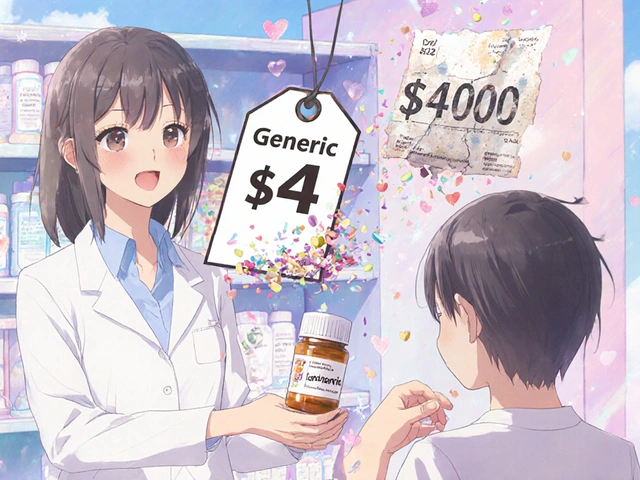
Generics make up 90% of all prescriptions in the U.S. and save the healthcare system about $1.68 trillion every decade. If generics had higher interaction risks, we’d see a spike in hospitalizations, ER visits, and adverse event reports. We don’t.In fact, the European Commission’s 2022 analysis of over 12,000 adverse event reports found no higher risk of drug interactions with generics than with brand-name drugs. The same holds true in Canada, Australia, and the UK.
What’s changing now is how regulators monitor this. The FDA’s 2023 Strategic Plan includes $24 million to study potential differences between multiple generic versions of the same drug. But the goal isn’t to prove they’re unsafe - it’s to ensure they’re as consistent as possible.
What You Should Do
- Don’t avoid generics because you’re worried about interactions. The science says it’s safe. - Ask your pharmacist if the generic you’re getting has the same inactive ingredients as your previous version - especially if you have allergies or sensitivities. - Don’t assume a new generic is worse. If you feel different after switching, give it a few weeks. Then talk to your doctor. - Report unusual symptoms. If you notice something new - dizziness, nausea, unusual fatigue - tell your provider. It’s rare, but worth checking. - For NTI drugs, stick with the same manufacturer if possible. But if you have to switch, monitor closely - not because interactions are more likely, but because small changes in absorption matter more.Bottom Line
Drug interactions happen because of the active ingredient - not because the pill was made by Pfizer or Teva. A generic drug isn’t a different drug. It’s the same medicine, sold for less. The risk of interactions? It’s identical. The savings? They’re real. And the evidence? It’s clear.Are generic drugs more likely to cause drug interactions than brand-name drugs?
No. Generic drugs contain the same active ingredient as brand-name drugs and are required to be bioequivalent. Studies, including data from the FDA and peer-reviewed journals, show no significant difference in drug interaction rates between generics and brand-name medications. The risk of interactions depends on the active drug, not whether it’s generic or branded.
Can different generic versions of the same drug interact differently?
In theory, yes - but it’s extremely rare. Two generics made by different companies may have slightly different inactive ingredients, which could affect how quickly the drug is absorbed. For most medications, this difference is too small to matter. For drugs with a narrow therapeutic index - like warfarin or levothyroxine - switching between generics could cause small changes in blood levels. That’s why doctors sometimes recommend sticking with the same generic brand. But this isn’t about drug interactions - it’s about consistency of absorption.
Why do some people say they feel different after switching to a generic?
Many factors can cause this. Sometimes, it’s a placebo or nocebo effect - expecting a change makes you notice symptoms you didn’t before. Other times, it’s a reaction to an inactive ingredient like lactose or dye. Rarely, a formulation difference might slightly alter how fast the drug is absorbed. If you notice a change, talk to your pharmacist. They can check the inactive ingredients and help determine if it’s a real issue or just a coincidence.
Should I avoid generics if I take multiple medications?
No. Taking multiple medications doesn’t increase the risk of interactions with generics. Drug interactions are determined by the active ingredients and how they affect your body - not by whether the drug is generic. In fact, using generics can reduce out-of-pocket costs, which may improve adherence and lower overall risk. Always review all your medications with your pharmacist, regardless of brand or generic status.
Are generic drugs tested as thoroughly as brand-name drugs for interactions?
Brand-name drugs go through years of clinical trials, including interaction studies. Generics don’t repeat those trials - they don’t need to. Instead, they must prove they deliver the same active ingredient the same way. The FDA and other global regulators accept this because the active ingredient is what drives interactions. If the drug works the same in your bloodstream, the interaction profile is the same. Post-market monitoring also ensures safety.