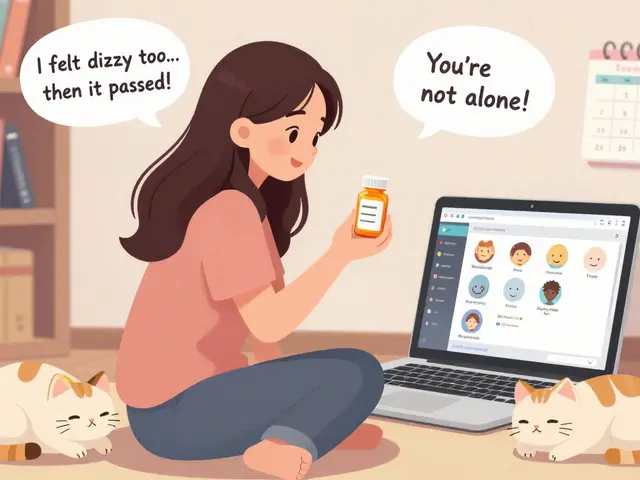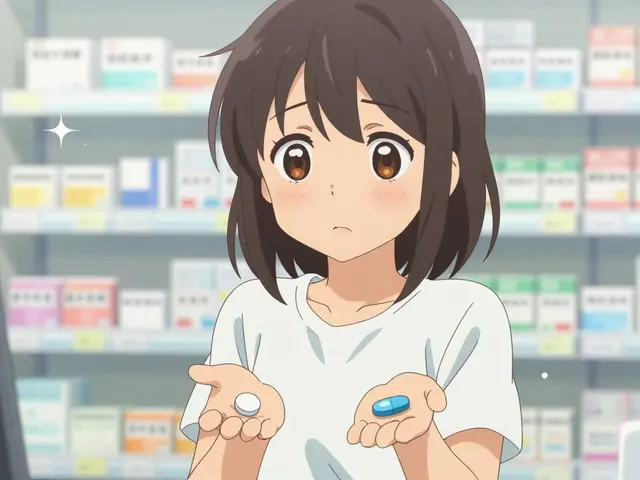
Imagine walking into a pharmacy and receiving a pill that looks completely different from the one you took last month. For many, this simple visual change triggers a wave of doubt. "Is this actually as strong?" "Does it work the same way?" These aren't just random questions; they are the result of deep-seated psychological biases that can actually make a patient feel sicker. The bridge between a patient's fear and their recovery isn't a better chemical formula-it's how their doctor or pharmacist talks to them. clinician communication is the targeted exchange of information between healthcare providers and patients designed to influence perceptions, acceptance, and adherence to medical treatments. When it comes to generic medications, the way a clinician delivers a message can be the difference between a patient who thrives and one who stops their treatment entirely.
Why the "Brand Name" Bias Persists
Most people assume their preference for brand-name drugs is based on a desire for quality. In reality, it's often a psychological anchor. Many patients believe brand names are "purer" or more potent, despite overwhelming evidence to the contrary. A 2015 Dove Press study found that nearly 30% of people still believe brand medicines are more effective. This isn't because they've read a clinical trial; it's because they've never been told otherwise in a way that sticks.
The gap is staggering. While the FDA (Food and Drug Administration) requires a strict bioequivalence range of 80-125% for a generic to be approved, patients often perceive the difference as a gamble. When a doctor simply says, "We'll switch you to the generic," without explaining the science, they leave a vacuum that the patient fills with doubt. This is where brand psychology takes over: the perceived value of the label outweighs the chemical reality of the drug.
The Danger of the Nocebo Effect
We've all heard of the placebo effect, where believing a treatment works actually helps you heal. The nocebo effect is its dark twin. It happens when a patient's negative expectation of a drug creates real, physical symptoms. If a patient believes a generic is "inferior," their brain can trigger headaches, nausea, or fatigue-even if the drug is chemically identical to the brand name.
This isn't just "in their head." A study in the Journal of the American Medical Association (JAMA) showed that patients who were given a detailed explanation of the FDA approval process reported 28% fewer adverse events. By replacing fear with facts, clinicians can effectively "switch off" the nocebo response. When a provider says, "Some people react to generics," they are accidentally priming the patient to experience side effects. Conversely, confident endorsement-telling a patient that the drug is identical and safe-protects the clinical outcome.
What Actually Works in the Exam Room
Not all conversations are created equal. Telling a patient "it's cheaper" is rarely enough to change a deep-seated belief. Effective communication is a clinical intervention, not just a chat. According to the American Pharmacists Association, the most successful interactions follow a specific blueprint. Instead of tentative language like "let's try this and see," providers who use authoritative, evidence-based language see much higher acceptance rates.
| Communication Scenario | Acceptance Rate | Primary Driver |
|---|---|---|
| No explanation provided | 68% | Price/Default choice |
| Thorough pharmacist explanation | 92% | Trust in expertise |
| Dual (Physician + Pharmacist) communication | 92% | Reinforced confidence |
| No communication from either | 61% | Skepticism/Fear |
The data proves that the "double-hit" approach-where both the doctor and the pharmacist reinforce the same message-creates the highest level of patient confidence. When the message is consistent across the healthcare chain, the patient stops questioning the molecule and starts trusting the process.
Breaking Down Demographic Barriers
A one-size-fits-all script doesn't work because trust isn't distributed evenly. Data from the NIH shows that non-Caucasian patients are 1.7 times more likely to be skeptical of generics than Caucasian patients. Similarly, those with lower socioeconomic status often show a stronger preference for brand names, possibly associating the higher price with higher reliability.
To fix this, clinicians need cultural competency. It's not about simplifying the language; it's about acknowledging the patient's perspective and providing tailored reassurance. A 2021 study in Health Affairs noted that culturally competent communication reduced skepticism by 41% among marginalized groups. This means moving beyond the "what" (the drug) and addressing the "who" (the patient's life experience and fears).

The Path to Better Patient Outcomes
Changing a patient's mind about generics requires a shift from "substitution" to "education." The American Medical Association and American Pharmacists Association suggest a four-pillar approach to every generic conversation:
- Explain the Standards: Mention the 80-125% bioequivalence range to show there is a scientific ceiling and floor.
- Confirm the Ingredients: Explicitly state that the active pharmaceutical ingredient is identical.
- Discuss the Value: Frame the cost savings (often 80-85% less) as a benefit that allows for better overall healthcare access.
- Manage Expectations: Proactively address the possibility of different pill colors or shapes so the patient isn't surprised at the pharmacy counter.
When these elements are combined, the result is a patient who feels empowered rather than pushed. For instance, a patient on a cardiologist-prescribed generic who was shown the actual FDA data is far more likely to stick with their meds for years than someone who was simply handed a generic bottle with a shrug from the pharmacist.
The Future of Medication Confidence
We are moving toward a world where communication is tracked as a metric of care. New tools like the "Generic Confidence Score" in Epic Systems are starting to prompt clinicians to hit these communication marks during the visit. The goal is to move the 90% generic utilization rate in the U.S. toward 100% of the *appropriate* population, reducing the $180 billion in wasted spending that occurs when patients insist on brand names they don't actually need.
Does a generic drug actually work as well as a brand-name drug?
Yes. To be approved by the FDA, generic drugs must demonstrate bioequivalence, meaning they deliver the same amount of active ingredient into a patient's bloodstream in the same amount of time as the brand-name drug. The allowed range is 80-125%, which is a rigorous standard ensuring clinical equivalence.
Why do some people feel different side effects when switching to a generic?
This is often due to the nocebo effect-where negative expectations create real physical symptoms. While inactive ingredients (fillers or dyes) can occasionally cause an allergic reaction, most "generic side effects" are psychological responses to the change in appearance or a lack of confidence in the drug's efficacy.
What is the most effective way for a doctor to introduce a generic?
The most effective method is using authoritative, confident language backed by data. Instead of saying "let's try the generic," a doctor should explain the FDA bioequivalence standards, confirm the active ingredients are identical, and proactively discuss the cost savings.
Do pharmacists play a role in this process?
A massive role. Patients who receive a thorough explanation from their pharmacist are significantly more likely to accept a substitution. When both the physician and pharmacist are aligned in their communication, acceptance rates can reach as high as 92%.
Can a patient's background affect how they view generics?
Yes. Research indicates that non-Caucasian patients and those from lower socioeconomic backgrounds often express higher levels of skepticism. Culturally competent communication that addresses these specific concerns can reduce this skepticism by up to 41%.