Getting your medication schedule right isn’t just about remembering to take a pill. It’s about staying healthy, avoiding hospital visits, and not wasting money on unnecessary treatments. Nearly half of people with chronic conditions miss doses regularly. That’s not because they don’t care-it’s because life gets busy, routines break, and alarms go ignored. But setting up medication reminders that actually work? That’s possible. And it doesn’t require fancy tech or a PhD.
Start with what you’re actually taking
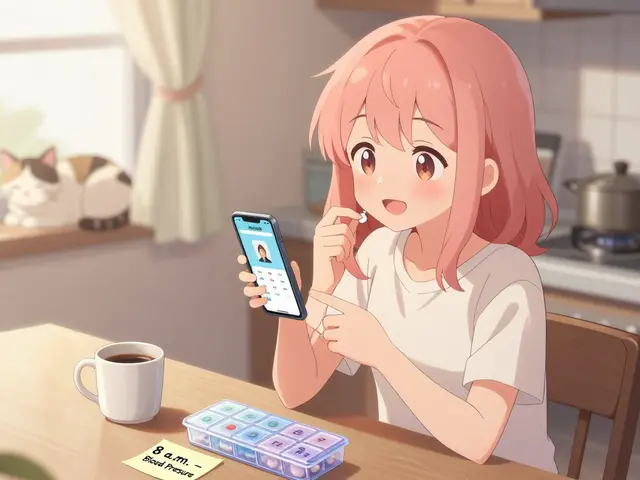
Before you touch your phone, write down every medication. Not just the names. Include the dose, how often you take it, and the time of day. If you’re on blood pressure pills at 8 a.m. and diabetes meds at 7 p.m., write that down. If you take a pill only on weekdays, note it. If you’re supposed to take one with food and another on an empty stomach, write that too. This isn’t busywork-it’s your foundation.Many people skip this step and just start typing into an app. That’s where mistakes happen. A 2023 study found that 73% fewer input errors occurred when users cross-checked their meds with the RxNorm drug database before entering them. That means if you’re taking metformin, don’t just type "diabetes pill." Type the full name. Get it right the first time.
Choose the right tool for your life
There are dozens of apps out there. But not all are made for real life. Here’s what actually works based on user data and clinical studies:- Medisafe is best if you’re on multiple meds and want smart alerts. It learns your habits. If you usually take your afternoon pill at 3 p.m. but start taking it at 4 p.m. for a week, it asks, "Did you mean to change this?" It also lets caregivers get alerts if you miss a dose.
- MedAdvisor works best if you want refill alerts to sync with your pharmacy. If your local CVS or Walgreens is connected, it’ll text you when your script is ready. No more driving there only to find it’s not ready yet.
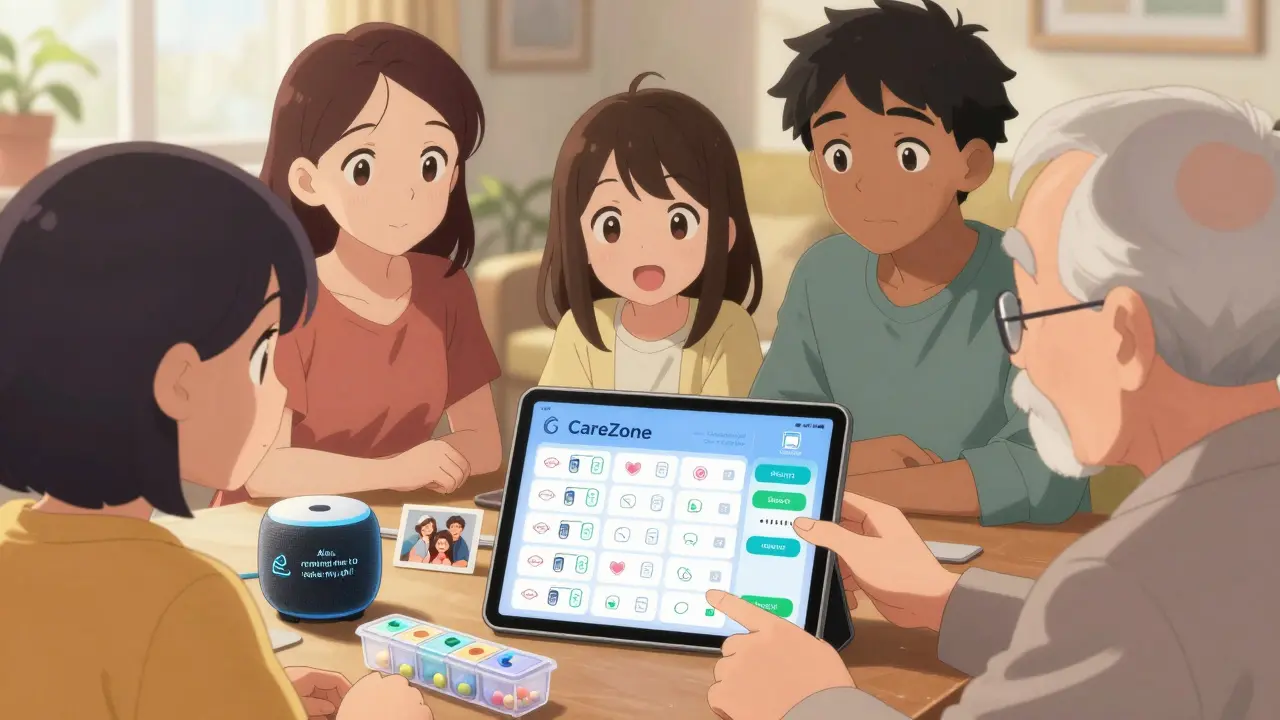
- CareZone is ideal if you help someone else-like a parent or partner. You can manage their meds from your phone, see when they last took something, and even send reminders for them.
- Round Health is simple and clean. Great for people who just need one or two daily alarms. No fluff. Just alarms that ring.
- Hero Health is a physical device. It’s a smart pillbox that opens only at the right time and dispenses pills automatically. Costs $199/month, but if you’re forgetful or live alone, it’s worth it. Seniors who used it had 82% adherence-compared to 67% for phone apps alone.
Free apps like Mango Health are tempting, but they often lack caregiver access or refill tracking. Paying $30 a year for Medisafe? That’s less than your monthly coffee habit. And if your doctor’s office uses Epic or MyChart, check if they offer built-in reminders. Many do.
Set alarms that don’t get ignored
An alarm that rings once and gets silenced? That’s useless. Effective reminders use escalation. Here’s how to build one:- First alert: Silent vibration at scheduled time.
- Second alert: Gentle chime 10 minutes later.
- Third alert: Loud tone + phone shaking if still ignored.
- Fourth alert: Text sent to your caregiver after 47 minutes.
This system, tested by Mayo Clinic with over 1,200 patients, cut missed doses by 63%. The key? Giving people time to respond-but not too much. If you wait an hour, you’ve already missed the window.
Also, turn off notifications during meetings or sleep. Most apps let you link to your calendar. If you have a Zoom call at 10 a.m., pause alarms for 30 minutes. No one wants to hear a pill alert during a work presentation.
Use your camera to prove you took it
Here’s the trick most people skip: take a picture of your pill before you swallow it.It sounds weird. But Stanford Medicine tested this with 500 people over six months. People who took a photo of their pill before taking it reduced false reports of adherence by 89%. Why? Because your brain remembers the action. You’re not just tapping "taken"-you’re physically confirming it.
Apps like Medisafe and CareZone let you snap a pic right in the app. No extra steps. Just open the alert, take a photo, tap "confirm." Done. It’s not surveillance. It’s accountability.
Sync with your pharmacy
One of the biggest reasons people fall off track? Running out. You forget to refill. Or the pharmacy doesn’t notify you. Or the refill request fails.Link your app to your pharmacy. Most major chains-CVS, Walgreens, Rite Aid, Shoppers Drug Mart-work with MedAdvisor and Medisafe. Once connected, you’ll get a text when your prescription is ready. No more guessing. No more driving over when it’s not ready.
But here’s the catch: if you switch pharmacies, update the link. A user in Ottawa reported 14 days of missed refill alerts because their new pharmacy wasn’t connected. That’s avoidable.
Set up a caregiver
If you’re helping someone older, or if you’re the one who needs help, invite a family member or friend to join your reminder system. Most apps let you give three levels of access:- View-only: Can see your schedule but can’t change anything.
- Edit schedule: Can adjust times or add new meds.
- Emergency override: Can trigger an alert even if you’ve turned off notifications.
University of Michigan found that when caregivers were added, adherence jumped 39%. It’s not about control. It’s about connection. Someone checking in says: "I care that you’re taking your medicine."
Avoid the big mistakes
Most people set up reminders and then never touch them again. That’s why they fail. Here’s what breaks systems:- Wrong time zone: If you travel or your phone resets, alarms can shift by an hour. Always check your app’s time zone setting. Turn on automatic daylight saving updates.
- Disabled notifications: Your phone might block background alerts. Go into Settings > Notifications > [Your App] and make sure "Allow Notifications" is ON. Also check "Lock Screen," "Banner," and "Sounds."
- Too many alarms: If you’re on 10+ meds, alarms can feel overwhelming. That’s called alert fatigue. Split them into morning, afternoon, and evening groups. Don’t blast 10 alerts at once.
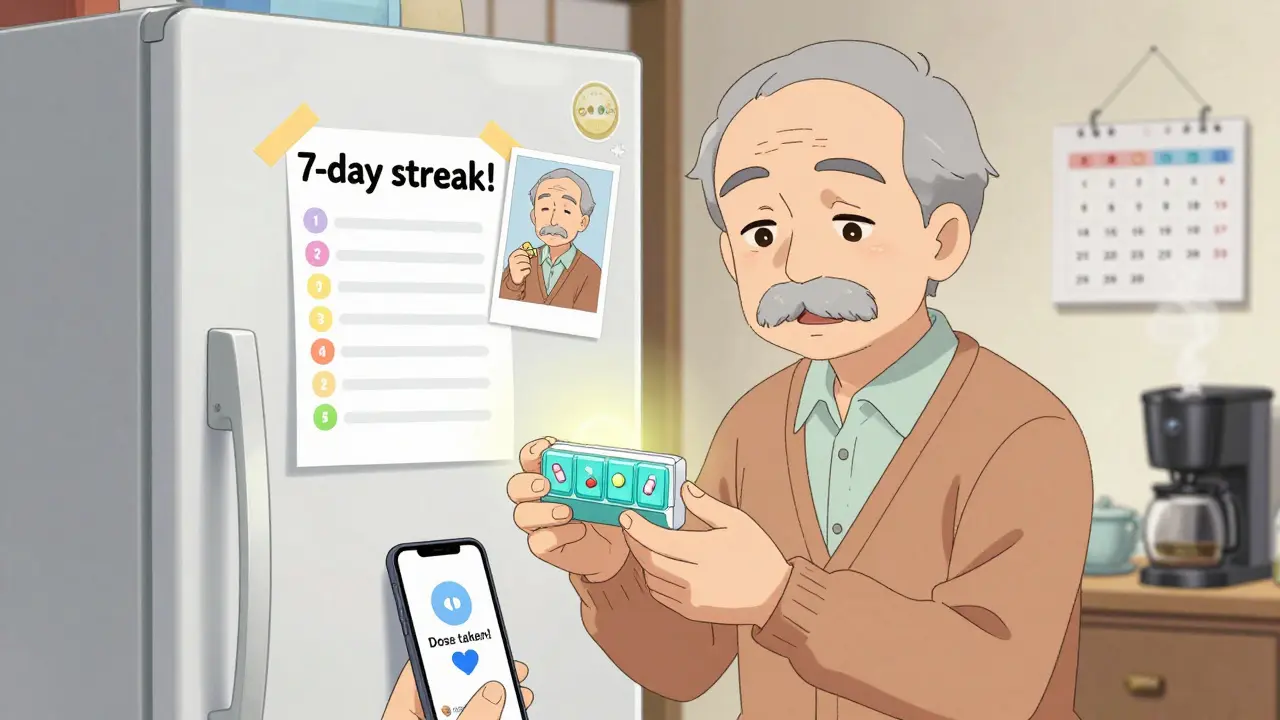
- Using only one method: Relying only on your phone? Add a physical pillbox. Or a sticky note on the fridge. Redundancy saves lives.
Track progress, not just pills
Good apps don’t just remind you-they show you how you’re doing. Look for features like:- Adherence score (e.g., "You took 28 of 30 doses this month")
- Pattern alerts (e.g., "You missed your evening dose every Friday for 3 weeks")
- Streak counters (e.g., "7-day streak! Keep going!")
People who saw their adherence score improved by 37% over 30 days, according to a study from UPenn. Seeing the number rise is motivating. It turns a chore into a win.
But skip the games if they annoy you. Gamification-badges, points, emojis-works for under-50s. For older adults, it feels childish. Turn it off if it feels wrong.
What if you still forget?
Tech isn’t magic. Sometimes, you just need a backup. Try these:- Keep a pill organizer with days of the week. Fill it every Sunday.
- Set a recurring alarm on your smart speaker: "Alexa, remind me to take my pill at 8 a.m. every day."
- Put your meds next to your toothbrush. Or your coffee maker. Link the habit to something you already do.
- Ask a neighbor to call you at your pill time. Sometimes, a human voice is the only thing that works.
One man in Ottawa, 78, used to miss his blood thinner. He started leaving his pill bottle on his car seat. Every time he got in the car, he saw it. His adherence went from 48% to 94% in two months.
It’s not about being perfect
You’re not going to get 100% every week. That’s okay. Even 80% adherence cuts hospital risk in half. The goal isn’t perfection. It’s consistency.Missed a dose? Don’t panic. Don’t double up. Just log it. Most apps let you mark a dose as "missed"-and that’s data. That’s how the system learns. If you skip your 8 p.m. pill three times a week, it might suggest moving it to 7 p.m. Or ask your doctor if you can switch to a once-daily version.
Medication reminders aren’t about punishment. They’re about support. They’re the quiet voice saying: "I’ve got you. You don’t have to remember everything. Just take this one step."
What’s the best free medication reminder app?
Mango Health and CareZone are both free and reliable. Mango Health connects to 65,000 U.S. pharmacies and offers refill alerts. CareZone lets you manage meds for multiple people. But if you’re on more than 5 medications, you’ll get better personalization with Medisafe’s free version, which still includes smart scheduling and caregiver alerts.
Can I use my phone’s built-in alarm for medications?
You can, but it’s risky. Phone alarms don’t track doses, don’t notify caregivers, and don’t sync with your pharmacy. If you miss one, there’s no record. Apps like Medisafe or MedAdvisor log every dose, show your progress, and adjust based on your habits. A simple alarm might remind you-but a smart system helps you succeed.
Why do my medication alarms keep turning off?
Your phone likely has battery optimization turned on. Go to Settings > Battery > Battery Optimization > Find your reminder app > Select "Don’t optimize." Also check that notifications are allowed in Settings > Notifications. Android and iOS often disable background alerts to save power-this is the #1 reason alarms fail silently.
How do I add a caregiver to my medication reminders?
Open your app and look for "Caregivers," "Family Access," or "Share My Plan." Tap it, enter their email or phone number, and choose their access level: view-only, edit, or emergency override. They’ll get a link to accept. Once they accept, they’ll see your schedule and get alerts if you miss a dose. This feature is in Medisafe, CareZone, and MedAdvisor.
Should I use a smart pill dispenser like Hero Health?
If you’re forgetful, live alone, or have cognitive challenges, yes. Hero Health dispenses pills automatically at set times, locks away extra doses, and texts you and your caregiver if a dose is skipped. It costs $199/month, but for people with complex regimens, it reduces hospital visits by 40%. For most people, a good app is enough. But if you’ve tried everything else and still miss doses, this is worth considering.
What if I travel across time zones?
Turn on automatic time zone updates in your app settings. Most apps use the IANA timezone database and adjust automatically when your phone detects a new location. But always double-check your schedule after landing. If you’re taking a pill at 8 a.m. local time in Ottawa, and you fly to London, your alarm might still ring at 8 a.m. Ottawa time-unless you’ve enabled auto-adjust. That’s a common mistake.
Can medication reminders help with mental health meds?
Absolutely. Antidepressants, antipsychotics, and mood stabilizers require daily consistency. Missing even one dose can trigger symptoms. Apps with mood tracking (like Medisafe’s mood log) let you connect missed doses to how you feel. Over time, you’ll see patterns: "I felt worse after skipping my pill on Tuesday." That insight helps you and your doctor adjust treatment.