
By age 70, nearly half of older adults struggle with sudden urges to urinate-sometimes leaking before they make it to the bathroom. This isn’t just inconvenient; it’s isolating. Many seniors stop going out, skip social events, or wear diapers just to feel safe. For years, the go-to treatments were anticholinergics like oxybutynin, but those often caused dry mouth, constipation, confusion, and even memory problems in older patients. Enter mirabegron: a newer option that works differently, with fewer side effects, and is now a key tool in geriatric care.
What Mirabegron Actually Does
Mirabegron doesn’t calm the bladder by blocking nerve signals like older drugs. Instead, it activates beta-3 adrenergic receptors in the bladder muscle. Think of it like giving the bladder a gentle signal to relax. When the muscle relaxes, the bladder can hold more urine without sudden, uncontrollable contractions. This reduces urgency, frequency, and leakage.
Unlike anticholinergics, mirabegron doesn’t cross the blood-brain barrier in significant amounts. That means it rarely causes drowsiness, confusion, or memory issues-common problems in seniors taking older bladder meds. In clinical trials, seniors on mirabegron had 30% fewer incontinence episodes per week compared to placebo, with side effects similar to those of a sugar pill.
Why It’s Better for Older Patients
Many elderly patients take five or more medications. Drug interactions are a real danger. Anticholinergics can interfere with heart rhythm drugs, antidepressants, and even some allergy pills. Mirabegron has fewer of these risky interactions. It’s mainly broken down by the liver, not the kidneys, which matters because kidney function drops as we age.
One 2023 study followed 412 adults over 75 with overactive bladder. Those on mirabegron reported better quality of life scores than those on oxybutynin. They were also 40% less likely to stop taking their medication due to side effects. For seniors, sticking to treatment is half the battle. If a drug makes you feel worse, you won’t take it-and your symptoms get worse.
Who Should Avoid It
Mirabegron isn’t for everyone. People with uncontrolled high blood pressure should be cautious. The drug can raise blood pressure slightly in some users, so it’s not recommended if your systolic pressure is above 180 mmHg. Your doctor will check your blood pressure before starting it and again after a few weeks.
Those with severe liver disease should also avoid it. The liver processes mirabegron, and if it’s not working well, the drug can build up in the body. In rare cases, mirabegron can cause urinary retention-especially in men with enlarged prostates. If you start taking it and suddenly can’t urinate at all, stop and call your doctor immediately.
Dosing and How to Take It
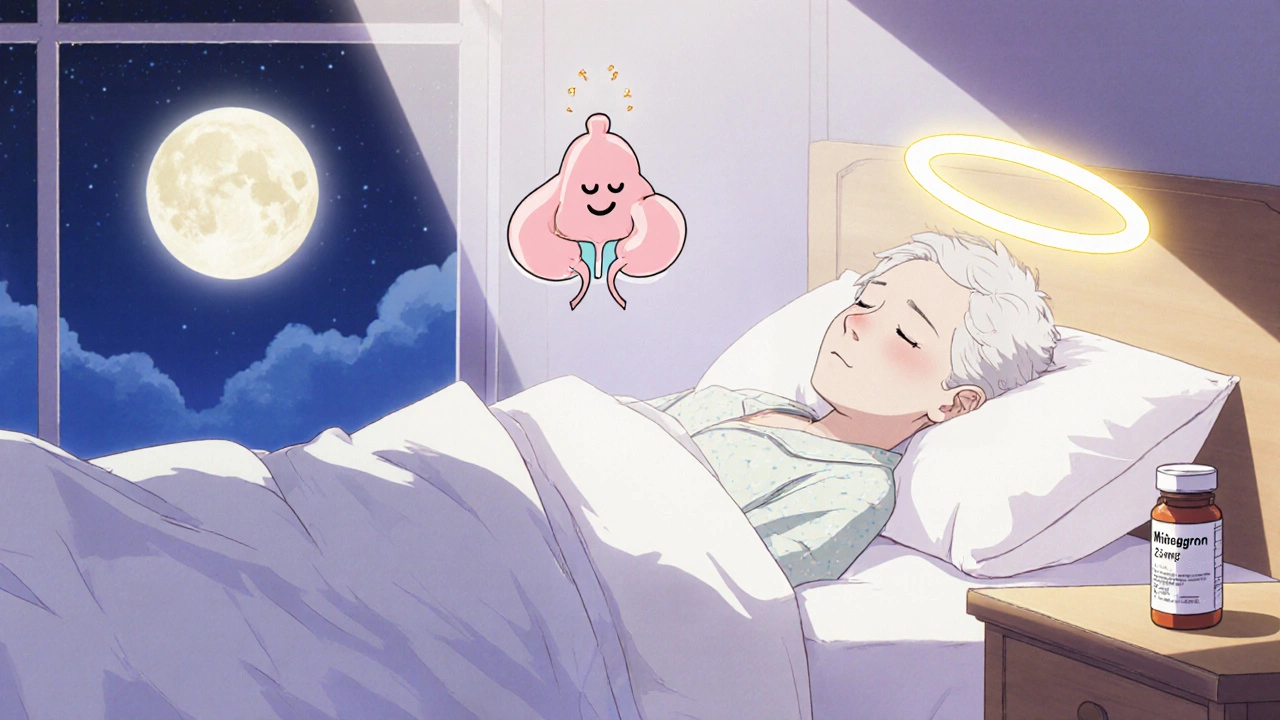
The standard dose for older adults is 25 mg once daily. It’s taken in the morning with or without food. The tablet should be swallowed whole-not crushed, chewed, or split. There’s no need to take it at night. Unlike some bladder meds that cause nighttime trips to the bathroom, mirabegron doesn’t increase urine production. In fact, many patients notice fewer nighttime voids after a few weeks.
Some doctors start at 25 mg even in frail seniors. Others may wait to see how the patient tolerates it before increasing to 50 mg. That higher dose is only used if the lower one doesn’t help enough and side effects are minimal. For most elderly patients, 25 mg is enough to make a real difference.
What to Expect in the First Few Weeks
Don’t expect miracles on day three. Mirabegron builds up slowly in the body. Most people notice less urgency after two to three weeks. Full benefits usually show up around six weeks. Keep a simple log: how many times you urinate each day, how many leaks, and how often you felt the sudden urge. Bring that log to your next appointment. It’s more helpful than saying, “It’s a little better.”
Some patients report mild side effects: headache, nasal congestion, or a slightly faster heartbeat. These usually fade within a week. If you feel your heart racing or your blood pressure feels unusually high, check it with a home monitor. If it’s over 140/90, call your doctor.
How It Fits Into Broader Geriatric Care
Mirabegron isn’t a standalone fix. It works best when paired with other strategies. Pelvic floor exercises-like Kegels-can strengthen the muscles that hold urine in. Bladder training, where you gradually stretch the time between bathroom visits, helps retrain the bladder. Reducing caffeine and alcohol intake, especially in the evening, cuts down on bladder irritation.
Many older adults also benefit from reviewing all their medications with a pharmacist. Diuretics (water pills), sedatives, and even some blood pressure drugs can worsen bladder control. Sometimes, simply adjusting one other pill makes mirabegron more effective.
For seniors with dementia or mobility issues, mirabegron can be a game-changer. If they’re less anxious about accidents, they’re more likely to stay engaged with family and activities. That mental and emotional boost matters just as much as the physical improvement.
Cost and Accessibility
Mirabegron is available as a generic in Canada and the U.S., which has brought the price down significantly. A 30-day supply of 25 mg tablets now costs between $15 and $30 CAD, depending on the pharmacy. Most provincial drug plans cover it for seniors, especially if they’ve tried and failed other treatments. In Ontario, for example, it’s listed on the Ontario Drug Benefit formulary for those over 65.
Insurance doesn’t always cover it as a first-line treatment. Some require you to try an anticholinergic first. But if that caused confusion, dry mouth, or constipation, your doctor can appeal. Many insurers now accept mirabegron as a first choice for older adults because of its safety profile.

Real Stories From Real Seniors
Martha, 78, from Ottawa, stopped going to her weekly book club because she was afraid of leaks. She tried oxybutynin but felt so foggy she couldn’t remember the plot. Her doctor switched her to mirabegron. After five weeks, she was back at the club. “I didn’t realize how much I missed talking with people until I could sit through a whole meeting without checking the clock,” she said.
Frank, 82, used to wear adult briefs at night. He took mirabegron and cut his nighttime bathroom trips from four to one. He’s now sleeping through the night for the first time in years. “I don’t feel like I’m aging anymore,” he told his nurse. “I feel like I’m just living.”
When to Talk to Your Doctor
If you or a loved one is avoiding social events, staying home more, or feeling embarrassed about bladder leaks, it’s time to talk. Don’t assume it’s just “part of getting old.” There are effective, safe options now.
Bring up mirabegron specifically if:
- You’ve had bad side effects from older bladder medications
- You’re on multiple other drugs and worry about interactions
- You’ve noticed memory issues or confusion since starting another medication
- You’re still having leaks despite trying lifestyle changes
Your doctor doesn’t need to be the one to suggest it. Many seniors ask about it after reading online or hearing from friends. It’s a reasonable, evidence-backed option-and one that’s becoming standard in geriatric clinics across Canada and the U.S.
Final Thoughts
Mirabegron isn’t a magic cure. But for many older adults, it’s the first treatment that actually improves their life without making them feel worse. It’s quiet, effective, and safe. It doesn’t erase the problem, but it gives back control. And for seniors who’ve spent years feeling trapped by their own bodies, that’s everything.
Is mirabegron safe for seniors with heart problems?
Mirabegron can slightly raise blood pressure and heart rate in some people. If you have uncontrolled high blood pressure (above 180/110 mmHg) or a history of serious heart rhythm issues like atrial fibrillation, your doctor will monitor you closely. Most seniors with stable heart conditions can take it safely, but your doctor should check your blood pressure before and after starting it.
Can mirabegron cause urinary retention?
Yes, but it’s rare. Mirabegron relaxes the bladder muscle, which can make it harder to empty completely in men with enlarged prostates or people with weak bladder muscles. If you start taking mirabegron and suddenly can’t urinate at all, stop the medication and contact your doctor immediately. This is a medical emergency.
How long does it take for mirabegron to work?
Most people notice less urgency and fewer leaks after two to three weeks. Full improvement usually takes four to six weeks. Don’t stop taking it if you don’t see results right away. It works gradually, and the benefits often grow over time.
Does mirabegron cause dry mouth like older bladder pills?
No. That’s one of its biggest advantages. Older drugs like oxybutynin block acetylcholine, which causes dry mouth, constipation, and confusion. Mirabegron works differently-by relaxing the bladder muscle-and doesn’t affect saliva production. Most seniors report no dry mouth at all.
Can I take mirabegron with other medications?
Mirabegron has fewer drug interactions than older bladder medications, but it can interact with certain heart drugs, antidepressants, and strong CYP2D6 inhibitors like fluoxetine or paroxetine. Always give your doctor or pharmacist a full list of everything you take-including supplements. They’ll check for potential clashes.