
When you take a pill, your body doesn’t just absorb it all at once. AUC analysis, Area Under the Curve, measures how much of a drug enters your bloodstream over time. Also known as pharmacokinetic exposure, it’s the gold standard for figuring out if a drug works the way it should—whether it’s brand-name, generic, or a new formulation. This isn’t just lab talk. AUC analysis decides if your generic pill does the same job as the brand, if a new dose is safe for older adults, or why some drugs need to be taken with food.
It ties directly to bioavailability, how much of the drug actually reaches your bloodstream after you swallow it. Two pills might look identical, but if one has poor bioavailability, your body gets less of the active ingredient. That’s where AUC comes in—it quantifies the difference. For example, if a generic drug has an AUC within 80–125% of the brand, regulators consider them equivalent. But AUC doesn’t stop there. It also links to drug absorption, how quickly and completely a medicine enters your system. A slow absorption might mean fewer side effects, while a spike could cause toxicity. That’s why AUC analysis matters for drugs like warfarin, lithium, or even SSRIs—where small changes in blood levels can make big differences in how you feel.
Doctors and pharmacists use AUC data to fine-tune doses for people with kidney or liver problems, adjust timing for drugs that interact with food, or even decide between once-daily or twice-daily dosing. It’s behind the scenes of every generic substitution, every dosage change, and every warning about taking meds with grapefruit juice. You won’t see AUC numbers on your prescription, but they’re why your pharmacist checks if you’re on the right version of a drug, or why your doctor asks if you’ve been taking your pills with food.
Look at the posts below. You’ll find real examples: how AUC analysis explains why iron and levothyroxine need to be spaced four hours apart, why some generic drugs run out when manufacturers can’t meet bioavailability standards, and how drug interactions with antibiotics or diuretics change how your body handles the dose. These aren’t abstract concepts—they’re the reason your medication works, or why it doesn’t.

Partial AUC is a sophisticated pharmacokinetic tool used to assess bioequivalence in complex drug formulations where traditional metrics like Cmax and total AUC fall short. It measures drug exposure during clinically relevant time windows, ensuring generics match brand drugs in both timing and effect.
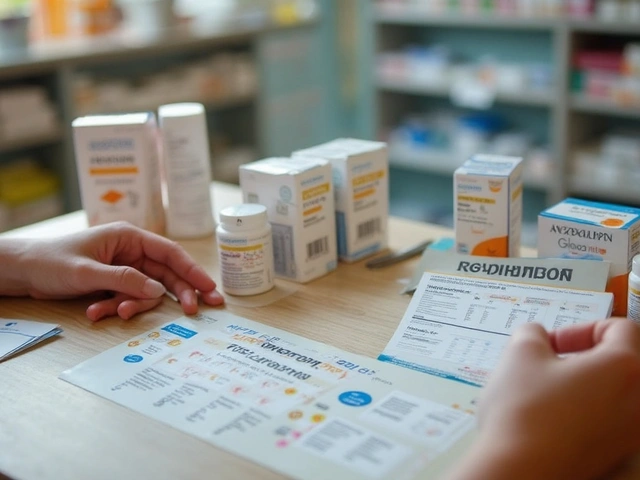
Curious which over-the-counter options stack up against amoxicillin? This article explores 10 OTC antibiotics or drugstore products with similar effects, comparing their efficacy and use. You’ll find interesting facts, tips on choosing the right alternative, and practical stats, all structured for clarity. Get ready for an in-depth, honest look at how drugstore meds measure up to this popular prescription antibiotic. From hidden risks to smart ways to shop, this guide covers what you need before making a decision.
In my recent research, I've come to understand there's a significant link between cholesterol levels and stroke risk. High levels of LDL or 'bad' cholesterol can lead to a build-up in the arteries, reducing blood flow to the brain and potentially causing a stroke. On the contrary, HDL or 'good' cholesterol can help remove LDL from the bloodstream, reducing the risk. Therefore, maintaining a healthy balance of cholesterol is key in stroke prevention. I believe it's crucial to keep an eye on our cholesterol levels and make necessary lifestyle changes if needed.
Allergen immunotherapy for asthma offers a long-term solution beyond inhalers. Compare allergy shots and SLIT tablets-how they work, which is more effective, and who benefits most.
Peppermint oil, especially in enteric-coated form, is a well-supported natural option for IBS symptom relief. Learn how it works, who it helps most, and how to use it safely and effectively based on the latest research.
Generic drugs make up 90% of prescriptions but only 20% of spending - and that’s why they’re disappearing. Cheap prices, foreign factories, and broken incentives are causing critical drug shortages affecting millions.