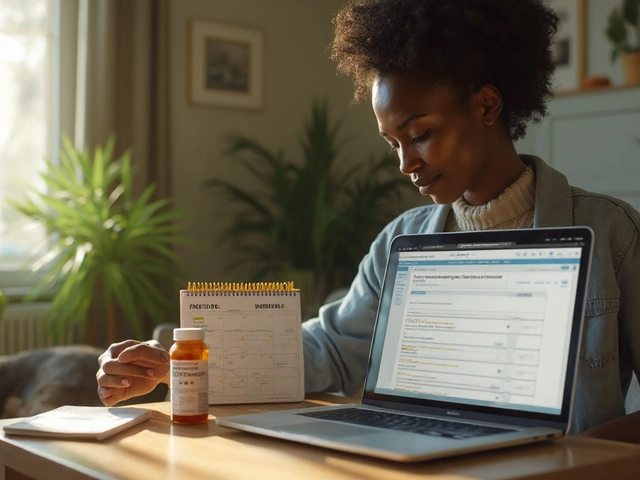
Every year, hundreds of thousands of patients in the U.S. are harmed because their medications get mixed up when they move from one care setting to another. This isn’t rare. It’s common. Medication reconciliation isn’t just a checklist item-it’s the line between a safe discharge and a preventable hospital readmission. And yet, too many hospitals treat it like paperwork, not patient care.
Why Medication Errors Happen During Transitions
When a patient is admitted to the hospital, transferred to a unit, or sent home, their medication list should be double-checked against what they were taking before. But in practice? It rarely happens right. A 2024 study found that 60% of all medication errors occur during these handoffs. That’s not a glitch-it’s a system failure. The biggest problem? Information doesn’t travel with the patient. A senior on warfarin and lisinopril might tell the ER nurse they’re on "blood pressure pills and blood thinners." The nurse writes it down. The pharmacist later finds three different versions of the same list across three systems. One says 5 mg. Another says 2.5 mg. A third says discontinued. No one knows which is right. This isn’t about bad people. It’s about broken workflows. Doctors are rushed. Nurses are overworked. Pharmacists can’t reach community pharmacies because the EHR systems don’t talk to each other. Only 37% of U.S. hospitals can electronically share medication data with local pharmacies. That means someone has to call-on a Friday afternoon, during shift change, with a confused family member on the line.What Medication Reconciliation Actually Looks Like
Medication reconciliation isn’t copying a list from one form to another. It’s a four-step process:- Get the best possible medication history-ask the patient, check with family, call the pharmacy, review old records. Don’t rely on what’s in the EHR.
- Create a new list based on what the care team plans to prescribe during this stay or after discharge.
- Compare the two lists-find the differences. Is the patient still on metformin? Was the statin stopped? Why?
- Make decisions-do you continue, stop, or change each medication? Document why.
Technology Helps-But Only If Used Right
Computerized systems like CPOE and barcode scanning have cut medication errors by nearly half in acute care. But they’re not magic. When a new EHR rolls out, errors often spike first. The MARQUIS study found a 18% increase in discrepancies during the first six months after implementation. Why? Because staff are learning a new system, and no one’s trained on how to use it for reconciliation. Even worse, some EHRs make things harder. One resident at Massachusetts General Hospital said their system adds 12 to 15 minutes per patient just to enter meds. So they skip steps. They copy-paste. They rely on the "auto-populate" feature-which often pulls old, wrong data. The real winners? Pharmacist-led teams. A 2023 study showed that when pharmacists own the reconciliation process at discharge, post-hospital errors drop by 57%, and readmissions fall by 38%. That’s not a small win. That’s life-saving. One pharmacist told me: "Catching a duplicate anticoagulant order before discharge? That’s why I show up every day."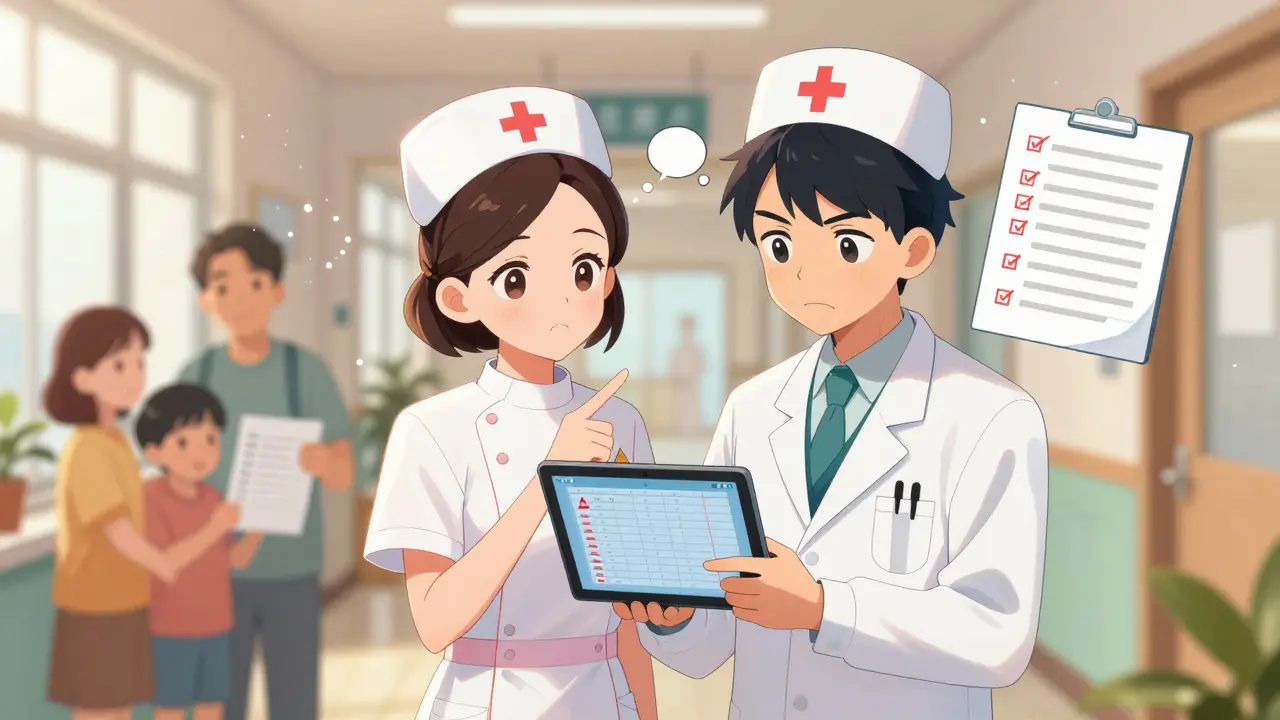
Who’s Responsible? (And Why It Matters)
This is the hidden flaw in most programs: no one owns it. Is it the nurse? The doctor? The pharmacist? The discharge planner? In too many places, everyone thinks someone else is handling it. The Joint Commission requires medication reconciliation at admission, transfer, and discharge. But they don’t say who does it. That’s a recipe for failure. The MARQUIS study found that when roles aren’t clearly defined, harmful discrepancies go up by 15%. The fix? Assign ownership. At discharge, the pharmacist should verify the final list. At admission, the nurse should gather the history. The attending physician signs off on changes. Simple. Clear. No ambiguity. And don’t forget the patient. Only 28% of hospitals consistently involve patients in reconciliation. That’s a disaster. A 2024 Kaiser Family Foundation survey found 72% of patients don’t even know why their medication list matters. But 85% of those who were asked, "What are you taking?" and shown the list, felt more confident. That’s the power of engagement.What’s Working Now-And What’s Not
Let’s be honest. Most hospitals say they do reconciliation. But only 43% actually check with community pharmacies. Only 34% have dedicated staff for discharge reconciliation. And 63% of hospitals report physician resistance-doctors don’t want to slow down. The high-performing places? They don’t add tasks. They bake reconciliation into existing routines. Instead of making a nurse stop everything to enter meds, they train them to ask about medications during the initial assessment. Instead of a separate discharge form, they build the reconciliation step into the electronic discharge summary. New tools are emerging too. MedWise Transition, an AI-powered tool cleared by the FDA in August 2024, reduced discrepancies by 41% in a 12-hospital pilot. It doesn’t replace people-it helps them. It flags potential interactions, reminds staff to check for duplicates, and pulls data from multiple sources. But it only works if someone is watching the screen and asking, "Does this make sense?"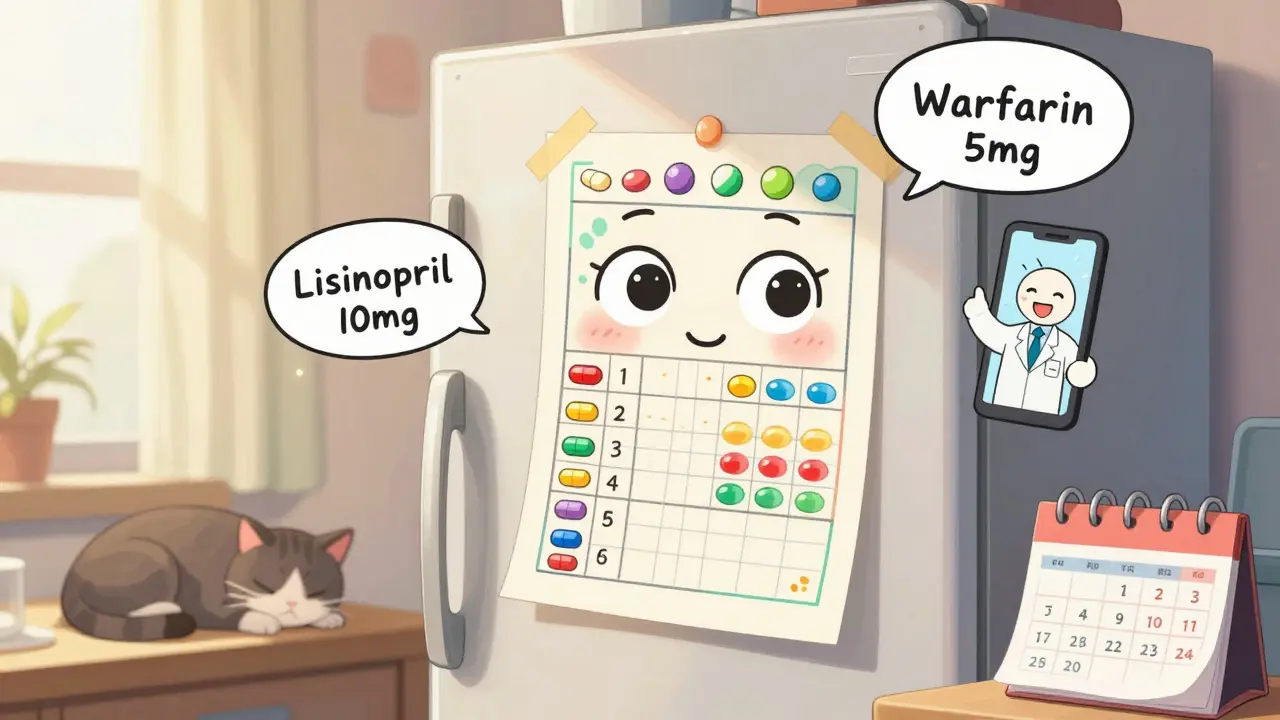
What You Can Do-Even If You’re Not a Doctor
You don’t need to be a clinician to help prevent medication errors. Here’s what patients and families can do:- Bring a list of all your medications-prescription, over-the-counter, vitamins, herbs-to every appointment.
- Ask: "Is this new medicine different from what I was taking before? Why?"
- Don’t assume your pharmacy knows what the hospital prescribed. Confirm the discharge script with your pharmacist.
- Keep a physical copy of your updated medication list. Don’t rely on memory.
The Bigger Picture
The WHO’s Medication Without Harm initiative aims to cut severe medication harm by 50% globally by 2027. The U.S. is on track-but only if we fix transitions. The 2025 National Patient Safety Goals will require verifying high-risk medications with at least two sources. That’s a step forward. But the real measure isn’t compliance. It’s outcomes. How many people go home safely? How many avoid another ER visit? How many avoid a dangerous bleed, a fall from low blood pressure, or a seizure from a missed seizure med? Medication errors during transitions aren’t inevitable. They’re a choice. We can keep doing things the old way-or we can make reconciliation a priority, not an afterthought. The data is clear. The tools exist. The people are ready. All we need is to stop treating it like paperwork-and start treating it like care.What is medication reconciliation?
Medication reconciliation is the process of creating the most accurate list possible of a patient’s current medications and comparing it to new orders during transitions like admission, transfer, or discharge. It involves identifying discrepancies, resolving them, and documenting changes to prevent errors like duplicates, omissions, or incorrect doses.
Why do medication errors happen most often during discharge?
Discharge is a high-risk moment because multiple providers are involved, communication breaks down, and patients often leave with new prescriptions that don’t match what they were taking before. Only 28% of hospitals consistently involve patients in verifying their discharge meds, and 63% of hospitals struggle with physician buy-in. Without a clear handoff to the patient and community pharmacy, errors slip through.
Can electronic health records (EHRs) prevent medication errors?
EHRs can reduce errors by 32% when used correctly, but they can also increase discrepancies by 18% during initial rollout due to poor design or lack of training. The key isn’t the technology-it’s how it’s used. Systems that integrate with community pharmacies and include clinical decision support perform best. Standalone EHR modules without workflow guidance are not enough.
How important is pharmacist involvement in medication reconciliation?
Pharmacists are the most effective single factor in reducing medication errors during transitions. Facilities with dedicated transition pharmacists see 53% fewer adverse drug events. Studies show pharmacist-led reconciliation cuts post-discharge errors by 57% and hospital readmissions by 38% within 30 days. Their training in drug interactions, dosing, and patient communication makes them essential to the process.
What are the biggest barriers to successful medication reconciliation?
The top barriers are poor communication between care settings, lack of clear roles, time constraints, and resistance from clinicians. Only 37% of U.S. hospitals can electronically share medication data with pharmacies. Many providers don’t have time to do it right, and without accountability, shortcuts become the norm. Training alone won’t fix it-ownership and workflow integration will.
What should patients do to protect themselves during care transitions?
Patients should bring a complete, up-to-date list of all medications-including doses and reasons-to every appointment. Ask: "Is this new medication different from what I was taking?" and "Why was something stopped?" After discharge, confirm the new prescription with your pharmacist. Keep a written copy of your updated list and share it with your primary care provider. Being involved reduces confusion and helps catch mistakes before they hurt you.