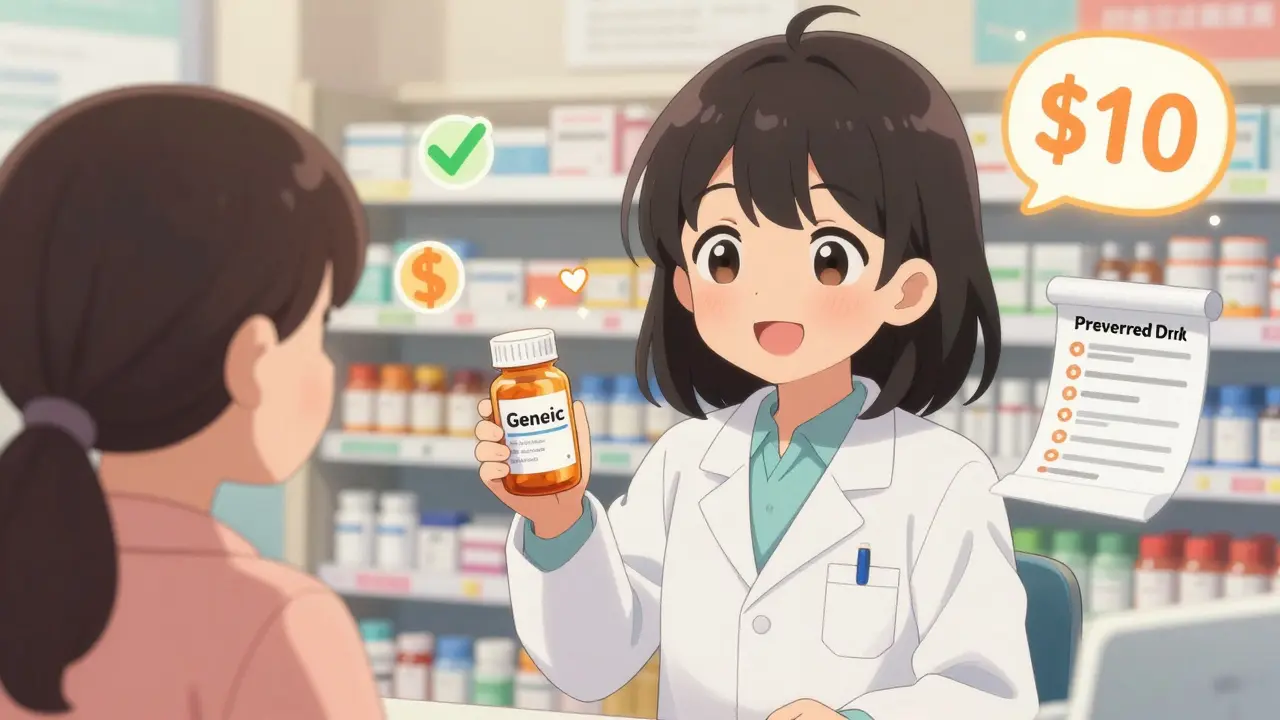
When you pick up a prescription, you might not realize that the decision between a brand-name drug and its generic version isn’t just up to your doctor or pharmacist. In many states, the system is engineered to nudge you - and your provider - toward the cheaper option. That’s the goal of generic prescribing incentives: state-level policies designed to cut drug costs by making generics the default choice.
Why States Care About Generic Drugs
Generic drugs are chemically identical to their brand-name counterparts but cost 80-85% less on average. In 2023, nearly 90% of all prescriptions filled in the U.S. were for generics. Yet even with that high usage, brand-name drugs still make up a huge chunk of total drug spending - about 75% of the money spent on prescriptions goes to just 10% of the drugs. That’s because new, expensive brand-name drugs keep hitting the market, often priced at $100,000 a year or more. States, especially those running Medicaid, can’t afford to pay those prices for everyone. So they’ve built systems that make generics the easier, cheaper, and sometimes only option. The goal isn’t to limit treatment - it’s to save money without sacrificing health outcomes. Studies show that generics work just as well. The real question isn’t whether they’re effective. It’s how to get more people to use them.How States Push for Generic Use
There are three main tools states use to encourage generic prescribing: Preferred Drug Lists, pharmacist substitution rules, and copayment differences. Preferred Drug Lists (PDLs) are the most common tool. Almost every state (46 out of 50 as of 2019) uses them. These lists say which drugs Medicaid will cover without extra steps. If a doctor prescribes a drug not on the list, the pharmacy must get prior approval - a paperwork hurdle that often makes them switch to a generic on the list. Some states review their lists every quarter. Others do it yearly. The idea is simple: make the cheapest, proven option the easiest one to prescribe. Pharmacist substitution laws are another big lever. These rules let pharmacists swap a brand-name drug for a generic without calling the doctor - but only if the state allows it. There are two types: explicit consent and presumed consent. In explicit consent states, the pharmacist must ask the patient for permission before switching. In presumed consent states, the switch happens automatically unless the patient says no. A 2018 NIH study found that presumed consent laws increased generic dispensing by 3.2 percentage points. That might sound small, but multiply that across millions of prescriptions, and you’re talking about billions in savings. Copayment differentials are the most direct incentive. If your copay for a brand-name drug is $40 and the generic is $10, you’re going to pick the generic. States have pushed this hard. In 2000, the average copay difference was already $20 or more. Today, many Medicaid programs charge $0 for generics and $10-$40 for brands. The financial pressure isn’t just on patients - pharmacies get higher dispensing fees for generics in some states. But research shows patients respond more to out-of-pocket costs than pharmacists do to fees. So the best policies put the incentive where it matters most: in the patient’s wallet.What Doesn’t Work
Not all state policies move the needle. Some are well-intentioned but ineffective. Mandatory substitution laws - rules that force pharmacists to switch to generics no matter what - have little impact. Why? Because pharmacists already have a financial reason to substitute. Generics are cheaper to buy, and they make the same profit as brand-name drugs. So even without a law, they’re already doing it. Adding a mandate doesn’t change behavior. Another misstep? Trying to control prescribers through penalties. Some states tried fining doctors who prescribed brand-name drugs when generics were available. But doctors often don’t know the cost of drugs. They’re trained to treat illness, not manage budgets. When you penalize them for prescribing a brand, they just write more prescriptions - not better ones. The real change comes when you make the patient the decision-maker, not the provider.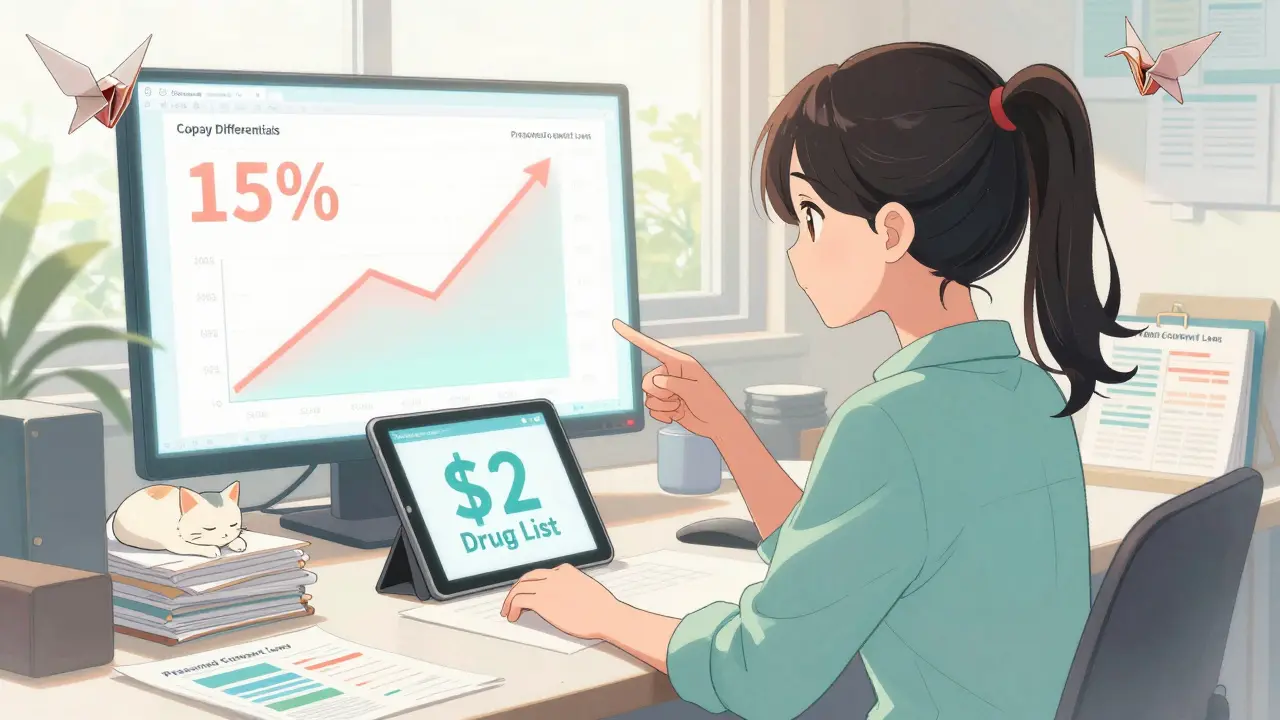
The Hidden Cost: When Generics Disappear
There’s a paradox here. The very system designed to save money can sometimes make generics harder to get. Medicaid requires drugmakers to pay rebates - a percentage of the drug’s price - to the state. The problem? Those rebates are calculated using a formula tied to inflation and average prices. Sometimes, a generic drug’s price doesn’t go up, but the rebate does. That can happen if the drug’s market share drops, if there’s a shortage, or if the manufacturer’s overall sales decline. In those cases, the rebate might jump from 13% to 25% - even though the drug’s price stayed the same. When that happens, the manufacturer loses money on every pill sold in Medicaid. So they stop selling it there. And suddenly, a cheap generic you relied on is gone. Avalere Health found this happens in five specific scenarios. The result? Fewer generic options, more shortages, and patients forced back to expensive brands. It’s a policy loophole that undermines the whole point of the system.What’s Next? The $2 Drug List
The federal government is watching. In 2023, the Centers for Medicare & Medicaid Services (CMS) started developing a new model called the $2 Drug List. It’s simple: for a handful of low-cost generics, Medicare Part D beneficiaries would pay just $2 per prescription - no matter the brand or pharmacy. It’s not mandatory for states, but it’s a signal. If patients see that a $2 generic is just as good as a $50 brand, they’ll expect the same at the pharmacy counter. States may adopt similar models. The idea isn’t to cut rebates - it’s to cut confusion. When patients know exactly what they’ll pay, they choose wisely.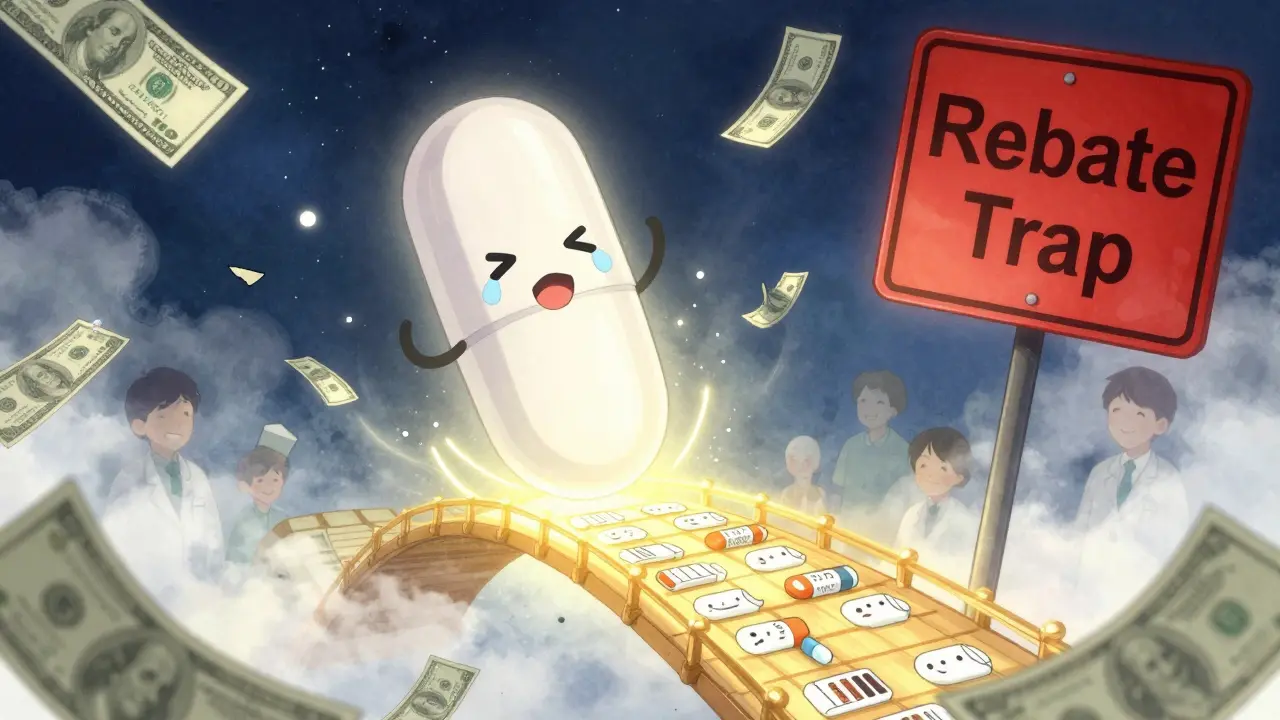
What You Can Do
If you’re on Medicaid or have a high-deductible plan, ask your pharmacist: Is there a generic version of this drug? Is it on my plan’s Preferred Drug List? You might save $30, $100, or even $500 a month. If you’re a patient, don’t assume your doctor knows the cost. Ask: Is there a cheaper alternative that works just as well? Most doctors are happy to switch - especially if you show them the price difference. And if you’re a policymaker or advocate? Push for presumed consent substitution laws and clear copay differentials. Avoid mandatory substitution. Watch for rebate traps that drive generics off the market. The goal isn’t just to save money today - it’s to keep the generic supply strong tomorrow.How Effective Are These Policies?
The numbers speak for themselves. States with presumed consent laws and strong copay differentials see 10-15% higher generic dispensing rates than states without them. The NIH estimated that if all 39 explicit consent states switched to presumed consent, they’d save $51 billion a year. That’s enough to cover free prescriptions for millions of low-income patients. But savings aren’t just about numbers. They’re about access. When states lower the cost of generics, more people take their meds. When people take their meds, hospital visits drop. Emergency room use falls. Chronic conditions get better managed. It’s not just a cost-saving trick - it’s a public health win.Bottom Line
Generic prescribing incentives aren’t about forcing people to take cheaper drugs. They’re about removing the financial and bureaucratic barriers that make the right choice hard. When the system rewards the right behavior - whether it’s a pharmacist swapping a pill, a patient choosing a $10 script, or a doctor prescribing a proven alternative - everyone wins. The challenge now isn’t whether these policies work. It’s whether we’ll keep improving them - and protect the generic supply chain from the unintended consequences of our own rebate systems. Because if we don’t, the next time you need a cheap, effective drug, it might not be there.Do generic drugs work as well as brand-name drugs?
Yes. The FDA requires generic drugs to have the same active ingredients, strength, dosage form, and route of administration as the brand-name version. They must also meet the same strict manufacturing standards. Studies consistently show they are equally effective and safe. The only differences are in inactive ingredients (like fillers or dyes), which rarely affect how the drug works.
Why do some pharmacies refuse to switch to a generic?
Sometimes, the doctor writes "dispense as written" or "no substitution" on the prescription. That’s a legal instruction that overrides state substitution laws. Other times, the generic isn’t available - it could be out of stock, or the manufacturer stopped making it because the Medicaid rebate made it unprofitable. Always ask your pharmacist if a generic is available and why it’s not being used.
Can my doctor prescribe a brand-name drug even if a generic exists?
Yes. Doctors can always prescribe the brand if they believe it’s medically necessary - for example, if you’ve had a bad reaction to a generic in the past, or if the drug has a narrow therapeutic index (like warfarin or levothyroxine). But they’ll usually need to justify it to your insurer, and you may pay more. Most of the time, the generic is just as safe and effective.
Why are some generics so hard to find?
Some generics disappear because the Medicaid rebate formula makes them unprofitable - even if the drug’s price hasn’t changed. If the manufacturer’s overall sales drop or there’s a shortage, the rebate can spike, forcing them to stop selling the drug to Medicaid. This is happening more often, especially with older, low-cost generics. States are starting to track this, but it’s still a blind spot in the system.
What’s the difference between a Preferred Drug List and a formulary?
A Preferred Drug List (PDL) is a state Medicaid tool that ranks drugs by cost and effectiveness. Non-preferred drugs require prior authorization. A formulary is a broader list used by private insurers or Medicare Part D plans. Both serve the same purpose - to guide prescribing - but PDLs are state-run and tied to Medicaid reimbursement rules, while formularies are set by private pharmacy benefit managers.