
When you get a vaccine, you’re not just getting a shot—you’re receiving the result of a complex, tightly controlled process called vaccine manufacturing, the science and industrial process of producing vaccines for public use. Also known as vaccine production, it’s what turns biological materials into something that safely trains your immune system to fight off real infections. This isn’t like making a bottle of pills. It’s more like brewing a living medicine under sterile conditions, then testing it hundreds of times before it ever reaches your arm.
Behind every vaccine is a chain of steps that starts with selecting the right virus or bacteria strain, then growing it in cells or eggs, inactivating or weakening it, and finally purifying it so only the parts needed to trigger immunity remain. vaccine development, the research and testing phase that leads to manufacturing can take years, but once approved, manufacturing scales up fast. Factories run 24/7, using bioreactors, filtration systems, and robotic arms to keep every batch identical. Even tiny changes in temperature or pH can ruin a batch, which is why regulators like the FDA and EMA watch every step. vaccine safety, the continuous monitoring of side effects and effectiveness after release doesn’t stop after the shot—it goes on for years, tracking real-world outcomes in millions of people.
Not all vaccines are made the same. Some use dead viruses, others use pieces of the virus, and newer ones like mRNA vaccines skip the virus entirely and just give your cells instructions to build a harmless piece of it. Each method has its own manufacturing needs, tools, and challenges. That’s why you’ll see different production timelines, costs, and storage requirements across vaccines. The same factory that makes flu shots might not be able to make an mRNA vaccine without major upgrades. And while some companies focus on speed, others prioritize stability or low cost—especially for global use in low-income countries.
What you won’t see on the news is how much testing happens before a single vial leaves the lab. Every batch goes through purity checks, potency tests, and sterility screens. Independent labs verify results. Random samples are destroyed to check for contamination. This isn’t guesswork—it’s science built on decades of standards. And even after approval, every lot is tracked. If something goes wrong, regulators can pull just that batch, not the whole product line.
So when you hear debates about vaccines, remember: the shot itself is just the end of a long, precise journey. The real story is in the labs, the clean rooms, and the engineers who make sure every drop is safe. You don’t need to understand every step to trust it—but knowing how much care goes into it helps you see why skipping vaccines isn’t just a personal choice—it affects the whole system that keeps you protected.
Below, you’ll find real-world guides on how vaccines connect to immune health, what goes into their ingredients, and how they compare to other medical treatments. Whether you’re curious about the science, concerned about safety, or just trying to understand why some vaccines need cold storage and others don’t—this collection has answers grounded in facts, not fear.

Vaccine generics don't exist like drug generics-complex manufacturing, supply chains, and profit-driven systems keep low-income countries dependent on imports. Here's why global vaccine access remains unequal.

Traveling can be an exciting experience, but for many, it comes with unwanted nausea. This article discusses practical and easy-to-implement tips to manage nausea while traveling, including preventive measures, diet considerations, and effective remedies.
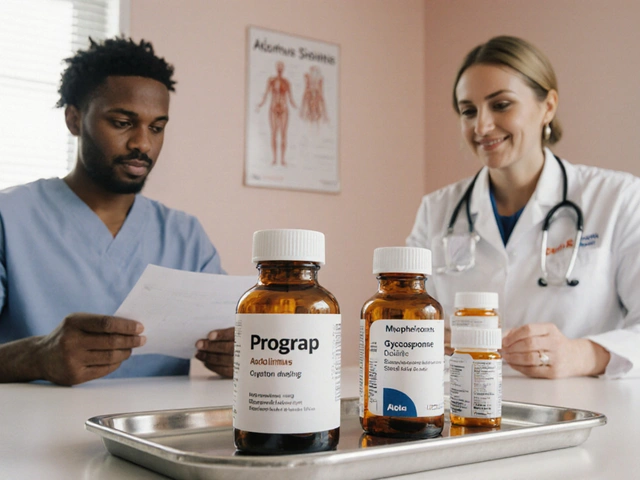
A detailed side‑effect, cost and efficacy comparison of Prograf (tacrolimus) with generic tacrolimus, cyclosporine, sirolimus and mycophenolate for transplant patients.

Cost is the top reason people skip doses or don't fill prescriptions. Learn how high drug prices hurt health, why it's not your fault, and what real help is available-from patient programs to Medicare changes and free discount tools.

Peppermint oil, especially in enteric-coated form, is a well-supported natural option for IBS symptom relief. Learn how it works, who it helps most, and how to use it safely and effectively based on the latest research.

Explore how clopidogrel works for carotid artery disease, its clinical evidence, comparisons with other antiplatelets, and practical tips for patients and doctors.