It’s not about forgetting your pills. It’s about medication adherence-and how side effects make it feel impossible to keep going. You take your blood pressure medicine every morning. You’ve done it for months. But lately, you’ve been dizzy after lunch. Your legs ache. You’re tired all the time. You start skipping doses. Not because you don’t care. But because you’re not sure if the medicine is worse than the condition. You’re not alone. Around half of people taking long-term meds don’t take them as prescribed. And side effects are one of the biggest reasons why.
Why Side Effects Stop People From Taking Their Meds
People don’t quit meds because they’re lazy. They quit because the side effects feel real, unpredictable, and sometimes worse than the illness they’re meant to treat. A person with high cholesterol might take a statin every day-until muscle pain makes it hard to climb stairs. Someone with depression might stop their antidepressant because it made them feel numb, or gave them nausea every morning. These aren’t rare reactions. They’re common enough that studies show up to 30% of patients stop taking their meds within the first few months, mostly because of how they feel.
The problem isn’t just physical. It’s psychological. When you feel worse after taking a pill, your brain starts to associate the medicine with discomfort. You begin to doubt: Is this helping? Or is this hurting me? That doubt grows. And soon, skipping a dose feels like a small act of control. A way to protect yourself. That’s why even people who know their meds are important still stop taking them.
The Real Cost of Skipping Doses
Skipping meds doesn’t just mean your condition doesn’t improve. It means things get worse-and faster than you think. In the U.S., about 125,000 deaths each year are linked to people not taking their medications as directed. Up to 69% of medication-related hospital stays happen because someone stopped, skipped, or changed their dose without talking to a doctor. That’s not just a number. That’s someone’s parent, sibling, or neighbor.
For chronic conditions like diabetes, heart disease, or high blood pressure, you need to take your meds at least 80% of the time to see real benefits. But data shows that after the first refill, only 25% to 30% of people are still taking their meds exactly as prescribed. By the end of a year, up to 80% have stopped entirely. Side effects are the number one reason for that drop-off.
And the financial toll? It’s huge. Every year, nonadherence costs the U.S. healthcare system between $100 billion and $300 billion. That includes extra doctor visits, emergency trips, and hospital stays-all preventable if people could manage their side effects better.
What Happens When Side Effects Go Unspoken
Most patients don’t tell their doctors about side effects unless they’re asked directly. Why? They think it’s normal. They don’t want to seem like complainers. Or they assume there’s nothing that can be done. A 2025 study found that pharmacists documented nonadherence in only 52% of cases-compared to 85% for nurses. That gap means side effects often slip through the cracks.
Doctors are busy. They’re focused on lab results and blood pressure numbers. They may not ask about how you’re feeling day-to-day. And if you don’t bring it up, they assume you’re fine. But if you’re skipping pills because of nausea, dizziness, or fatigue, those symptoms aren’t just inconvenient-they’re dangerous. They’re signs your treatment plan needs adjusting.
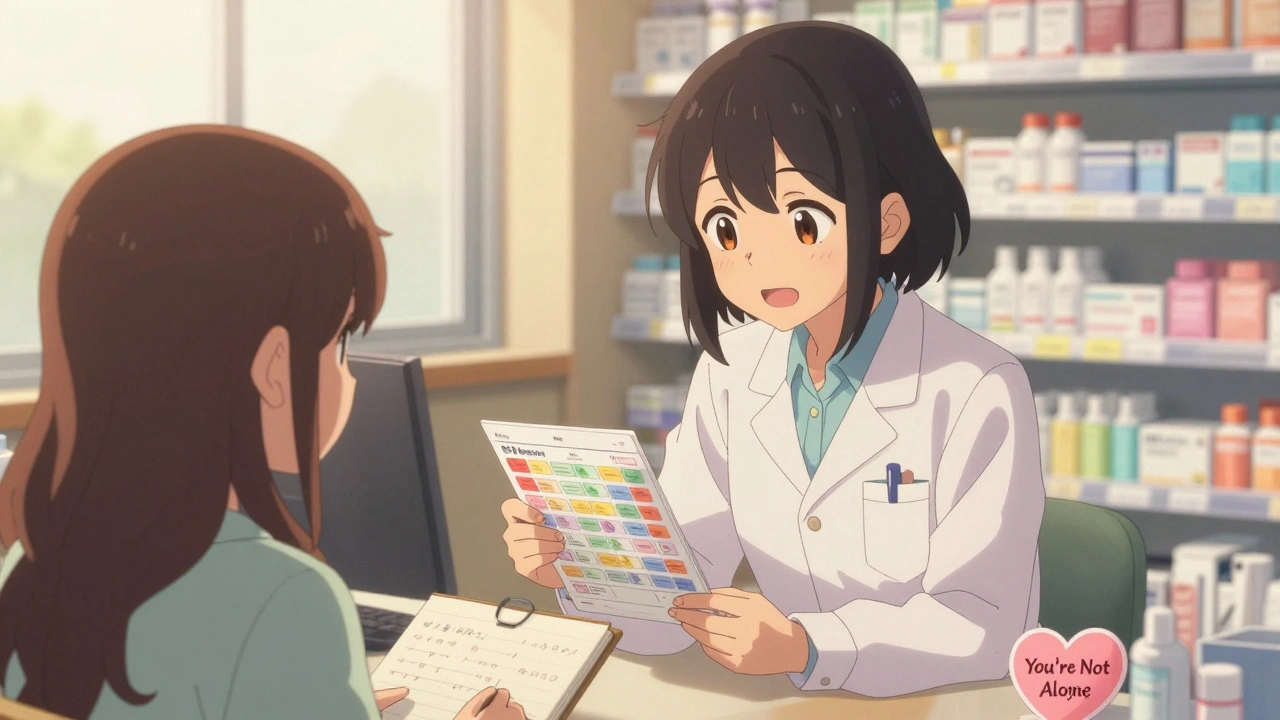
How Pharmacists Can Help-And Why It Works
One of the most effective ways to fix this is by talking to your pharmacist. Not just when you pick up your prescription. But regularly. Pharmacists are trained to spot side effects before they become crises. They know which meds are linked to which symptoms. And they can help you manage them without stopping your treatment.
Studies show that when pharmacists work directly with patients to address side effects, adherence improves by up to 40%. In one trial, patients who met with a pharmacist to go over their meds and side effects had an 89% adherence rate-compared to just 74% for those who got standard care. That’s a massive difference.
What do these pharmacist-led sessions look like? They’re simple:
- They ask: “What are you feeling after you take your pills?”
- They explain: “This nausea is common with this drug, and here’s how to reduce it.”
- They adjust: “Let’s try taking it with food,” or “We can switch to a different pill that’s less likely to cause drowsiness.”
- They follow up: “Call me in two weeks. Let’s see how you’re doing.”
Face-to-face conversations are the most powerful. Phone calls help, but they’re less effective. In-person check-ins led to an 83% success rate in improving adherence. Hospital discharge programs were next at 67%. Even simple printed guides helped-but only if they were personalized.
What You Can Do Right Now
You don’t need to wait for your doctor’s appointment. Start today:
- Write down every side effect. Even small ones. Headache. Dry mouth. Trouble sleeping. Write when it happens and how bad it is.
- Don’t stop on your own. Stopping suddenly can be dangerous. Call your pharmacist or doctor before you quit.
- Ask: “Is there a different version of this drug?” Some meds come in extended-release forms, lower doses, or different brands that cause fewer side effects.
- Ask: “Can I take this with food?” Many side effects-like nausea or stomach upset-get better when taken with a meal.
- Ask: “Is there a cheaper option?” Cost can make people skip doses. If you’re skipping because of price, talk to your pharmacist. There are often patient assistance programs or generic alternatives.
And if you’re on multiple meds? Ask for a medication review. Pharmacists can look at all your pills at once and spot interactions, overlaps, or unnecessary drugs. You’d be surprised how many people are taking things they don’t need-or taking two drugs that fight each other.
When Mental Health Meds Are Hard to Stick With
People with depression, anxiety, or bipolar disorder are twice as likely to skip their meds because of side effects. That’s not just about nausea or weight gain. It’s about feeling emotionally flat. Losing motivation. Feeling like the drug is dulling who they are. For many, the side effects feel like a loss of self.
But here’s the truth: those feelings often fade after a few weeks. And if they don’t, there are other options. Antidepressants aren’t one-size-fits-all. One person’s miracle drug is another’s nightmare. The key is persistence-with support. Don’t give up after two weeks. Talk to your prescriber. Give them your list of side effects. Ask for alternatives. There are over 20 different antidepressants. One of them will work for you.
And if you’re worried about stigma? You’re not alone. Many people feel ashamed to say they’re struggling with mental health meds. But skipping them makes symptoms worse-and that’s when hospitalizations happen. The goal isn’t to feel perfect. It’s to feel stable enough to live your life.
The Future: Personalized Support Through Tech
Technology is starting to help. Apps that remind you to take pills? Useful-but only if they also let you report side effects in real time. New AI tools can now predict who’s at risk of quitting based on their symptoms, refill patterns, and even voice tone during calls. Some pharmacies now use these tools to flag patients who need a call before they stop taking their meds.
These systems aren’t perfect. But they’re getting better. And they’re most effective when they’re paired with human support. A text reminder won’t fix your anxiety. But a pharmacist who calls because your refill was late? That might save your life.
Final Thought: You’re Not Failing-Your System Is
It’s easy to blame yourself when you stop taking your meds. But the truth? The system isn’t built to help you stay on track. Doctors don’t have time. Pharmacies don’t follow up. Insurance doesn’t pay for check-ins. But you don’t have to navigate this alone.
Ask for help. Talk to your pharmacist. Write down your side effects. Don’t wait until you feel worse. Because medication adherence isn’t about willpower. It’s about support. And you deserve that.
Why do people stop taking their medications even when they know it’s important?
People stop because side effects feel worse than the condition they’re treating. Symptoms like nausea, dizziness, fatigue, or emotional numbness make daily life harder. Many assume these side effects are normal or unavoidable, so they skip doses to feel better-even if it means risking their health. Fear of long-term effects or drug interactions also plays a role.
How common is medication nonadherence due to side effects?
About 30% to 50% of people don’t take their medications as prescribed, and side effects are the top reason for stopping. For chronic conditions like high blood pressure or diabetes, up to 80% of patients stop taking their meds within a year, mostly because of how they feel after taking them. In mental health, patients are twice as likely to skip treatment if side effects are present.
Can pharmacists really help with side effects and adherence?
Yes. Studies show pharmacist-led interventions improve adherence by up to 40%. Pharmacists can adjust dosing, suggest alternative medications, recommend taking pills with food, and connect patients to cost-saving programs. Face-to-face consultations have the highest success rate-83%-because they build trust and allow for detailed conversations about symptoms.
What should I do if I’m experiencing side effects?
Don’t stop taking your medication without talking to someone. Write down your symptoms, when they happen, and how bad they are. Call your pharmacist or doctor and ask: “Is this normal?” “Can I take this differently?” “Is there another option?” Many side effects can be managed without quitting the drug. Sometimes a small change-like timing or dosage-makes all the difference.
Are there affordable alternatives if my meds are too expensive?
Yes. Many brand-name drugs have cheaper generic versions. Pharmacists can check for patient assistance programs, manufacturer coupons, or mail-order options. Some states offer discount cards for prescriptions. Never skip doses because of cost-ask for help first. You might be surprised how much you can save with the right guidance.
How long should I wait before deciding a medication isn’t working?
For most medications, it takes 4 to 6 weeks to see full effects. Side effects often fade after the first two weeks. Don’t judge a drug based on how you feel in the first few days. But if side effects are severe or don’t improve after a month, talk to your provider. There’s no reason to suffer unnecessarily-other options exist.