When a drug becomes unsafe - whether due to contamination, unexpected side effects, or manufacturing errors - time is everything. The U.S. Food and Drug Administration (FDA) doesn’t wait for news outlets to break the story. Instead, it sends out real-time alerts directly to subscribers. If you’re a patient, caregiver, pharmacist, or healthcare provider, signing up for these alerts isn’t optional - it’s essential. And the best part? It’s completely free.
What You’ll Get from FDA Drug Safety Alerts
The FDA sends out three types of safety alerts, each serving a different purpose. You don’t need to understand all of them at first, but knowing what each one covers helps you pick the right ones.
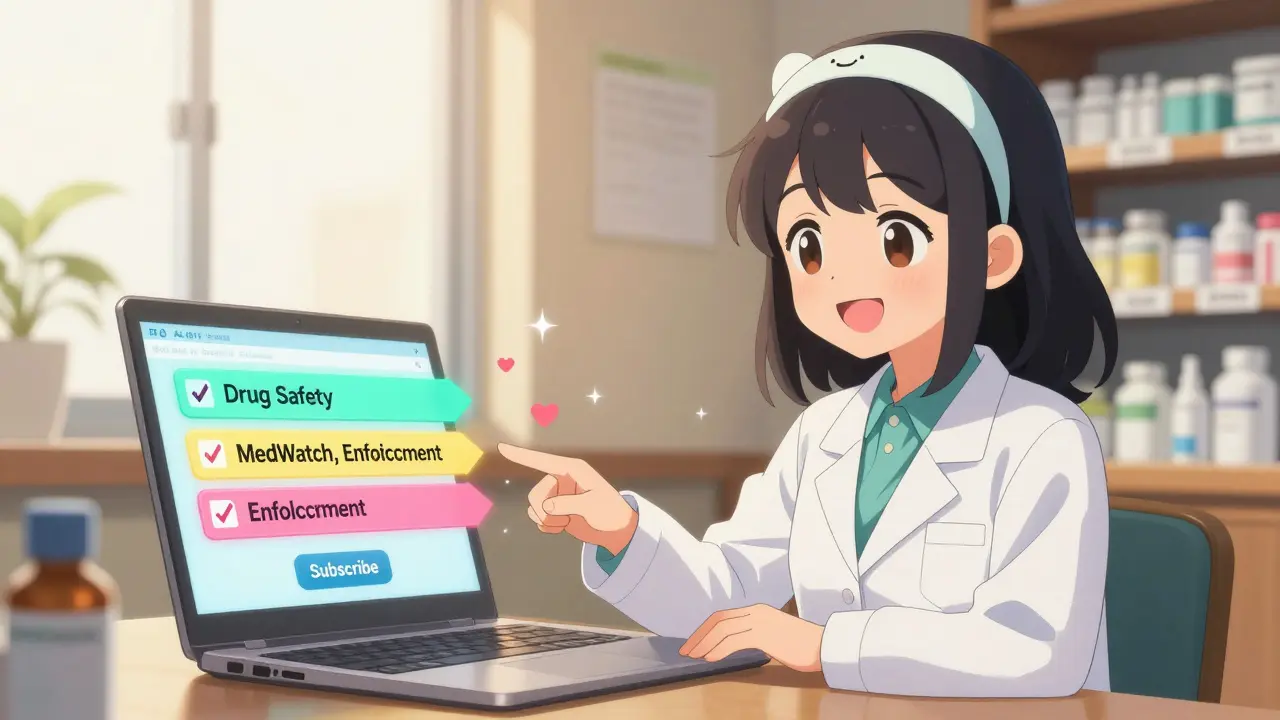
- Drug Safety Communications - These are alerts about serious risks tied to specific medications. Think: "This drug may cause liver damage" or "New warning for pregnant users." They don’t always mean a recall, but they mean you need to pay attention.
- MedWatch Safety Alerts - This system covers both drugs and medical devices. It’s where the FDA posts urgent safety notices, like when a batch of insulin was found to have incorrect dosing. You can get these via email, Twitter, or RSS.
- Enforcement Report Subscription Service - This one is for recalls. If a company pulls a medicine off shelves because it’s contaminated, mislabeled, or unsafe, this system notifies you within hours.
As of December 2023, over 2.7 million people and organizations subscribed to at least one of these systems. That’s up from 1.84 million just a year earlier. People are catching on - and for good reason.
How to Subscribe - Step by Step
Signing up takes less than five minutes. Here’s how to do each one correctly.
1. Drug Safety Communications (for medication-specific warnings)
Go to fda.gov/drugs/drug-safety-and-availability/drug-safety-communications. Scroll down and click "Sign up for email alerts". Enter your email address, choose whether you want alerts for all drugs or only specific ones (like diabetes meds, blood thinners, or antidepressants), and confirm your subscription. You’ll start getting alerts within 24 hours.
Pro tip: If you’re a pharmacist or work in a clinic, sign up for alerts by drug class - not just brand names. That way, you’ll catch issues with generic versions too.
2. MedWatch E-list (for urgent drug and device alerts)
Visit fda.gov/medwatch-email-list. Fill out the simple form with your email and select "MedWatch Safety Alerts" from the dropdown. You can also follow @FDAMedWatch on Twitter - it’s updated daily and has over 285,000 followers. The RSS feed is available too if you use a news aggregator.
3. Enforcement Report Subscription (for recalls)
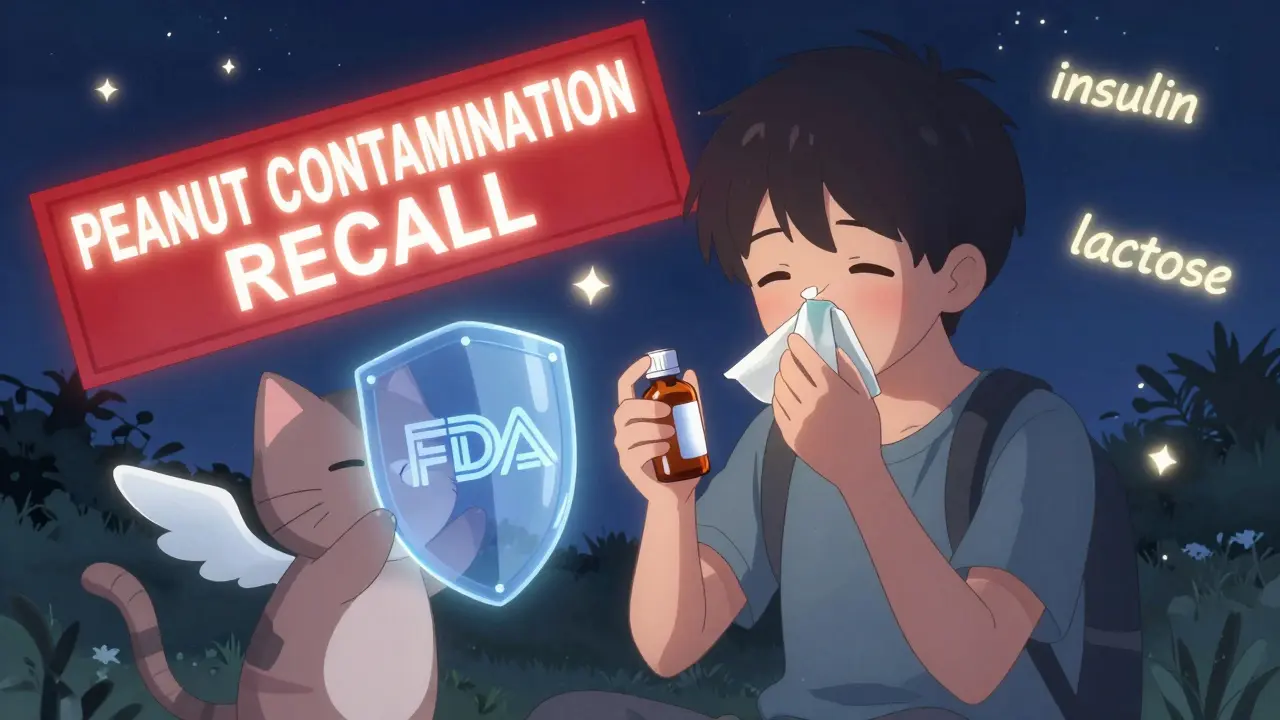
This is the most powerful tool if you handle medications daily. Go to fda.gov/enforcement-report-subscription. You’ll be asked to pick product categories. Choose "Drugs" - that’s the one most people need. Then, set your delivery frequency: daily or weekly. Here’s the game-changer: you can add up to five custom keywords. Type in "insulin," "metformin," "aspirin," or even "peanut" if you’re allergic. The system will only alert you when those words appear in recall notices.
According to FDA usability tests, this feature reduces alert overload by 61%. A hospital pharmacist in Ohio told the FDA in a 2023 survey: "The insulin keyword alert saved us from distributing a recalled batch. We caught it before a single patient got it."
What You Won’t Get - And Why It Matters
The FDA system is powerful, but it’s not perfect. Here’s what it doesn’t do - and what you should know.
- No mobile app - Right now, you only get emails or tweets. No push notifications. That’s changing. The FDA confirmed in October 2024 that a mobile app is in testing and will launch in Q2 2025.
- No risk scoring - Unlike commercial services (like First Databank or MedWatcher), the FDA doesn’t tell you how urgent an alert is. You have to read the whole thing. A 2023 study found that 47% of users felt the initial alerts were too vague.
- No non-English alerts yet - Only 12% of alerts reach Spanish speakers, even though they make up 22% of the population. The FDA plans to fix this in Q3 2025.
And here’s a hidden issue: alert fatigue. A 2022 Government Accountability Office report found that only 38% of healthcare workers knew all three systems existed. Many people sign up for one, get overwhelmed, and unsubscribe. The FDA itself admitted this problem. In November 2023, they announced they’re merging all three systems into one unified platform by Q3 2025 - with machine learning to rank alerts by urgency.
Why This Matters More Than You Think
A 2022 survey by the American Medical Association found that physicians who subscribed to FDA Drug Safety Communications were 72% more likely to change how they prescribed a drug based on the alerts. Those who didn’t subscribe? Only 41% made changes. That’s a 31-point gap - and it’s not just about paperwork. It’s about safety.
Consider this real case: In 2023, a batch of losartan - a common blood pressure drug - was found to contain a cancer-causing impurity. The FDA issued a recall alert within 8 hours. A community pharmacy in Texas got the email, checked their inventory, and pulled 147 bottles before a single patient took one. They didn’t need to wait for a news headline. They didn’t need to call the manufacturer. The FDA told them - and they acted.
Compare that to commercial services. Many charge $10/month or more. They’re faster on some alerts - but they only cover prescription drugs. The FDA covers everything: prescription, over-the-counter, biologics, even medical devices like insulin pumps and pacemakers.
Who Should Subscribe - And Who’s Already Doing It
You might think this is just for hospitals. But here’s what the data says:
- 82% of hospitals with 200+ beds subscribe to at least one FDA alert system.
- 68% of pharmaceutical manufacturers use category-specific alerts to track recalls affecting their products.
- 29% of retail pharmacists subscribe - but only 17% of consumers do.
If you take medication regularly - or care for someone who does - you’re in the 17%. That’s too low. This isn’t just for professionals. It’s for anyone who buys medicine at a pharmacy, uses a generic drug, or has allergies. A patient in Florida told the FDA: "I set my keyword to 'peanut.' Last month, a cough syrup was recalled because it had trace peanut oil. I didn’t buy it. My son’s allergic. That alert saved him."
What’s Coming Next (2025 Updates)
The FDA isn’t done improving. Here’s what’s coming:
- One unified system - By late 2025, the three separate subscription portals will merge into one dashboard.
- 10 keywords per account - Currently limited to five. By December 2025, you’ll be able to track up to ten terms (e.g., "warfarin," "cipro," "lactose," "diabetic").
- Priority-based alerts - Machine learning will tag alerts as "High," "Medium," or "Low" urgency based on clinical impact.
- Spanish-language alerts - Launching Q3 2025.
- Mobile app - Expected Q2 2025.
The agency has $15.2 million allocated through the 2024 FDA Reauthorization Act to make this happen. They know the system is underused - and they’re fixing it.
What to Do Right Now
You don’t need to wait for the upgrades. Start today:
- Go to fda.gov/drugs/drug-safety-communications and sign up for Drug Safety Communications.
- Go to fda.gov/enforcement-report-subscription. Choose "Drugs," set delivery to daily, and add your top three medications or allergens as keywords.
- Follow @FDAMedWatch on Twitter for instant updates.
Set a calendar reminder to check your inbox every Monday. If you see a new alert, read it. Even if it doesn’t seem relevant now - it might be next month.
There’s no subscription fee. No credit card. No trial period. Just a simple email - and the power to protect yourself, your family, or your patients.
Do I need to pay to subscribe to FDA drug safety alerts?
No. All FDA drug safety alert subscriptions are completely free. You only need an email address. There are no hidden fees, no premium tiers, and no trials. The system is funded by the U.S. government and designed to be accessible to everyone - from patients to pharmacists.
What’s the difference between MedWatch and Drug Safety Communications?
MedWatch covers urgent safety notices for both drugs and medical devices - like faulty insulin pumps or contaminated vaccines. Drug Safety Communications focus specifically on medication risks: new side effects, dosage changes, or warnings for certain patient groups (like pregnant women). You’ll want both. MedWatch is for emergencies. Drug Safety Communications are for ongoing clinical guidance.
Can I get alerts in Spanish?
Not yet - but it’s coming. As of early 2026, only English-language alerts are available. However, the FDA confirmed in its 2025 Strategic Plan that Spanish-language alerts will launch in Q3 2025. Until then, you can use browser translation tools on the FDA website, but signed-up email alerts will still be in English.
How often do I get alerts?
It depends on the service. The Enforcement Report lets you choose daily or weekly. Drug Safety Communications and MedWatch send alerts as soon as a new notice is issued - which can be multiple times a week during busy periods. In 2023, the FDA issued over 1,300 safety notices. Most subscribers receive 2-5 alerts per month.
Will I get alerts for over-the-counter drugs?
Yes. The FDA’s alert systems cover all regulated products - including OTC pain relievers, antacids, cough syrups, and even topical creams. If a product is sold in the U.S. and regulated by the FDA, it’s included. That’s why keyword alerts (like "ibuprofen" or "lactose") are so useful - they let you track specific OTC items you use regularly.
What if I don’t want to get so many emails?
Use keywords. The Enforcement Report system lets you add up to five custom terms - so you only get alerts about the drugs or allergens that matter to you. You can also set delivery to weekly instead of daily. And if you’re overwhelmed, you can unsubscribe from one system and still stay subscribed to others. There’s no need to sign up for everything at once.