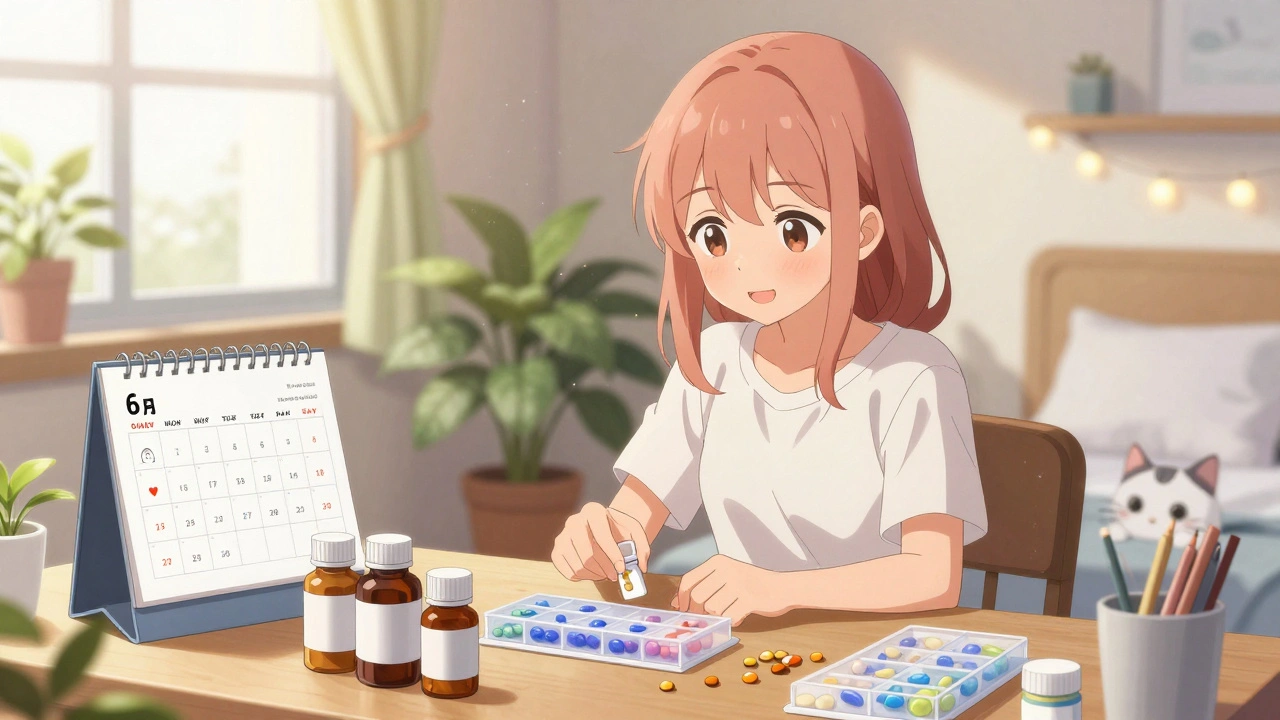
Every household with medications has them-bottles tucked in bathroom cabinets, drawers filled with old prescriptions, or emergency kits buried in the back of a closet. Some of those pills, liquids, or inhalers are past their expiration date. And while it might seem harmless to take them, using expired medications can be risky. The medication expiration review schedule isn’t just a bureaucratic chore-it’s a simple, life-saving habit.
Why You Need a Medication Expiration Review Schedule
The U.S. Food and Drug Administration (FDA) says expiration dates aren’t arbitrary. They’re based on stability testing that shows when a drug will still work as intended under proper storage conditions. After that date, the medication may lose potency. In some cases, like insulin or liquid antibiotics, it can become unsafe. A 2020 NIH study found that expired insulin could lead to dangerously high blood sugar levels. Epinephrine auto-injectors, used in allergic emergencies, can fail completely after expiration, putting lives at risk. But here’s the twist: research from the Mayo Clinic Proceedings found that 90% of medications tested 15 years past their expiration date were still effective-if stored properly. So why do we throw them out? Because most people don’t store them properly. Heat, humidity, and light break down drugs faster than manufacturers predict. That’s why a review schedule matters. It’s not about blindly trusting the date on the bottle. It’s about knowing your storage conditions and checking regularly.Step 1: Gather All Your Medications
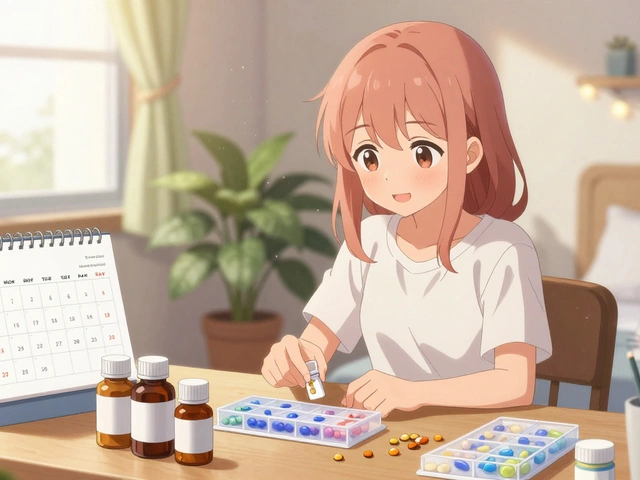
Start by collecting every pill, liquid, patch, inhaler, and injectable you have. Don’t skip the ones you haven’t used in years. Look in medicine cabinets, nightstands, purses, and even the car glove compartment. Include over-the-counter drugs like pain relievers, antacids, and allergy meds. Many people forget these, but they expire too. Remove everything from its packaging. Place each item on a clean surface. Check for:- Original labels with expiration dates
- Signs of damage: cracked pills, cloudy liquids, discolored patches
- Unusual smells or textures
Step 2: Sort by Risk Level
Not all medications are equal when it comes to expiration. Some degrade quickly. Others last longer. Sort them into three groups:- High-risk: Insulin, nitroglycerin, epinephrine auto-injectors, liquid antibiotics, eye drops, and compounded medications. These lose potency fast. Even a few months past expiration can be dangerous.
- Medium-risk: Blood pressure pills, antidepressants, birth control, asthma inhalers, and thyroid meds. They may still work after expiration, but effectiveness isn’t guaranteed. Using them could mean your condition isn’t controlled.
- Low-risk: Pain relievers (ibuprofen, acetaminophen), antihistamines, antacids, and vitamins. These tend to hold up well, but you still shouldn’t rely on them past expiration if you need them for serious symptoms.
Step 3: Set Your Review Frequency
Consistency is everything. Pick a day that’s easy to remember. Maybe the first of the month, or the day you pay your bills. Write it down. Then stick to it.| Medication Type | Review Frequency | Storage Condition |
|---|---|---|
| Insulin, epinephrine, liquid antibiotics | Monthly | Refrigerated or room temperature |
| Blood pressure, antidepressants, birth control | Quarterly | Room temperature |
| Pain relievers, antihistamines, vitamins | Every 6 months | Room temperature |
| Emergency kits (epinephrine, naloxone) | Monthly | Room temperature, away from heat |
Step 4: Document Everything
Write down what you have. Use a simple spreadsheet, a notebook, or a free app like Medisafe or MedWise. For each medication, record:- Drug name and strength
- Manufacturer and NDC number (found on the bottle)
- Expiration date
- Lot number (for recalls)
- Where it’s stored
- When you last checked it
Step 5: Use the FEFO Method
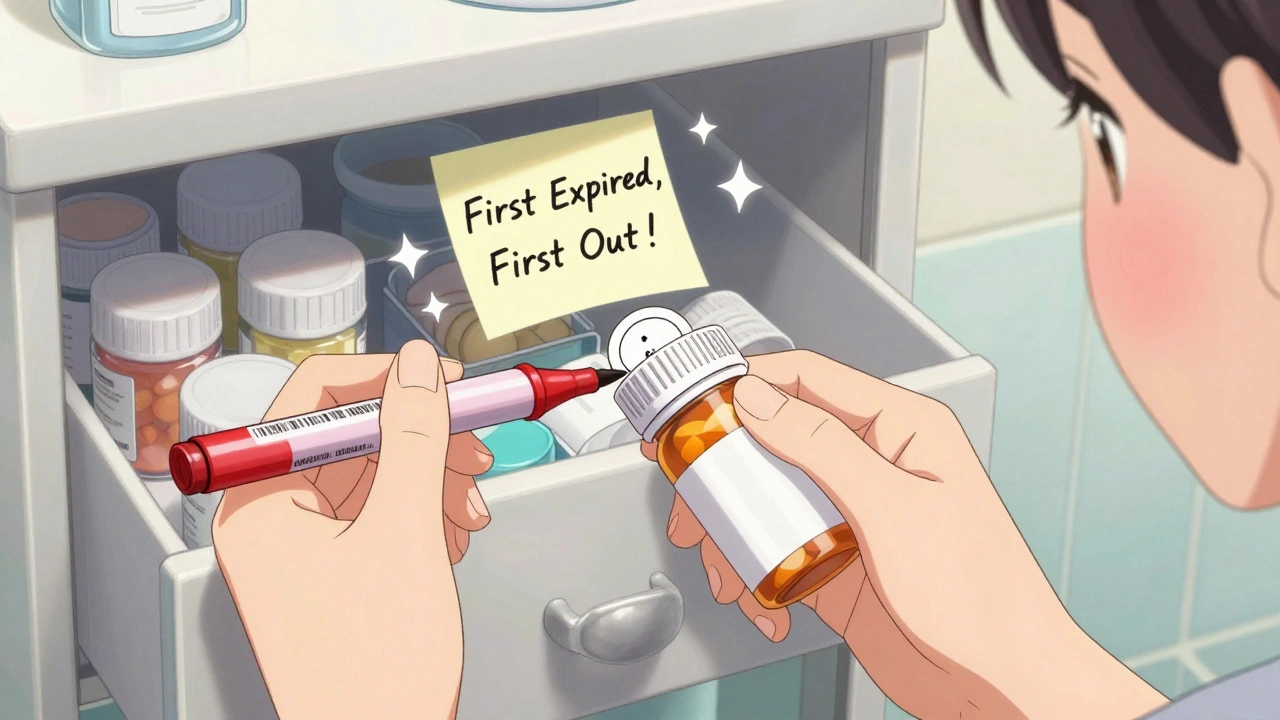
FEFO stands for “First Expired, First Out.” It’s a simple rule: when you refill a prescription, put the new bottle behind the old one. Use the one with the earlier expiration date first. This prevents old meds from getting buried and forgotten. Apply this to your pill organizer too. If you use a weekly or monthly tray, fill it with the newest supply. Don’t mix old and new pills. The older ones might be weaker.Step 6: Dispose of Expired Medications Safely
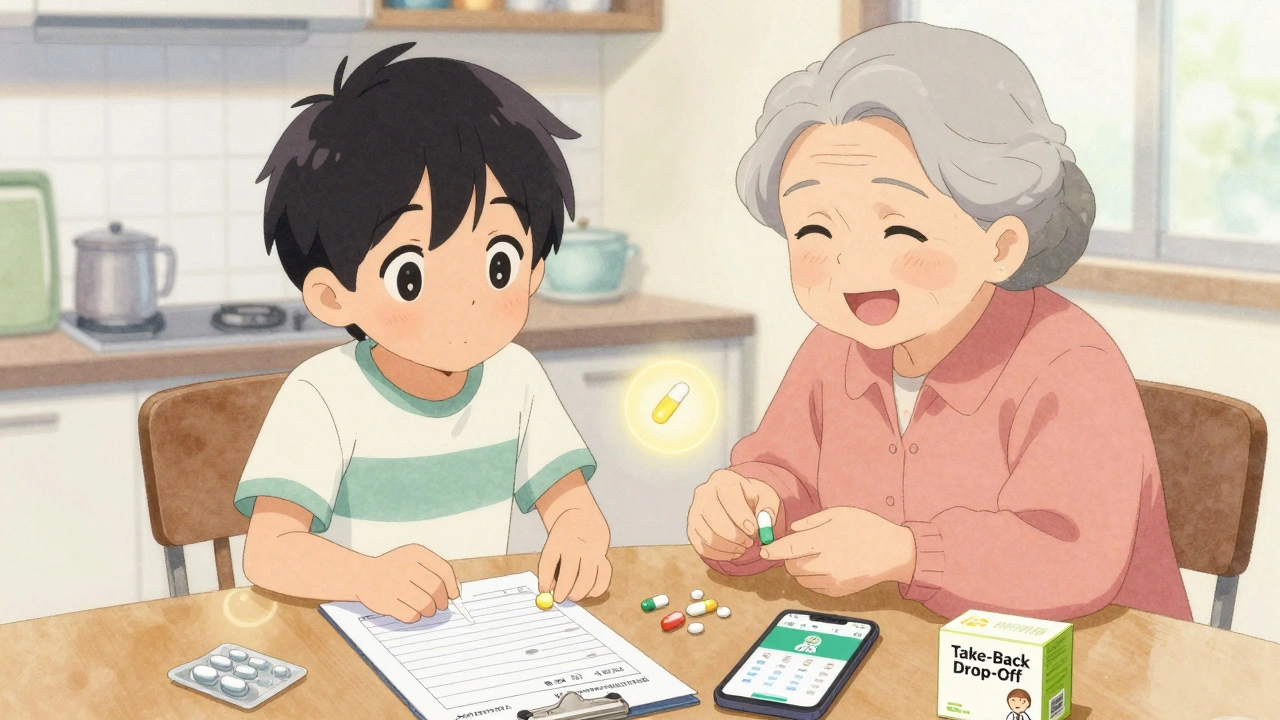
Never flush pills down the toilet or throw them in the trash. That’s bad for the environment and dangerous if someone else finds them. Use a drug take-back program. Many pharmacies, hospitals, and police stations offer free drop-off bins. The DEA’s National Prescription Drug Take Back Day happens twice a year, but you don’t have to wait. Check DEA’s website for local collection sites. If no take-back is available, mix pills with coffee grounds or cat litter, seal them in a bag, and throw them in the trash. Remove labels to protect your privacy.Common Mistakes and How to Avoid Them
People make the same mistakes over and over:- Confusing manufacture date with expiration date. The manufacture date is printed on some bottles. The expiration date is what matters. Look for “EXP” or “Expires.”
- Assuming “it still looks fine” means it’s safe. A pill might look normal but have lost 30% of its potency. That’s enough to fail at treating high blood pressure or seizures.
- Keeping meds in the bathroom. Steam and moisture destroy medications. Store them in a bedroom drawer instead.
- Not checking refill dates. A prescription might say “refillable for 6 months,” but the expiration date on the bottle could be sooner. Always follow the bottle’s date.
Tools That Help
You don’t need fancy gear. But a few tools make it easier:- Medisafe app (free): Sends reminders for doses and expiration dates. Syncs with family members.
- Hero Health dispenser ($499): Automatically dispenses pills and tracks expiration. Good for complex regimens.
- Printable log sheet: Download the National Council on Aging’s free Medication Expiration Log. Keep it taped to your fridge.
- Red marker: Circle expiration dates on pill bottles. Makes them impossible to miss.
What Experts Say
The FDA says: throw out expired meds. The Institute for Safe Medication Practices says: don’t guess. Talk to your pharmacist. And they’re right. Even if a study shows a drug might still work, you can’t know how it was stored. Was it left in a hot car? Did the fridge fail for a week? You don’t control that. Pharmacists see the results every day. One nurse on Reddit shared that three patients used expired insulin and ended up in the ER. Another user admitted they kept antibiotics for years, saying, “They’re too expensive to throw away.” But that’s not saving money-it’s risking your health.Final Thought: It’s Not About Waste. It’s About Safety.
Americans throw away $7.2 billion in unexpired medications each year-not because they’re expired, but because they’re confused. You don’t need to be one of them. A simple review schedule cuts waste and saves lives. You’ll know exactly what you have, when it expires, and whether it’s safe to use. Start today. Gather your meds. Sort them. Set a date. Check next month. That’s it. No apps needed. No complexity. Just one habit that keeps you-and your family-safe.What happens if I take expired medication?
Taking expired medication usually won’t make you sick, but it might not work. For critical drugs like insulin, epinephrine, or antibiotics, reduced potency can lead to serious health risks-uncontrolled blood sugar, failed allergic reactions, or untreated infections. Some medications, like liquid antibiotics, can break down into harmful compounds. Even if a pill looks fine, it may have lost 10-30% of its strength.
Can I extend the expiration date of my medication?
No. Only manufacturers can legally extend expiration dates through stability testing under FDA oversight. The Department of Defense’s Shelf Life Extension Program found some military stockpiles remained effective for years past expiration-but those were stored in climate-controlled vaults. Home storage conditions (heat, humidity, light) make this impossible to replicate. Don’t guess. When in doubt, dispose of it.
How often should I check my medications?
High-risk medications like insulin or epinephrine should be checked monthly. Blood pressure pills, antidepressants, and birth control can be checked every three months. Pain relievers and vitamins are safe to check every six months. If you’re on multiple medications, set a calendar reminder for the first of each month to review everything.
Where’s the best place to store medications at home?
Store medications in a cool, dry place away from light and moisture. A bedroom drawer or kitchen cabinet (not above the stove) works best. Avoid bathrooms, cars, and windowsills. The ideal temperature is 68-77°F (20-25°C). If your medication requires refrigeration, keep it in the main fridge-not the door, where temperatures fluctuate.
What should I do if I find expired medication in someone else’s home?
If you’re caring for an elderly parent, relative, or friend, gently help them create a medication review schedule. Offer to sort their pills and set up reminders. Never throw away medications without their permission. Instead, suggest a pharmacy take-back program. Many pharmacies offer free disposal services. If they’re resistant, explain that expired meds can be dangerous-especially for conditions like heart disease or diabetes.
Next Steps
If you’re just starting out:- Set a calendar reminder for next month.
- Gather all medications in one place.
- Use a pen and paper to list each one with its expiration date.
- Dispose of anything expired or damaged using a take-back program.
- Mark your calendar for the next review.