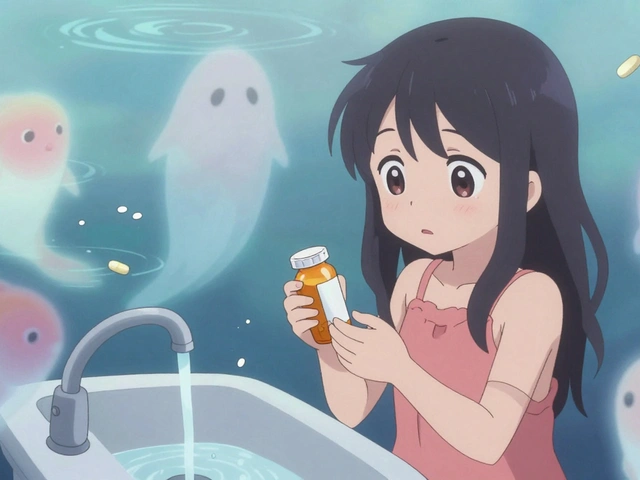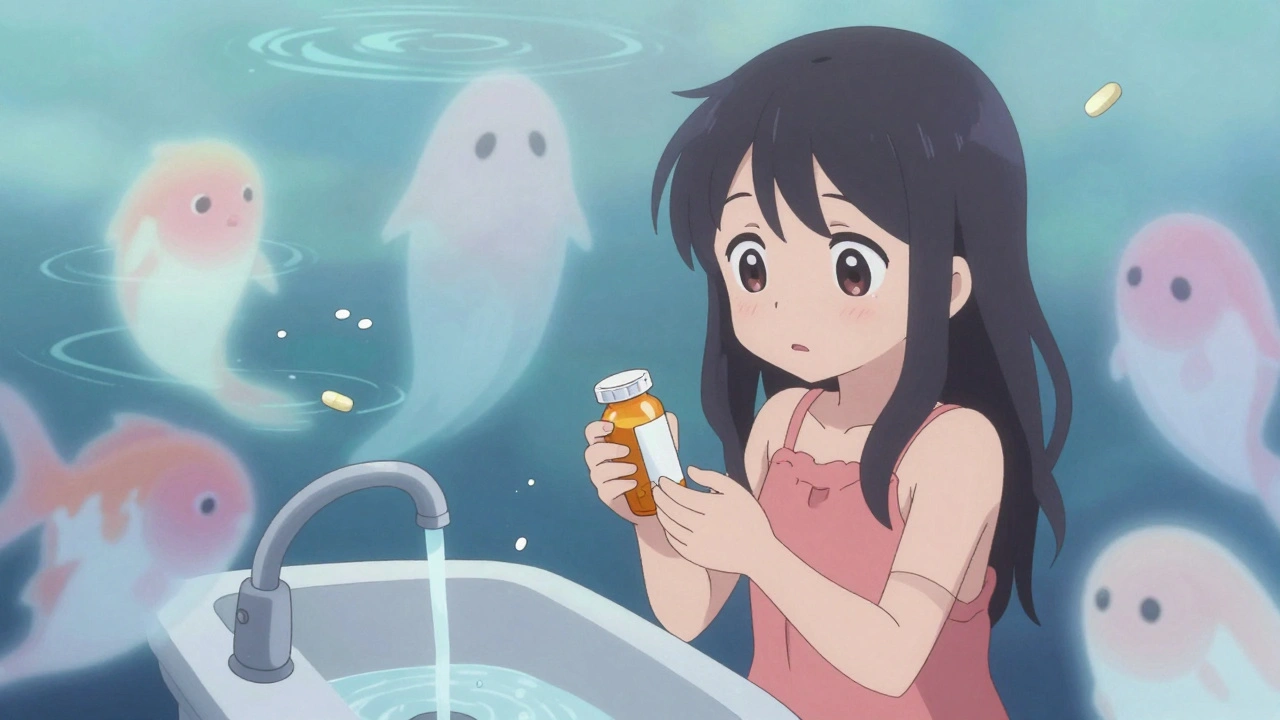
Every year, millions of unused or expired pills, patches, and liquids end up in toilets and sinks across North America. People do it out of convenience, thinking it’s the safest way to get rid of something potentially dangerous. But flushing medications doesn’t just disappear-it enters rivers, lakes, and even drinking water supplies. And the damage is real.
What Happens When You Flush a Pill?
When you flush a medication, it doesn’t vanish. It travels through pipes to wastewater treatment plants. These plants were never designed to remove chemicals like antidepressants, painkillers, or antibiotics. They filter out solids, kill bacteria, and reduce nutrients-but they can’t break down most pharmaceutical compounds. The result? Trace amounts of drugs end up in rivers, lakes, and groundwater. Studies from the U.S. Geological Survey found pharmaceuticals in 80% of waterways tested across 30 states. That includes ibuprofen, acetaminophen, estrogen from birth control pills, and even antibiotics like ciprofloxacin. These aren’t random contaminants-they’re active ingredients meant to change how your body works. And they’re now changing how aquatic life works too. Fish in contaminated waters have shown feminization: male fish developing eggs, reduced fertility, and abnormal behavior. One study found that even tiny concentrations of estrogen-lower than a grain of salt in an Olympic pool-were enough to trigger these changes. Other animals, like amphibians and invertebrates, are also showing signs of hormonal disruption. This isn’t science fiction. It’s happening right now in rivers near cities and towns.Why Take-Back Programs Are the Gold Standard
The best way to dispose of unused medications is through a take-back program. These are collection sites-often at pharmacies, hospitals, or police stations-where you drop off old pills, patches, or liquids for safe destruction. Unlike flushing or throwing them in the trash, take-back programs ensure medications are incinerated at high temperatures, preventing them from ever entering water or soil. In Canada, many provinces have established permanent take-back programs. In Ontario, pharmacies like Shoppers Drug Mart and Rexall participate in the Medication Return Program, which accepts all types of prescription and over-the-counter drugs. You don’t need a receipt. You don’t need to remove pills from blister packs. Just bring them in. The U.S. has similar programs under the Secure and Responsible Drug Disposal Act of 2010. But access is uneven. As of 2023, only about 2,140 permanent collection sites existed nationwide, mostly in urban areas. Rural communities often have to drive 30-50 miles to find one. That’s a barrier. But the environmental payoff is clear: every pill returned means one less chemical in the water.The FDA’s ‘Flush List’-What’s Really Safe?
You might have heard the FDA says some drugs should be flushed. That’s true-but only for a very small list. As of October 2022, the FDA’s flush list includes only 15 medications, mostly powerful opioids like fentanyl patches, oxycodone, and buprenorphine. These drugs are included because of their high risk of accidental overdose if found by children or pets. The environmental risk is considered secondary to the immediate public safety risk. For everything else-antibiotics, blood pressure pills, thyroid meds, antidepressants, even aspirin-do not flush. Flushing these contributes nothing to safety and everything to pollution. The FDA’s guidance has changed over time as more data came in. What was once recommended (flushing most meds) is now discouraged, except in rare cases. If you’re unsure whether your medication is on the flush list, check the label, ask your pharmacist, or visit the FDA’s website. Don’t guess. Don’t assume.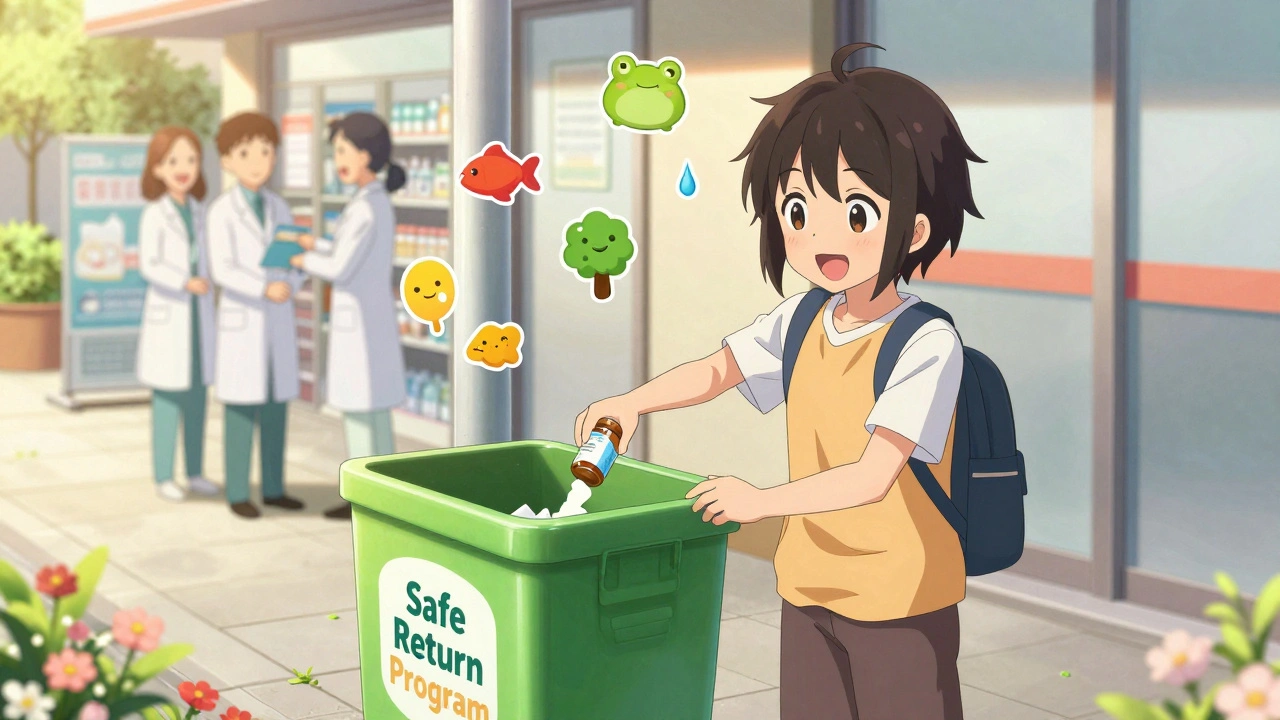
What About Throwing Medications in the Trash?
If a take-back program isn’t available, the EPA recommends a two-step method for home disposal:- Remove pills from original containers and mix them with something unappealing-used coffee grounds, cat litter, or dirt.
- Place the mixture in a sealed plastic bag or container and throw it in the trash.
Why People Keep Flushing-And How to Change That
Why do so many people still flush meds? Mostly because they don’t know better. A 2021 FDA survey found only 30% of Americans knew about take-back programs. Many think flushing is the cleanest option. Others worry about drug diversion and believe throwing pills in the trash is risky. Real stories show how awareness changes behavior. One Reddit user from Ottawa, u/EcoWarrior2023, said: “I had no idea flushing meds was bad until I read about fish mutations last year. Now I drive 20 minutes to the nearest drop-off. It’s worth it.” Education matters. Pharmacists are on the front lines. In British Columbia and Quebec, pharmacies now include disposal instructions on prescription labels. California passed SB 212 in 2024, requiring all pharmacies to provide disposal info with every new prescription. These small steps add up.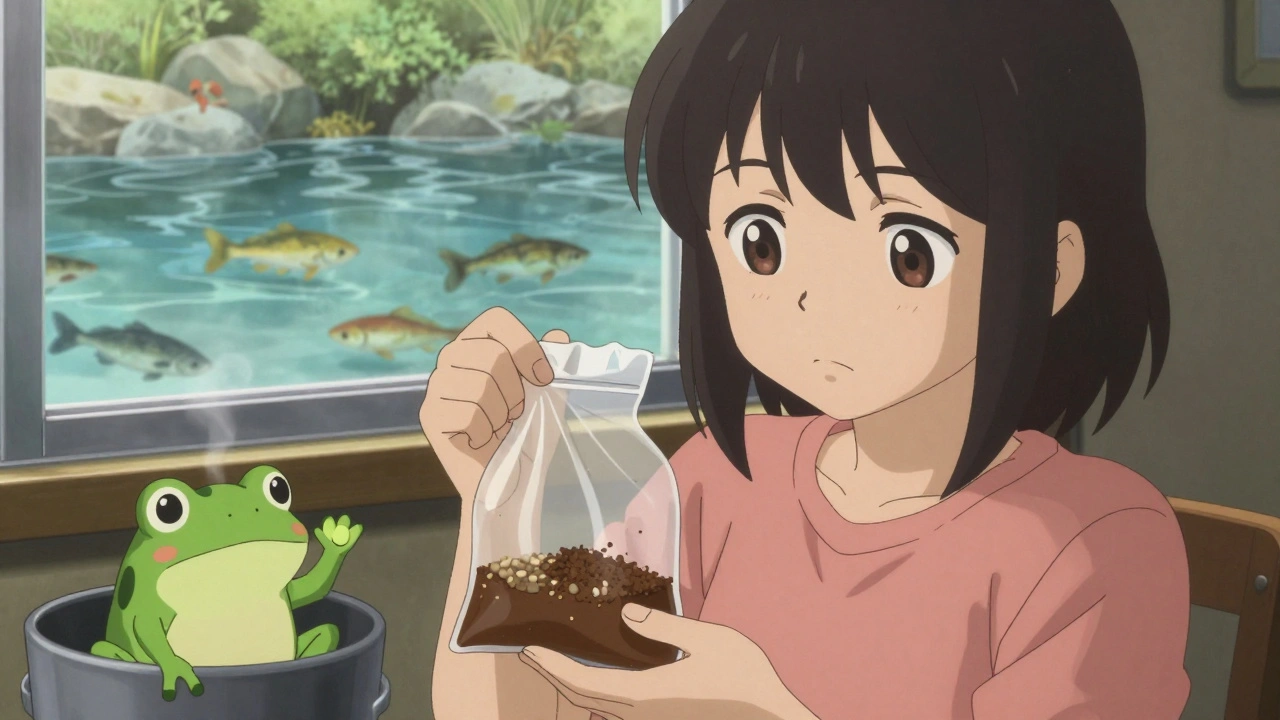
The Bigger Picture: Who’s Responsible?
It’s easy to blame consumers. But the problem didn’t start with you. Pharmaceutical companies produce billions of pills every year. Many are prescribed unnecessarily. Many expire unused. The system encourages overproduction and underuse. In the European Union, Extended Producer Responsibility (EPR) laws require drug makers to fund and manage take-back programs. That’s starting to shift the burden away from individuals. Canada and some U.S. states are exploring similar models. Meanwhile, wastewater treatment plants are being upgraded. Advanced systems using ozone, activated carbon, or membrane filtration can remove 85-95% of pharmaceuticals. But retrofitting a single plant costs between $500,000 and $2 million. That’s not happening fast enough. The truth? No single solution fixes this. We need better prescribing habits. Stronger take-back networks. Cleaner treatment tech. And informed consumers.What You Can Do Today
You don’t need to wait for policy changes to make a difference. Here’s what you can do right now:- Check your medicine cabinet. Remove expired, unused, or unwanted medications.
- Find your nearest take-back location. In Ottawa, visit Ottawa Public Health or a participating pharmacy.
- If no drop-off is nearby, mix meds with coffee grounds or cat litter, seal them, and toss in the trash.
- Never flush anything unless it’s on the FDA’s official flush list.
- Ask your pharmacist about disposal when you pick up a new prescription.
- Don’t stockpile meds. Only fill what you need.
Final Thought: It’s Not About Perfection
You won’t stop all pharmaceutical pollution. Human bodies naturally excrete drugs. That’s unavoidable. But improper disposal? That’s preventable. You can’t control how a factory makes pills. But you can control what you do with the ones you don’t need. The next time you clean out your medicine cabinet, don’t reach for the toilet. Reach for the drop-off box. Or the coffee grounds. Either way, you’re choosing cleaner water. And that matters-for fish, for frogs, for your kids, and for the next generation.Is it ever okay to flush medications?
Only if the medication is on the FDA’s official flush list, which includes powerful opioids like fentanyl and oxycodone due to high overdose risk. For all other medications-including antibiotics, pain relievers, and antidepressants-flushing is not recommended and contributes to water pollution.
Where can I drop off unused medications in Ottawa?
In Ottawa, you can return unused medications at participating pharmacies such as Shoppers Drug Mart, Rexall, and London Drugs. You can also visit Ottawa Public Health locations or any police station that participates in the Medication Return Program. No receipt or prescription is needed. Visit ottawa.ca for a current list of drop-off locations.
What if there’s no take-back site near me?
If no drop-off location is accessible, mix medications with an unappealing substance like used coffee grounds, cat litter, or dirt. Place the mixture in a sealed plastic bag or container, then throw it in your household trash. Never pour liquids down the drain or flush pills unless they’re on the FDA flush list.
Do take-back programs really make a difference?
Yes. Take-back programs prevent pharmaceuticals from entering waterways and landfills entirely. Studies show that when these programs are accessible and well-publicized, participation increases significantly. In regions with strong programs, up to 70% of unused medications are returned instead of flushed or trashed.
Can I recycle medication packaging?
Yes. Plastic bottles, cardboard boxes, and paper inserts can usually be recycled, but remove or black out personal information first. Caps and blister packs are often not recyclable in curbside programs-check local guidelines. Some pharmacies accept empty blister packs for special recycling. Always rinse containers before recycling.
Are there any new technologies to remove drugs from water?
Yes. Advanced wastewater treatment methods like ozone oxidation, activated carbon filtration, and membrane bioreactors can remove 85-95% of pharmaceutical compounds. But these systems are expensive-costing $500,000 to $2 million per plant to install. While some cities in Europe and California are adopting them, most municipal plants still rely on traditional methods that don’t remove drugs.
Why do some people still think flushing is safe?
Many people were taught to flush medications years ago, before the environmental impact was widely understood. Misinformation persists, especially among older adults. Some also believe flushing is the only way to prevent misuse by children or pets. But proper disposal methods-like mixing with coffee grounds and sealing in trash-are just as effective at preventing access, without harming the environment.