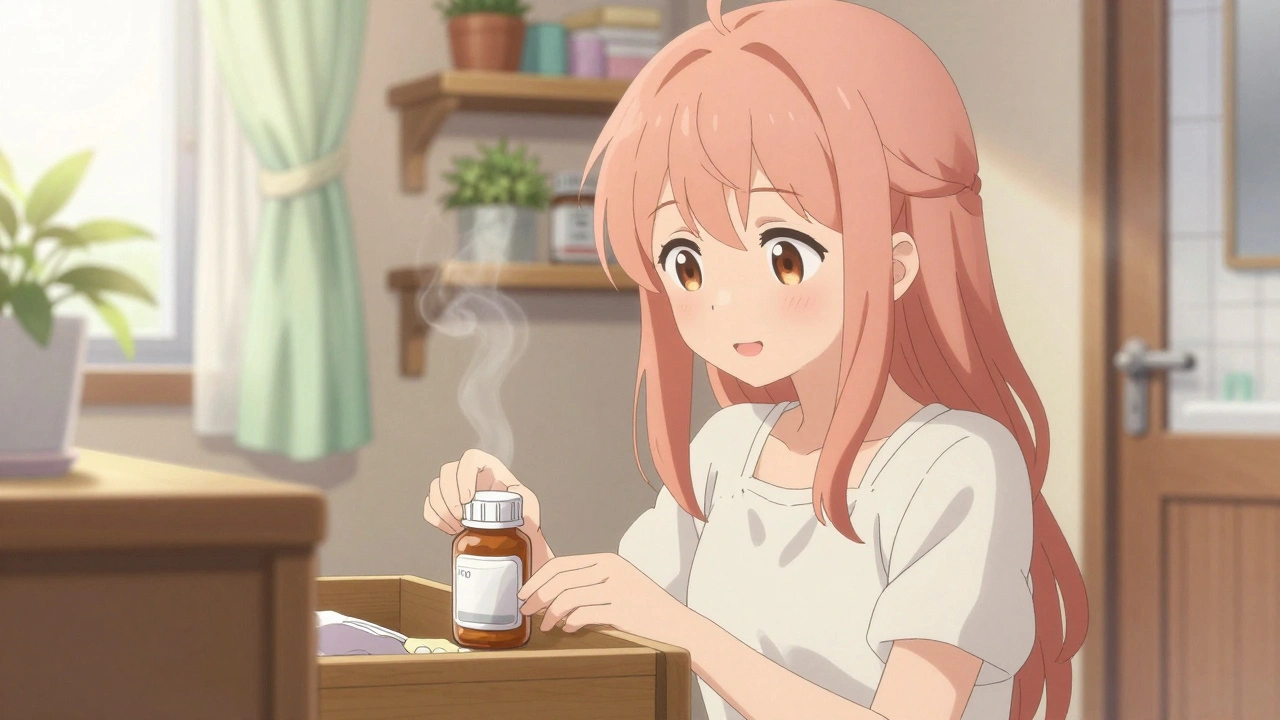
Moisture doesn’t just ruin your phone or your favorite pair of shoes-it can also destroy your pills and capsules. If your medication sits in a humid bathroom or gets tossed into a purse on a hot day, it might look fine, but inside, it could be breaking down. Active ingredients like aspirin, vitamin C, and antibiotics start to degrade when exposed to water vapor, turning into ineffective-or even harmful-substances. You might not notice until the medicine stops working, or worse, causes stomach upset or allergic reactions. The good news? Preventing this isn’t complicated. It just takes knowing what to do-and what not to do.
Why Moisture Destroys Pills and Capsules
Water doesn’t just make pills soggy. It triggers chemical reactions that break down the active ingredients. This process is called hydrolysis. For example, aspirin turns into salicylic acid and acetic acid (vinegar) when it gets wet. That’s why old aspirin sometimes smells like vinegar. Other medications, like amoxicillin/clavulanic acid, lose potency so fast in humid conditions that they become useless within days outside their original packaging. Vitamin C, a common supplement, oxidizes quickly when moisture is present, turning brown and losing its effectiveness.
Manufacturers test their products under strict conditions-like 25°C and 60% humidity-to make sure they last until the expiration date. But once you take them out of the bottle, you’re exposing them to moisture every time you open it. A typical 500-pill bottle gets opened about 250 times over its lifespan. Each time, moist air rushes in. That’s why even if your bottle says it’s good for two years, your pills might be damaged long before then if stored poorly.
Don’t Store Pills in the Bathroom
The bathroom is the worst place to keep your medications. Showers, hot water, and steam raise humidity levels to 70% or higher. Even if you keep the bottle closed, the air inside it still holds moisture. Over time, that moisture seeps into the pills. Many people store meds in the bathroom because it’s convenient-but convenience kills effectiveness. Studies show that humidity above 50% significantly increases the risk of degradation in moisture-sensitive drugs.
Instead, keep your pills in a cool, dry place. A bedroom drawer, a kitchen cabinet away from the stove, or a shelf in a closet works best. Avoid places near windows, radiators, or appliances that generate heat. Temperature matters too-heat speeds up chemical breakdown. The ideal storage temperature is between 68°F and 77°F (20°C-25°C).
Use the Original Packaging
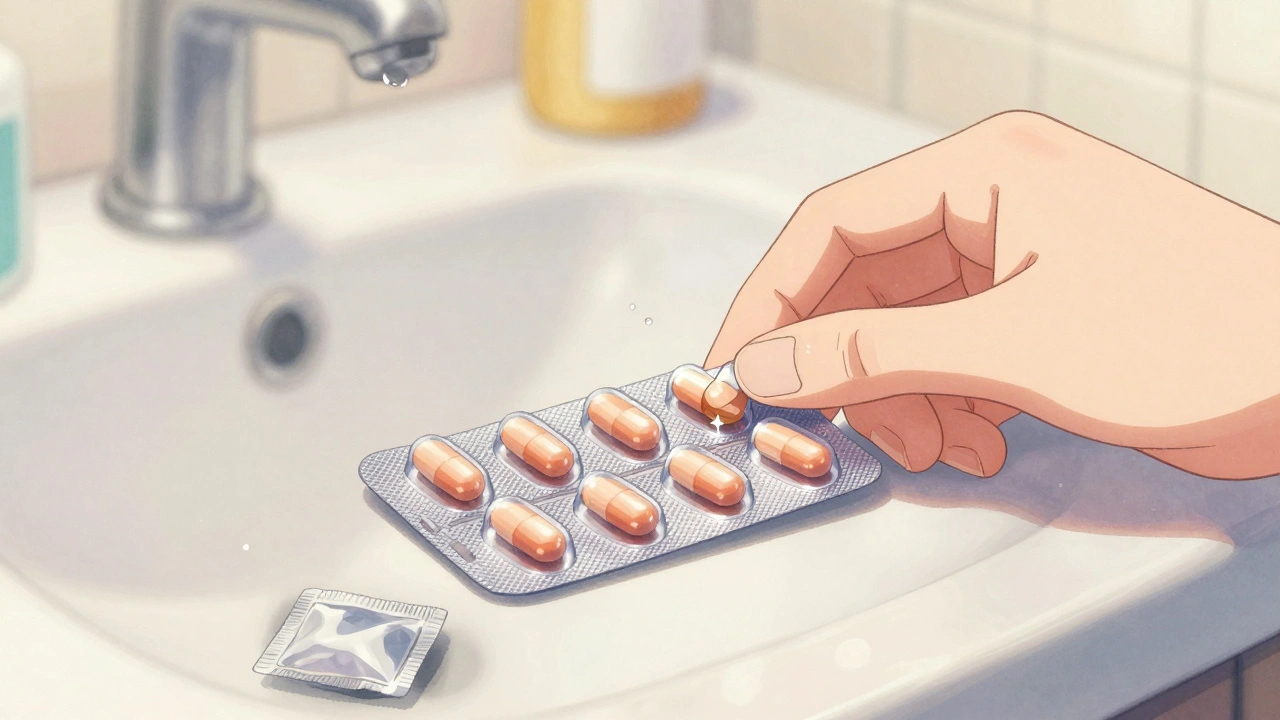
Never transfer pills to a different container unless you have to. The original bottle or blister pack was designed with moisture protection in mind. Many come with special coatings, desiccants, or sealed foil. Blister packs, for example, seal each pill individually, keeping air and moisture out until you pop it out. HDPE plastic bottles are common, but alone, they don’t block water vapor. That’s why most quality bottles include a silica gel packet inside.
If you need to use a pill organizer, only fill it for a few days at a time. Don’t leave pills sitting in a plastic box for weeks. These organizers offer zero moisture protection. Once you take a pill out of its original packaging, it’s vulnerable. Use the organizer as a daily tool, not a long-term storage solution.
Keep Desiccants Inside the Bottle
That little packet labeled "Do Not Eat"? Keep it in the bottle. It’s not a trick-it’s your pill’s best friend. Silica gel is the most common desiccant used in pharmaceutical packaging. It absorbs moisture like a sponge, pulling water vapor out of the air inside the bottle. Wisesorbent’s testing shows that a properly sized silica gel pack can keep moisture levels in a pill bottle from rising more than 0.3% over two years-even in humid climates.
Here’s the catch: if you throw away the desiccant, you’re removing the last line of defense. Some manufacturers still skip desiccants to cut costs, especially in cheaper generics. If your bottle doesn’t have one, consider buying a small, food-safe silica gel pack and placing it inside. Just make sure it’s not touching the pills directly. A paper towel or small cloth pouch can separate them.
Look for Coated Pills
Not all pills are created equal. Some are coated with special films that block moisture. Polyvinyl alcohol (PVA)-based coatings, like Opadry® Amb II, offer up to 40% better protection than older hydroxypropyl methylcellulose (HPMC) coatings. These coatings act like a waterproof shell around the pill, slowing down water absorption even if the bottle is opened repeatedly.
If you’re prescribed a new medication, ask your pharmacist: "Is this coated for moisture resistance?" If you’re buying over-the-counter supplements, check the label. Brands that use advanced coatings often advertise it-"moisture-resistant formula," "enteric-coated," or "film-coated" are good signs. For example, antibiotics like amoxicillin/clavulanic acid that use PVA coatings show far less degradation than uncoated versions, even after being exposed to air for days.
What to Do If Your Pills Look Off
Signs of moisture damage include:
- Pills that are discolored (yellow, brown, or spotted)
- Capsules that are sticky, swollen, or leaking
- Pills that crumble easily or smell odd (like vinegar)
- Tablets that don’t dissolve properly in water
If you see any of these, don’t take them. Even if they still look mostly intact, the active ingredient may have degraded. Taking a weakened dose can mean your illness doesn’t get treated. Taking a chemically altered pill could cause side effects. When in doubt, return it to your pharmacy. They’ll dispose of it safely and replace it if needed.
How to Dispose of Damaged Medications
Never flush pills down the toilet or throw them in the trash without mixing them first. The FDA recommends mixing expired or damaged pills with something unappealing-like coffee grounds, cat litter, or dirt-then sealing them in a plastic bag before tossing them. This prevents pets, kids, or wildlife from getting into them.
Many pharmacies and local health departments offer take-back programs. These are the safest way to dispose of meds. If you’re unsure where to go, check the DEA’s website for authorized collection sites. Don’t wait until you have a full drawer of old meds-clean it out every six months.
Real-World Examples
Pharmacists on Reddit’s r/Pharmacy community reported a big drop in customer complaints after switching to PVA-coated antibiotics. One user said, "Since we switched to Opadry-coated meds, we went from five complaints a month to almost none." On Trustpilot, Wisesorbent’s desiccant packs got 4.7 out of 5 stars from users in Brazil, India, and Southeast Asia-all places with high humidity.
On the flip side, FDA warning letters from 2021-2022 cited two companies for recalls because their pill bottles didn’t include enough desiccant. The result? Tablets degraded in transit and on store shelves. Patients got ineffective medicine. That’s not just bad for health-it’s a legal and financial disaster for the company.
What You Can Do Today
You don’t need to be a scientist to protect your meds. Here’s your simple checklist:
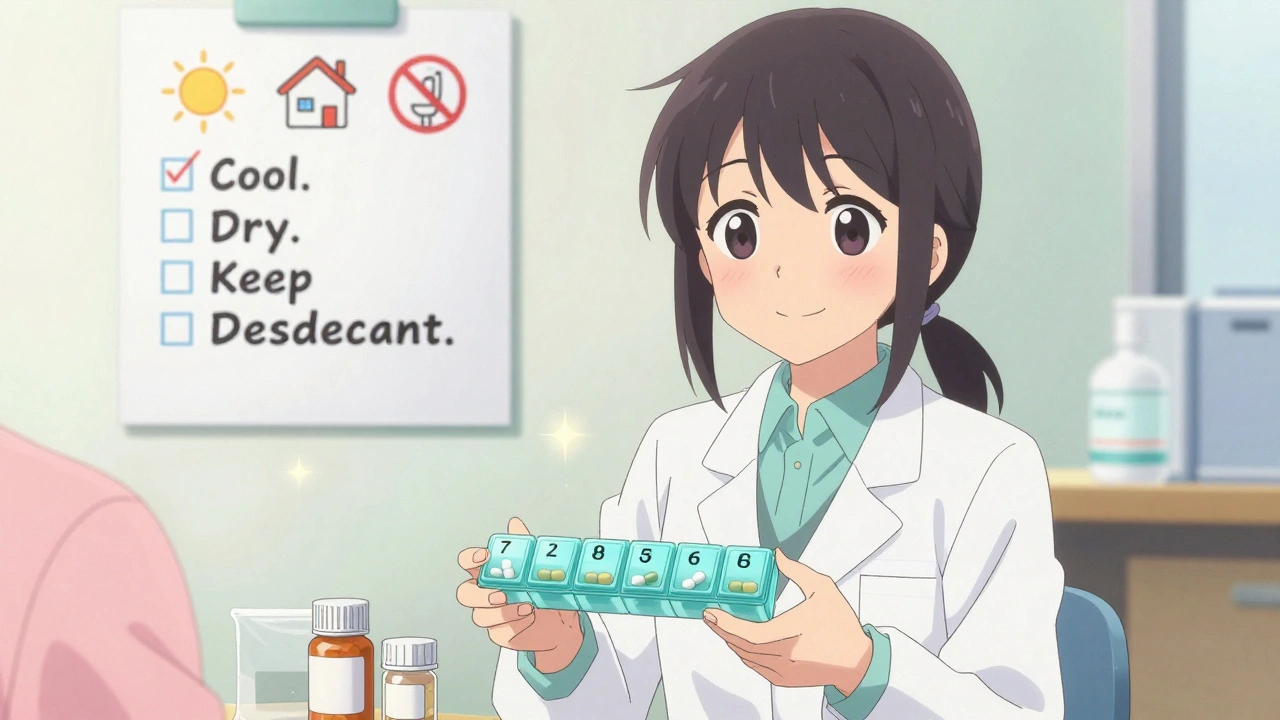
- Keep pills in a cool, dry place-never the bathroom.
- Leave the desiccant packet inside the bottle.
- Use the original packaging whenever possible.
- Only fill pill organizers for 3-7 days at a time.
- Check pills every few months for discoloration, stickiness, or smell.
- Dispose of damaged or expired pills safely.
These steps cost nothing and take minutes. But they can mean the difference between a medication working as intended-or failing when you need it most.
Can I store pills in the fridge to avoid moisture?
Only if the label says to. Most pills don’t need refrigeration, and cold temperatures can cause condensation when you take them out. Moisture forms on the bottle’s surface and can seep inside. Unless your medication is specifically labeled "refrigerate," keep it at room temperature in a dry place.
Are all desiccants safe to use with medications?
Only silica gel packets made for pharmaceutical use are safe. Avoid those labeled for electronics or food-they may contain chemicals not approved for drug contact. Look for packs labeled "USP" or "pharmaceutical grade." If you’re adding your own, buy from reputable suppliers like Wisesorbent or Colorcon. Never use rice, clay, or homemade alternatives-they don’t absorb moisture well and can introduce contaminants.
Do capsule shells protect against moisture?
Not really. Gelatin capsules are porous and absorb moisture easily. That’s why many manufacturers coat them with additional layers or use HPMC (vegetable-based) capsules, which are more resistant. But even those aren’t foolproof. Once the capsule is exposed to humid air, moisture can still get in. That’s why packaging and desiccants are still essential-even for capsules.
How do I know if my pill bottle has enough desiccant?
There’s no easy way to tell without lab testing, but there’s a rule of thumb: if the bottle holds 50-100 pills, the desiccant should weigh at least 1-2 grams. Larger bottles (200+ pills) need 3-5 grams. If the packet feels thin or small, or if the bottle is more than half empty, the desiccant may be overwhelmed. In humid areas, it’s safer to add an extra packet.
Can moisture damage make pills toxic?
Yes, in some cases. Aspirin breaks down into salicylic acid, which can irritate the stomach. Other drugs, like tetracycline antibiotics, can degrade into toxic compounds that harm the kidneys. Even if a pill doesn’t look damaged, chemical changes can happen invisibly. If you’re unsure, don’t risk it. Consult your pharmacist or throw it out.
Final Thoughts
Moisture damage is silent, slow, and often unnoticed until it’s too late. But it’s also preventable. You don’t need fancy gadgets or expensive packaging. Just be mindful. Store your meds properly. Keep the desiccant in. Don’t transfer them unless you have to. Check them every few months. These small habits protect your health more than you realize. Your pills are meant to help you-don’t let moisture ruin that.