Most people think of cold sores when they hear "herpes." But what if I told you that the same virus behind your lip blister could also cause genital outbreaks - and that many who carry it don’t even know? Herpes simplex virus (HSV) isn’t rare. Around 67% of people under 50 have HSV-1, and nearly 1 in 8 people aged 15-49 carry HSV-2. Yet confusion, stigma, and misinformation still surround it. Understanding the differences between HSV-1 and HSV-2, recognizing the real symptoms, and knowing what treatments actually work can change how you manage or even prevent outbreaks.
HSV-1 vs. HSV-2: More Similar Than You Think
Herpes simplex virus type 1 (HSV-1) and type 2 (HSV-2) are two strains of the same family. They look almost identical under a microscope - both have a double-stranded DNA core, an icosahedral capsid, and a glycoprotein-studded envelope. They even share about half their genetic code. But their behavior? Totally different.
HSV-1 used to be called the "oral herpes" virus. It typically causes cold sores around the mouth, lips, or face. But in recent years, it’s become the leading cause of new genital herpes cases in high-income countries. In fact, about 30-50% of new genital infections are now HSV-1, according to CDC surveillance data from 2021. This shift happened because fewer people were exposed to HSV-1 in childhood (due to better hygiene), leaving them vulnerable to genital infection later through oral sex.
HSV-2, on the other hand, is still the main cause of genital herpes - responsible for 70-80% of cases. It prefers the sacral nerves near the base of the spine and tends to reactivate more often. While HSV-1 genital outbreaks recur about 0.2 to 0.5 times per year, HSV-2 flares up 4 to 5 times per year on average. It also sheds virus asymptomatically on 10-20% of days, meaning you can pass it on even when no sores are visible.
There’s one big exception: eye infections. Herpes keratitis - a serious corneal infection that can lead to blindness - is caused almost entirely by HSV-1. About 98% of cases come from this strain. It’s rare, but it’s serious. That’s why doctors treat even a single eye irritation with suspicion if you’ve ever had cold sores.
What Do Herpes Outbreaks Actually Look Like?
Not every tingling sensation means herpes. But if you’ve had an outbreak before, you’ll recognize the signs. The first stage is the prodrome - a warning. You might feel a burning, itching, or tingling sensation in the same spot where sores usually appear. For oral HSV-1, it’s often near the lip line. For genital HSV-2, it’s on the vulva, penis, or anus. This phase lasts less than six hours in recurrent cases, but can stretch longer in first-time infections.
Then come the lesions. Small, fluid-filled blisters, each about 0.5 to 1.5 cm wide, cluster together on red, inflamed skin. These aren’t pimples. They’re clear or cloudy vesicles that quickly break open, leaving painful, shallow ulcers. In primary infections, these can number 10 or more. People with their first genital outbreak often report 93% pain, 78% burning during urination, and 65% swollen lymph nodes in the groin. Some even get fevers above 38°C, muscle aches, or fatigue.
Healing takes time. Without treatment, the ulcers crust over and heal in 7 to 21 days. Scarring is rare. But the pain can be intense - especially during urination or bowel movements. One Reddit user described their first outbreak: "Couldn’t urinate without lidocaine. Fever hit 39.2°C. Twelve sores. Took 18 days to heal."
Primary oral HSV-1 in children looks different. It’s called herpetic gingivostomatitis. Kids get high fevers, swollen gums, mouth ulcers, bad breath, and refuse to eat or drink. About 5-10% of these cases require hospitalization for dehydration.
How Antiviral Therapy Works - And What Actually Helps
There’s no cure for herpes. But antiviral drugs don’t just reduce symptoms - they change the course of the infection. Three main drugs are used: acyclovir, valacyclovir, and famciclovir. They all work the same way: they block the virus from copying its DNA. Without replication, the outbreak can’t spread.
For first-time genital outbreaks, the CDC recommends acyclovir 400mg three times daily for 5-10 days. This cuts healing time from 19 days to about 10. Pain drops from 12 days to 8. Starting treatment within 24 hours of symptoms reduces healing time by 50% compared to waiting 72 hours.
For recurrent outbreaks, episodic therapy works best. Take the same dose at the first sign of tingling - even before blisters appear. Many people report outbreaks shrinking from 7-10 days to just 2-3. One Drugs.com review of over 4,300 users found 65% saw outbreaks cut in half with daily use.
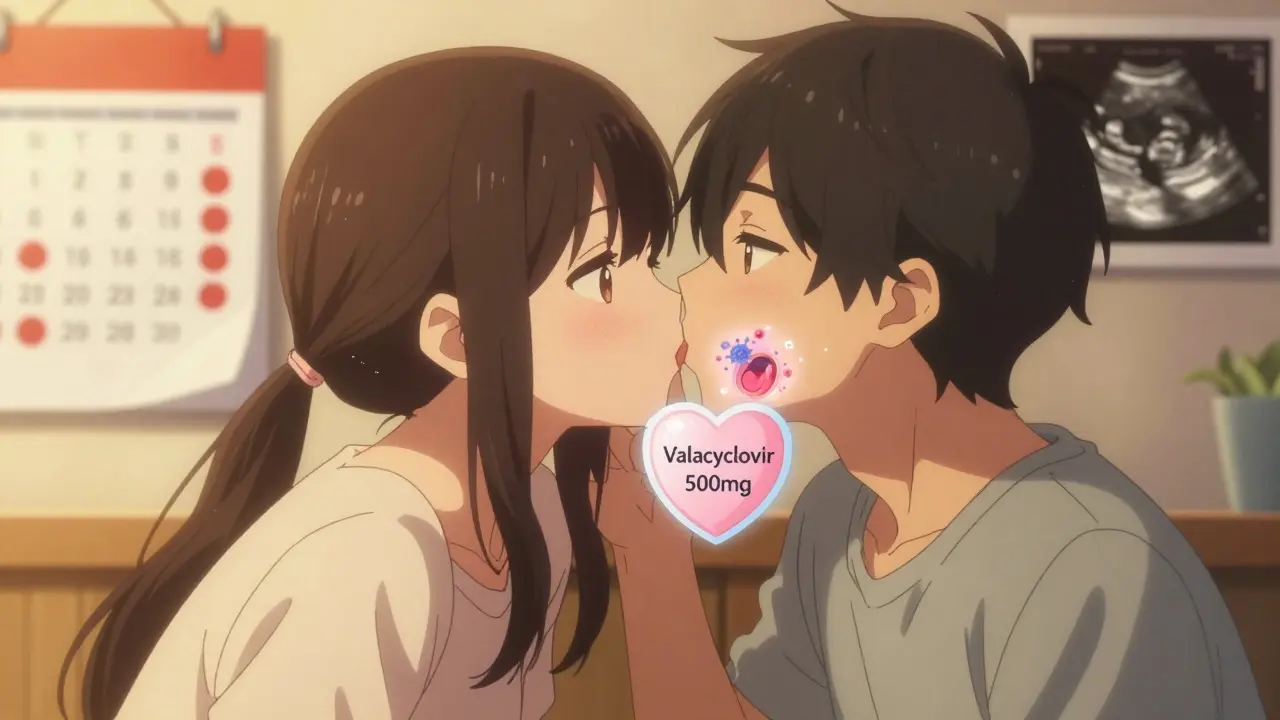
For people with frequent outbreaks (six or more per year), daily suppressive therapy is an option. Taking valacyclovir 500mg once daily reduces outbreaks by 70-80%. More importantly, it cuts transmission to partners by 48-70%. The Partners Transmission Study showed this clearly: partners of those on daily valacyclovir were far less likely to get infected.
But not everyone needs it. HSV-1 genital infections recur so rarely that many doctors don’t recommend daily therapy unless outbreaks are severe. As one clinician put it: "Why treat something that happens once a year?"
Special Cases: Eyes, Babies, and Immune Problems
Some herpes infections demand urgent care.
Herpes keratitis - eye infection - can destroy vision. Treatment? Topical trifluridine 1% drops, applied hourly while awake. This cuts healing time from 21 days to 14. Delayed treatment can mean corneal scarring or transplant.
Neonatal herpes is rare - about 1 in 3,200 births - but deadly. It usually happens when a mother has an active genital outbreak during delivery. HSV-2 causes 70% of these cases, but HSV-1 is more likely to kill. Mortality is 30% for HSV-1 versus 20% for HSV-2. That’s why doctors now recommend C-sections if a woman has active lesions at the time of labor. Suppressive therapy starting at 36 weeks cuts transmission risk from 30-50% down to 1-3%.
People with weakened immune systems - like those with HIV, cancer, or organ transplants - are at high risk for severe, prolonged outbreaks. They may need intravenous acyclovir 5-10mg/kg every 8 hours. In some cases, the virus becomes resistant. When that happens, doctors switch to foscarnet or the newer drug ritelivir, approved by the FDA in 2023 for acyclovir-resistant cases.
Diagnosis: What Tests Actually Tell You
Don’t trust a visual diagnosis. Cold sores can look like pimples, yeast infections, or allergic reactions. The only reliable way to confirm herpes is testing.
PCR swab of an active lesion is the gold standard. It detects viral DNA and is 95-98% accurate. Results come back in 24-72 hours. Viral culture is older and less sensitive - only 70-80% accurate - so it’s rarely used anymore.
Serologic blood tests check for antibodies. Type-specific tests like HerpeSelect or EUROIMMUN’s recomLine HSV IgG can tell HSV-1 from HSV-2 with 97-98% accuracy. But they’re not useful right after infection. It takes 12-16 weeks for antibodies to show up. So if you just had a new outbreak, get a swab first. Then consider a blood test later to confirm which type you have.
And here’s a hard truth: only 19% of people infected with HSV in the U.S. know they have it. Many assume they’re fine because they’ve never had symptoms - or because their outbreaks were so mild they thought it was a bug.
Living With Herpes: Real Challenges
Medication helps. But the biggest burden isn’t physical - it’s emotional.
A 2023 survey by the American Sexual Health Association found that 74% of people with herpes felt stigma-related anxiety. 45% said it damaged relationships. 32% waited over six months to tell a partner. Reddit threads are full of people afraid to date, terrified of disclosure, or ashamed after a first outbreak.
Side effects from antivirals are usually mild: headache, nausea, or fatigue. But 8% of people with kidney problems report renal issues with high doses. If you have kidney disease, your doctor needs to adjust your dose.
Cost is another barrier. Valacyclovir 500mg costs $35-$60/month with insurance. Without it, $300-$400/month. Many skip doses because they can’t afford it. Generic acyclovir is cheaper - but you have to take it three times a day. That’s harder to stick with.
Adherence is the real problem. Only 65% of people on daily suppressive therapy stick with it for a full year. Life gets busy. Side effects creep in. The fear fades. But if you’re trying to protect a partner, consistency matters.
The Future: New Drugs, Vaccines, and Hope
The herpes drug market is growing. New antivirals like pritelivir and amenamevir are showing up in trials. They work differently - targeting viral enzymes earlier in the replication cycle. In one study, pritelivir reduced viral shedding by 90% in 24 hours, compared to 60% for acyclovir.
Vaccines? Still in development. Candidates like GEN-003 and Simplirix reduced shedding by 50% in phase II trials. But none have cleared phase III yet. Don’t hold your breath for a vaccine anytime soon.
What’s changing fast is awareness. WHO now recommends HSV-2 screening for pregnant women with outbreaks. CDC is pushing for better testing. And more people are talking openly - sharing stories, supporting each other, refusing shame.
You don’t have to live in fear. Herpes is manageable. It’s not a life sentence. It’s a virus - one that’s been around for centuries, one that most people carry without knowing, and one that modern medicine can control.
Can you get herpes from sharing a towel or toilet seat?
No. Herpes simplex virus doesn’t survive long outside the body. It dies quickly on dry surfaces like towels, toilet seats, or doorknobs. Transmission happens through direct skin-to-skin contact - kissing, oral sex, genital contact - when the virus is active. You can’t catch it from inanimate objects.
If I have cold sores, can I give my partner genital herpes?
Yes. HSV-1 can be passed from mouth to genitals during oral sex. In fact, it’s now the leading cause of new genital herpes cases in many countries. If you have frequent cold sores, avoid oral sex during outbreaks - and consider using antiviral suppression if your partner is uninfected. Using condoms or dental dams reduces but doesn’t eliminate risk.
Are antivirals safe for long-term use?
Yes. Acyclovir, valacyclovir, and famciclovir have been used safely for decades. Long-term studies show no major organ damage or increased cancer risk. The most common side effects are mild: headache or nausea. People with kidney disease need lower doses, but for healthy individuals, daily suppressive therapy is considered safe for years.
Can herpes cause infertility?
No. Herpes simplex virus does not affect fertility in men or women. It doesn’t damage sperm, eggs, or reproductive organs. The only reproductive risk is during childbirth, where active genital lesions can infect the baby. That’s why doctors monitor for outbreaks late in pregnancy and may recommend a C-section if needed.
Is herpes the same as HPV or HIV?
No. Herpes simplex virus (HSV) is completely different from human papillomavirus (HPV) and human immunodeficiency virus (HIV). HSV causes blisters and sores. HPV causes warts and is linked to cervical cancer. HIV attacks the immune system and leads to AIDS. They’re all sexually transmitted, but they’re different viruses with different treatments and outcomes. Testing for one doesn’t mean you’re tested for all.
Should I tell every partner I’ve ever had?
You’re not required to tell past partners - especially if you didn’t know you had it at the time. But ethically, you should disclose to current and future partners before any intimate contact. It’s not about guilt - it’s about consent. Most people understand. Many have it too. There are support groups, resources like ASHA, and honest conversations that make this easier than you think.
Can I still have kids if I have herpes?
Absolutely. Women with herpes can have healthy pregnancies and deliveries. The key is managing outbreaks near delivery. If you’ve had herpes before and are not having an outbreak at the time of birth, vaginal delivery is safe. If you have active lesions or prodromal symptoms, a C-section reduces neonatal risk to under 3%. Many women take suppressive therapy in the last month of pregnancy to prevent outbreaks.
Do antivirals prevent transmission 100%?
No. Antivirals reduce transmission by 48-70%, but they don’t eliminate it. The virus can still shed asymptomatically. That’s why combining antivirals with condoms, avoiding sex during outbreaks, and open communication gives the best protection. Think of it like seatbelts - they don’t prevent all crashes, but they save lives.