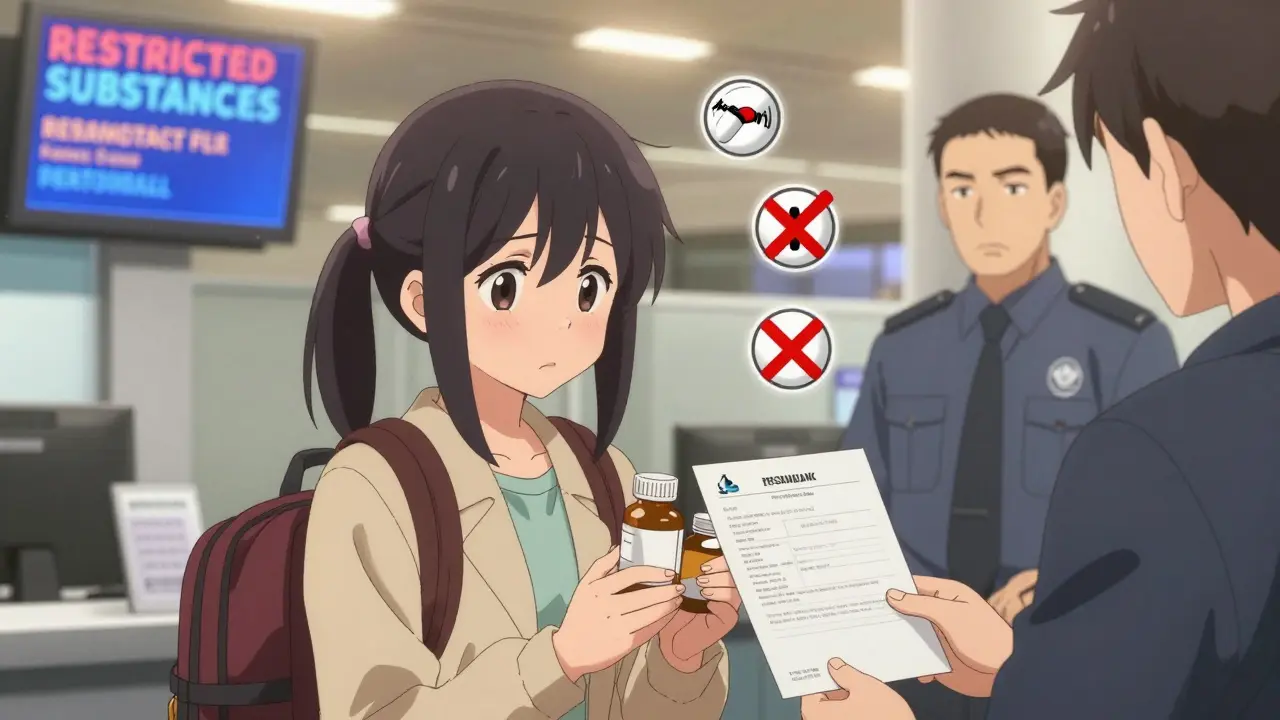
Running out of your medication halfway across the world isn’t just inconvenient-it can be dangerous. Whether you’re on a two-week vacation or moving abroad for work, finding medications abroad isn’t as simple as walking into a pharmacy. What’s legal in the U.S. might be banned in Japan. What’s over-the-counter in Mexico could land you in jail in Singapore. And if your prescription doesn’t match your passport name? Good luck getting it filled.
Why Your Medication Might Not Be Available Overseas
Not all drugs are created equal around the world. A pill you take daily for anxiety, ADHD, or chronic pain might be classified as a controlled substance-or outright illegal-in the country you’re visiting. The reason? International drug treaties from the 1960s and 70s gave countries broad power to regulate what’s allowed, and they’ve used it differently ever since. For example:- Hydrocodone (a common painkiller in the U.S.) is completely banned in Japan.
- Codeine is sold without a prescription in Mexico, but you need special authorization just to carry it into Australia.
- Diazepam (Valium) and alprazolam (Xanax) are prohibited in Malaysia-even with a valid U.S. prescription.
- Pseudoephedrine, found in many cold medicines in the U.S., is illegal in Australia, New Zealand, and the UAE because it’s used to make methamphetamine.
What You Need Before You Travel
Don’t wait until you land to figure this out. Start planning at least 8 to 12 weeks before departure. Here’s what you actually need:- Original prescription bottles-with your name on the label. No exceptions. Pharmacies abroad will refuse to fill anything without it.
- A doctor’s letter on official letterhead. It must include: your full name (matching your passport), the generic and brand names of your medication, dosage, reason for use (using ICD-11 medical codes), and the total quantity you’re carrying. Many countries require this.
- Notarized translations if you’re going to a non-English-speaking country. In places like France, Germany, or Thailand, authorities may demand the letter translated into their language. A Google Translate printout won’t cut it.
- Check the destination country’s rules-not just the airline’s. Visit the embassy website of your destination. Search for “medication import regulations” or “controlled substances.” The International Narcotics Control Board (INCB) has a database, but only 68 out of 195 countries have submitted their rules as of October 2025. For the rest, you’re on your own.
How to Get a Local Prescription Abroad
Sometimes, you’ll need to see a local doctor to get your medication refilled. This is common in countries like Thailand, Spain, or Canada, where prescriptions are more flexible for travelers. Here’s how to do it safely:- Bring all your original packaging, prescriptions, and doctor’s letter. Local doctors won’t write a new prescription without proof you’re not misusing medication.
- Use the International Association for Medical Assistance to Travellers (IAMAT) network. They’ve vetted over 1,400 clinics worldwide that understand international medication needs. No guesswork.
- Be ready to pay out-of-pocket. Most foreign clinics don’t accept U.S. insurance. Budget $50-$150 for a consultation and new prescription.
- Ask for the generic name of your drug. Brand names vary by country. For example, “Lipitor” is “atorvastatin” everywhere, but “Zoloft” might be sold as “sertraline” under a different brand.

What to Do at the Airport
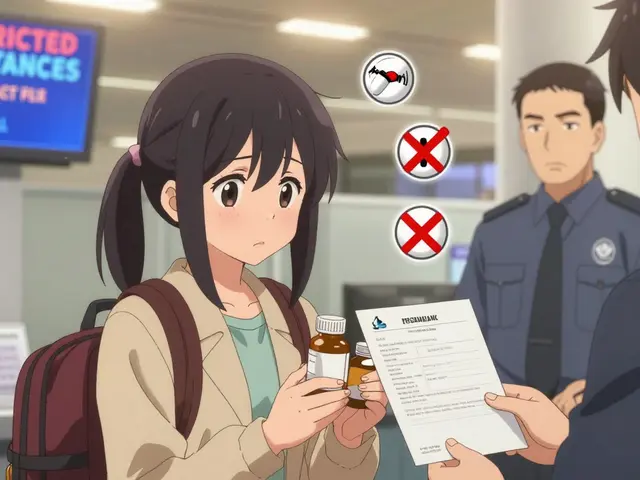
Security checkpoints are where most travelers get tripped up. The TSA allows medically necessary liquids over 3.4 ounces, but only if you declare them. Same goes for international airports. Follow these steps:- Keep all medications in their original containers. No pill organizers. No ziplock bags.
- Carry your doctor’s letter with you in your carry-on-not your checked luggage.
- Declare all controlled substances at customs. Even if you’re not sure. Better safe than detained.
- Use TSA Cares or similar programs if you need help. They offer private screening and assistance for travelers with medical needs.
Where You’ll Have the Hardest Time
Some countries are known for being especially strict. If you’re going here, plan extra time:- Japan: 89% of U.S. travelers with controlled substances face issues. Even melatonin is regulated. Bring a doctor’s letter and stick to 30 days’ supply.
- Singapore: Any opioid, stimulant, or sedative requires pre-approval. Apply at least 6 weeks ahead.
- United Arab Emirates: Zolpidem (Ambien), oxycodone, and even some antidepressants require Ministry of Health approval before arrival. Over 1,200 travelers were turned away in 2024.
- Thailand: Generally friendly, but tramadol and codeine require a local prescription. Bring your original bottle and letter.
What’s Changing in 2026
There’s some good news. The WHO released a new international standard for medication documentation in May 2025, and it’s rolling out in 2026. This means:- A single, globally recognized form for carrying controlled substances.
- Doctors won’t need to write custom letters for every country.
- Pharmacies abroad will have clearer guidelines.
Real Stories, Real Mistakes
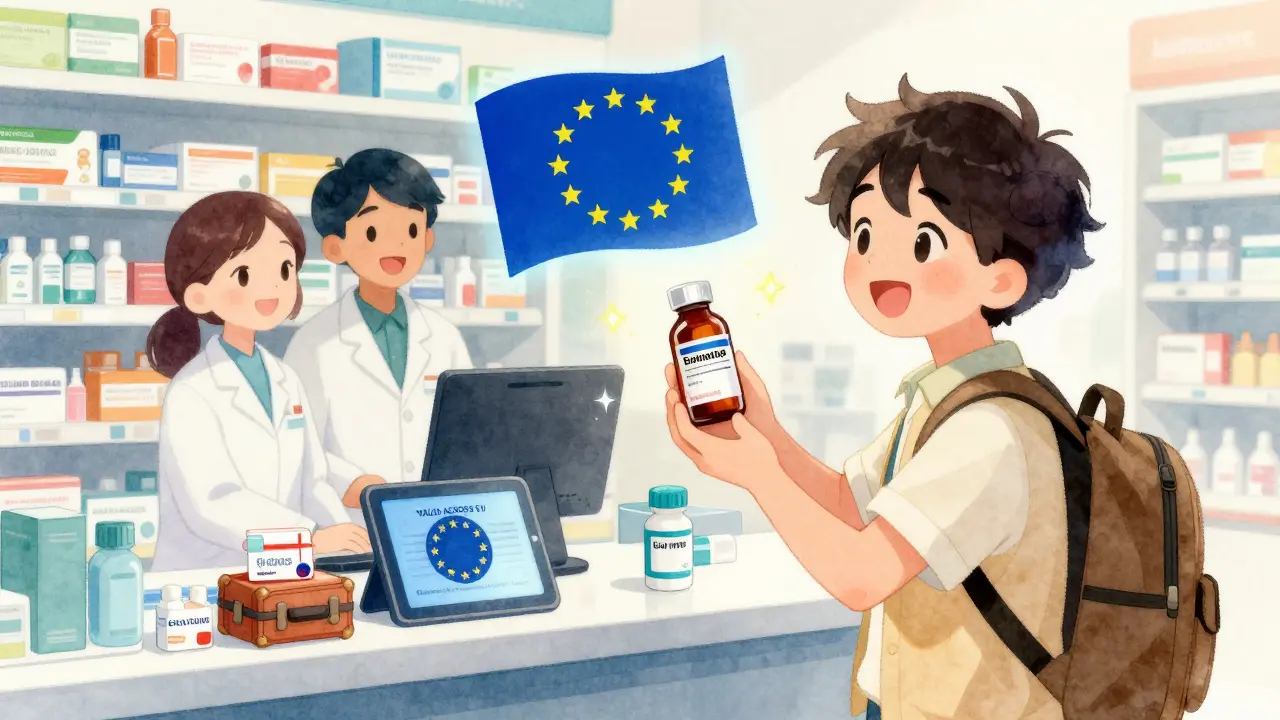
A college student studying in Paris lost her Adderall at the airport. She didn’t know it was illegal in France. She had to go without it for three weeks-her grades dropped, her anxiety spiked. She ended up switching to non-stimulant medication, which worked, but it took months to adjust. Another traveler brought her Xanax to Dubai with a doctor’s note. Customs still confiscated it. She spent two days in a holding room while officials debated whether her note was “valid.” She missed her connecting flight. On the flip side, someone with diabetes traveling through Spain used her German e-prescription to refill insulin in Madrid-within two hours. No hassle. No questions. That’s the EU system working.Bottom Line: Don’t Guess. Plan.
Traveling with medication isn’t about luck. It’s about preparation. The rules are confusing, the penalties are real, and the consequences can be life-altering. Do this before you leave:- Check your destination’s official government website for medication rules.
- Get a doctor’s letter with ICD-11 codes and generic names.
- Carry meds in original bottles with your name on them.
- Bring extra supply-just in case.
- Know the nearest IAMAT clinic at your destination.
Can I bring my prescription meds in a pill organizer?
No. Almost every country requires medications to be in their original pharmacy containers with the label showing your name, the drug name, and dosage. Pill organizers are not accepted at customs or pharmacies abroad. Even if you’re carrying a 30-day supply, keep each pill in its original bottle.
What if my medication is banned in the country I’m visiting?
If your medication is banned, you have three options: 1) Ask your doctor for a legal alternative before you leave (e.g., switch from Adderall to non-stimulant ADHD meds like atomoxetine); 2) Contact a local doctor at your destination to see if they can prescribe something equivalent; or 3) Leave it behind and manage without it-if safe to do so. Never try to smuggle banned drugs. The risks include arrest, fines, or deportation.
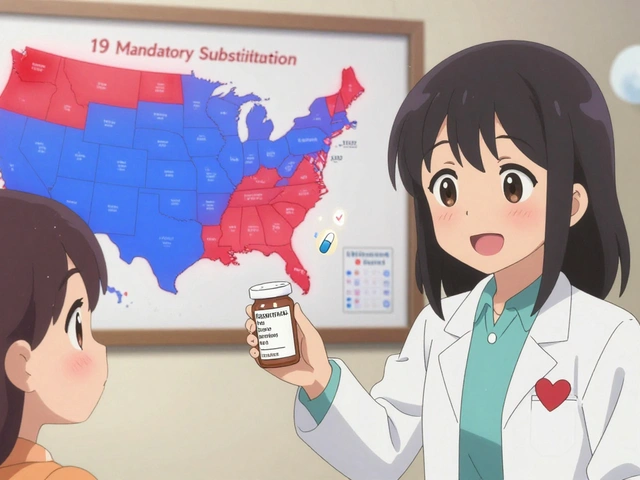
Can I get a prescription filled in another country using my U.S. prescription?
Sometimes, but not always. In the European Union, yes-your prescription is valid across member states. Outside the EU, most pharmacies won’t honor a U.S. prescription unless you have a doctor’s letter and the medication is not restricted. You’ll usually need to see a local doctor to get a new prescription. Always bring your original bottle and prescription label to show them.
Are over-the-counter meds safe to bring?
Not always. Many OTC drugs in the U.S. contain ingredients banned elsewhere. Pseudoephedrine (in Sudafed), codeine (in some cough syrups), and even melatonin are restricted or illegal in countries like Australia, Japan, and the UAE. Always check the active ingredients, not just the brand name. When in doubt, leave it behind.
How much medication can I bring?
Most countries allow a 90-day supply for personal use. But Japan limits narcotics to 30 days, Singapore to 14 days, and some Middle Eastern countries require pre-approval for any amount. Always check the specific country’s limit. Carrying more than 90 days’ supply will raise red flags-even if it’s for a chronic condition. Bring a doctor’s note explaining why you need more.