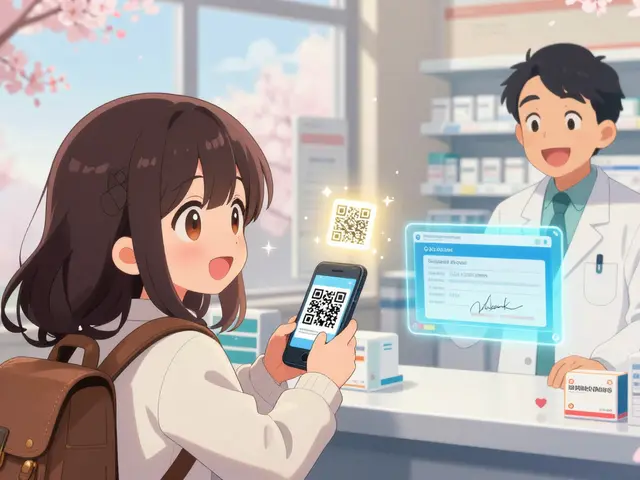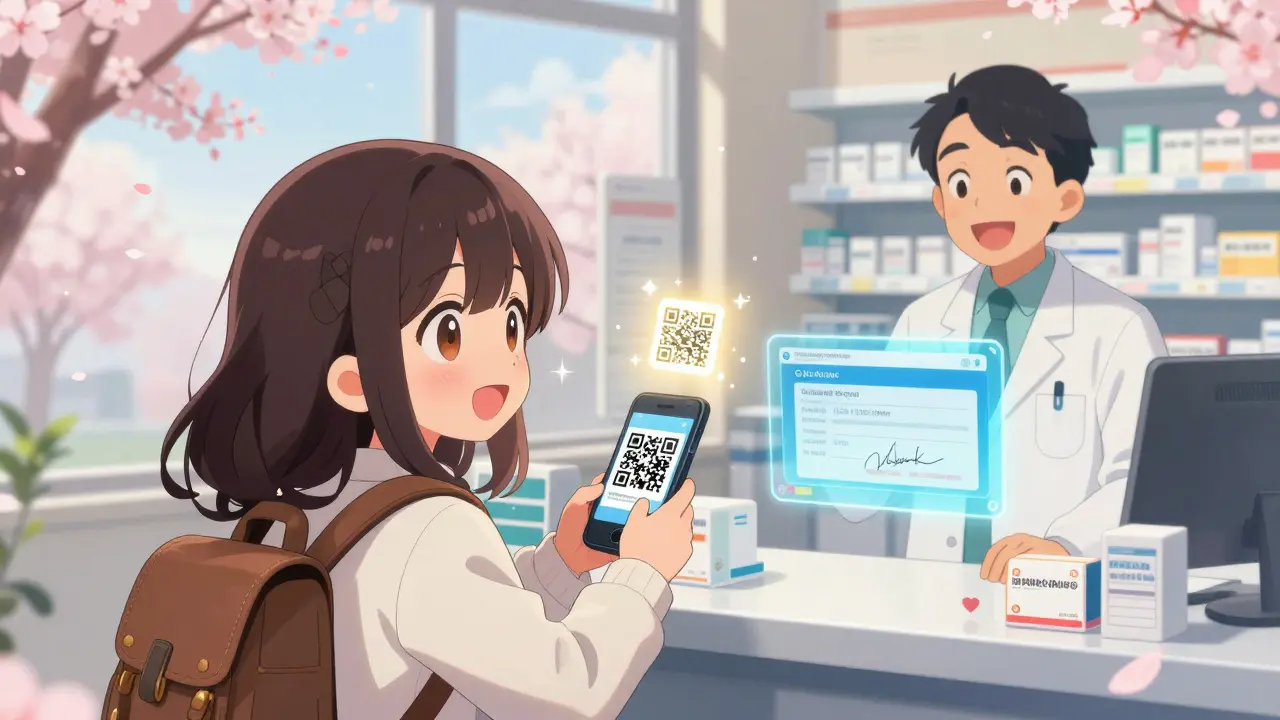
Imagine you’re on vacation in Austria, your blood pressure medication runs out, and you walk into a local pharmacy with just your phone. No paper prescription. No hassle. You scan a QR code, the pharmacist pulls up your digital prescription from your home country, and you walk out with your pills. This isn’t science fiction-it’s real in the EU today. Thanks to the ePrescription and eDispensation systems, millions of Europeans now move across borders to get generic drugs faster, cheaper, and safer than ever before.
How the EU’s cross-border pharmacy system actually works
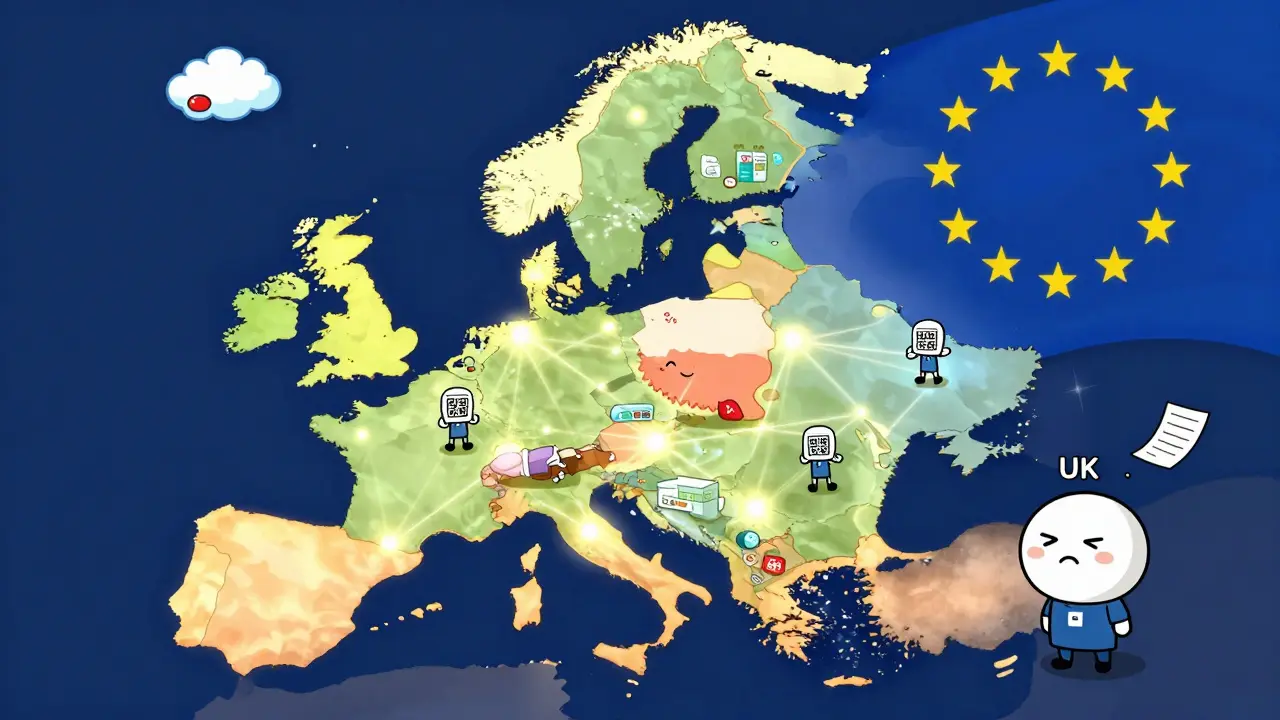
The EU’s cross-border pharmacy system isn’t about shipping drugs from one country to another. It’s about letting patients access medication in any EU or EEA country using their own country’s digital prescription. The backbone? The eHealth Digital Service Infrastructure (eHDSI) a secure, encrypted network connecting national health systems across 27 EU/EEA countries. It lets pharmacists in, say, Spain, read a prescription issued by a doctor in Poland, as long as both systems are linked.
Here’s how it plays out in real life:
- You get a digital prescription from your doctor in your home country (Germany, France, Italy, etc.).
- You travel to another EU country-maybe Sweden or Portugal.
- You visit a participating pharmacy and show your national e-ID or QR code.
- The pharmacist accesses your ePrescription through the eHDSI network.
- The pharmacy dispenses the generic drug-same active ingredient, same dosage, often half the price.
This system doesn’t just save time. It saves money. Generic drugs in Germany can cost 60% more than in Poland. In Austria, a month’s supply of metformin might be €8. In Bulgaria, it’s €2.50. The EU system lets patients shop for the best price, not just the nearest pharmacy.
What drugs can you actually get across borders?
Not every medication is available everywhere. The system works best for common generic drugs: blood pressure pills, diabetes meds, thyroid hormones, antibiotics, and antidepressants. These are standardized across the EU under the same active ingredient rules. But if you need a specialized biologic, a rare cancer drug, or a medication with a unique formulation only available in your home country, you might hit a wall.
Take insulin. Most EU countries use the same insulin analogs-glargine, aspart, lispro. So if you’re traveling, you can usually refill without issue. But if you’re on a niche, patented formulation only approved in, say, Denmark, you might not find it in Croatia. Pharmacists are trained to check the active ingredient, not the brand name. If the drug matches the ePrescription’s active compound, they’ll dispense it-even if the packaging looks different.
There’s another catch: some countries still require a paper backup. Belgium, for example, lets you use ePrescriptions, but pharmacies must keep a printed copy on file. Ireland doesn’t accept prescriptions from outside the EU/EEA-even if they’re from the UK. That’s a big problem for Northern Irish patients who cross the border for cheaper meds. A 2025 survey by Hayes Solicitors found 37% of Irish pharmacists rejected UK telehealth prescriptions outright, even when the medication was identical to what’s sold in Ireland.
The hidden roadblocks: Why it doesn’t work everywhere
Here’s the truth: the EU’s system works beautifully… if you’re in the right place.
Border regions like the Netherlands-Germany frontier or the France-Spain Pyrenees have seamless access. A 2025 patient survey by Copenhagen Economics found 78% of people in these areas successfully filled cross-border prescriptions. But in non-border regions? Only 42% had a smooth experience. Why? Because national systems aren’t equally connected.
Some countries still use outdated tech. Others don’t allow pharmacists to access foreign health records. Iceland is finally joining the network in August 2025, but until then, its citizens can’t use ePrescriptions abroad. Italy switched from paper ‘bollino’ stickers to GS1 DataMatrix codes on prescriptions in February 2025-great for security, terrible for pharmacists who haven’t been trained to scan them.
Language is another barrier. Patient Summaries-digital health records that show allergies, past meds, and conditions-are supposed to appear in the pharmacist’s language. But in practice, many are still in the patient’s native tongue. A French patient with a Portuguese pharmacist might get a summary in French. The pharmacist doesn’t understand it. The patient doesn’t know what’s written. That’s a safety risk.
Who’s really benefiting-and who’s being left out
The biggest winners? Chronic disease patients on stable, long-term meds. People with diabetes, hypertension, or asthma who refill monthly. They save hundreds a year by buying generics across borders. Elderly travelers, digital natives, and those living near borders are the most active users.
But millions are still in the dark. Only 38% of EU citizens know they have the right to get their prescription filled abroad. That number jumps to 72% in border towns. The rest? They assume it’s impossible. Or they’re scared of legal trouble. Or they don’t know how to access their ePrescription.
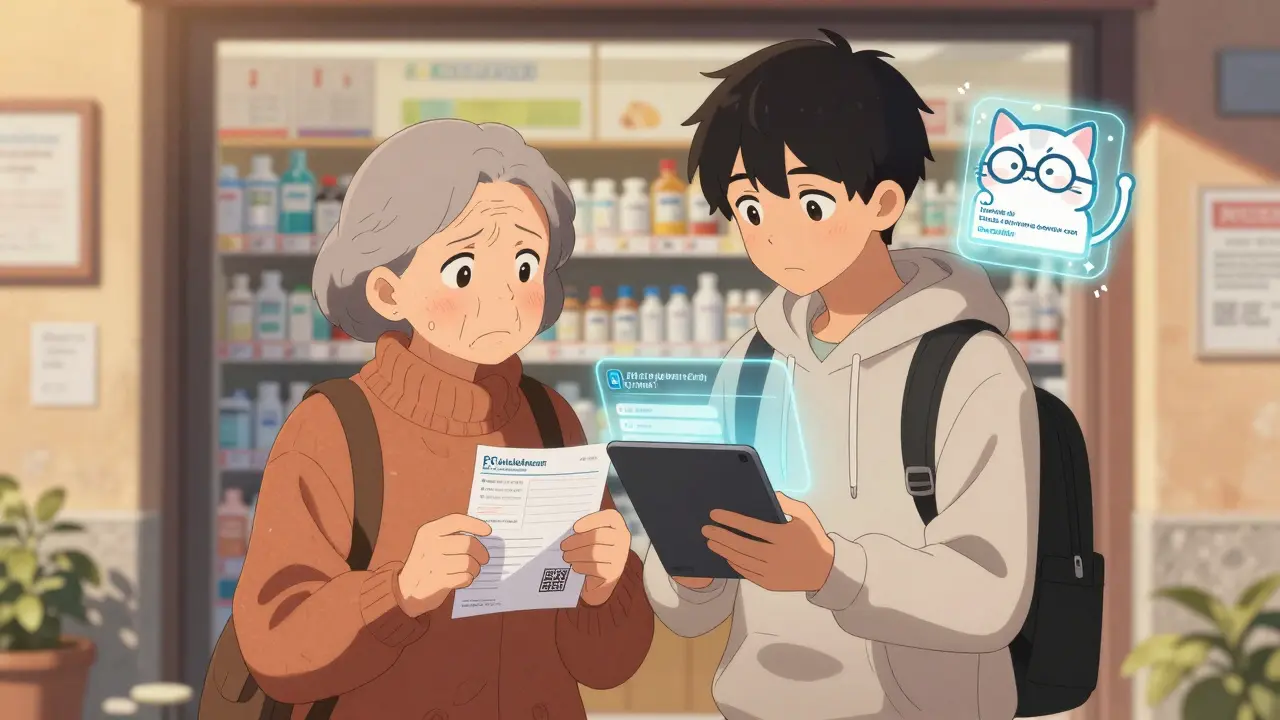
There’s also a gap between digital and analog. People without smartphones, older adults unfamiliar with e-ID systems, or those in rural areas with poor internet access can’t use the service. The system assumes everyone has a phone, a digital identity, and confidence navigating government portals. That’s not true everywhere.
What’s changing in 2026-and what’s coming next
2025 was a turning point. The EU rolled out Regulation (EU) 2025/327, which gives the European Commission power to shut down non-compliant systems. Countries that don’t meet security or data protection standards can lose access to the eHDSI network. That’s forcing slowpokes to upgrade.
Italy’s switch to GS1 DataMatrix codes is just the start. By 2027, the EU plans to include medical images, lab results, and hospital discharge reports in the shared system. Imagine showing up at a hospital in Croatia with your full health history already available in their system-no forms, no delays.
The European Shortages Medicines Platform (ESMP) is also live. It tracks drug supply across borders in real time. If a generic drug runs out in Germany, the system alerts pharmacists in Poland or Hungary to redirect stock. This could cut medication shortages by up to 35% by 2030, according to IQVIA.
But the biggest challenge remains reimbursement. If you buy a cheaper drug in another country, will your home insurance cover it? Right now, only 8 EU countries have clear rules on this. The rest? You pay out of pocket. That’s why many patients don’t bother-even if the drug is cheaper, they’re afraid they won’t get reimbursed.
What you need to do to use cross-border pharmacy services
If you’re an EU citizen and want to use this system, here’s what to do:
- Check if your country participates. All 27 EU/EEA countries are connected, but some have restrictions. Verify on your national health portal.
- Get your ePrescription. Ask your doctor for a digital prescription. Make sure it’s issued through your country’s official system.
- Know your e-ID. You’ll need your national electronic ID to access your records abroad. If you’re unsure how to use it, contact your national health authority.
- Call ahead. Not every pharmacy accepts cross-border ePrescriptions. Call before you go. Ask: “Do you accept ePrescriptions from [your country]?”
- Bring backup. Even if you have a digital prescription, carry a printed copy or a screenshot. Some pharmacists still need paper.
And if you’re a pharmacist? You need 40 hours of training to handle cross-border workflows. That’s the reality. Language, drug formulations, and legal differences vary too much to wing it.
Is this the future of pharmacy?
Yes-and it’s already here. The EU’s cross-border pharmacy system isn’t perfect, but it’s working. It’s reducing costs, improving access, and cutting medication errors by 22%, according to EAEP data. It’s empowering patients to make smarter, cheaper choices.
The real question isn’t whether it works. It’s whether every EU citizen will get equal access. Right now, the system is a patchwork. Some countries lead. Others lag. The EU has the tech. It has the laws. What it still needs is political will to make it universal.
For now, if you’re traveling and need your meds, don’t assume you’re stuck. Check your ePrescription. Call a pharmacy. Ask. You might just find your next refill is cheaper-and closer-than you thought.
Can I use my EU prescription in the UK after Brexit?
No. The UK is no longer part of the EU’s ePrescription system. UK pharmacies cannot access EU digital prescriptions, and EU pharmacies cannot accept UK prescriptions unless they meet strict national requirements. If you’re traveling from the EU to the UK, you must bring your own medication or get a new prescription from a UK doctor.
Are generic drugs from other EU countries safe?
Yes. All generic drugs sold in the EU must meet the same strict quality and safety standards set by the European Medicines Agency. The active ingredient, dosage, and effectiveness must match the original brand. The only difference is the name, packaging, or filler ingredients-which don’t affect how the drug works.
What if a pharmacy refuses my ePrescription?
Ask why. If it’s because they don’t recognize your country’s system, they may not be trained. You can contact your home country’s national contact point for digital health-they can help resolve the issue. In some cases, you may need to get a paper prescription from a local doctor, but you’re entitled to have your ePrescription honored if the system is connected.
Can I get my prescription filled in another EU country if I’m not a citizen?
Yes. The system is based on your residence, not citizenship. If you’re legally resident in an EU country and have a valid ePrescription from your home system, you can use it anywhere in the EU/EEA-even if you’re a non-EU citizen, like a U.S. expat living in Spain.
Is there a limit to how often I can refill across borders?
No official limit exists. However, your home country’s health insurer may have rules about reimbursement frequency. For example, if you refill your blood pressure med every month in Poland instead of Germany, your insurer might question whether you’re truly traveling or just shopping for cheaper drugs. Keep records of your travel dates to avoid issues.