When you pick up a prescription, you might see two options: the familiar brand name you’ve heard on TV, or a cheaper generic version with a plain label. You might wonder-are generic drugs as safe as brand-name drugs? The answer isn’t as simple as yes or no. But the science is clear: for most people, most of the time, they are.
What Makes a Drug ‘Generic’?
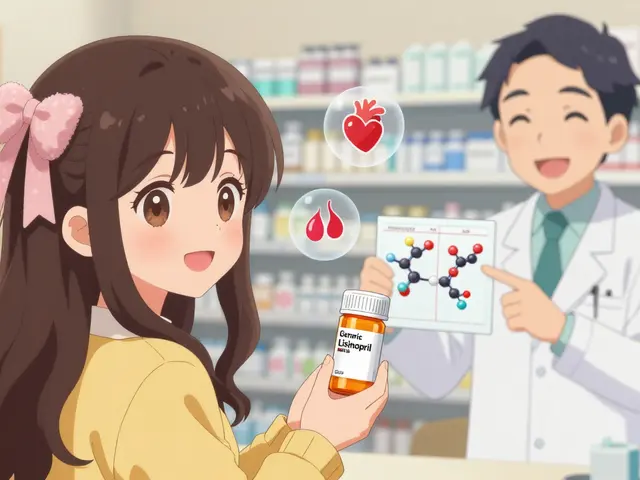
A generic drug isn’t a copycat or a knockoff. It’s required by law to have the same active ingredient, strength, dosage form, and route of administration as the original brand-name drug. That means if you’re taking 10 mg of lisinopril for high blood pressure, whether it’s called Zestril or just lisinopril, the molecule doing the work is identical. The FDA doesn’t allow generics unless they match the brand exactly in this core way.
But here’s where people get confused: generics can have different fillers, dyes, or preservatives-what we call inactive ingredients. These don’t affect how the drug works, but they can cause rare allergic reactions in sensitive people. For example, someone allergic to lactose might react to a generic version that uses it as a filler, while the brand uses corn starch. That’s not about effectiveness-it’s about tolerance.
The Bioequivalence Standard: How the FDA Makes Sure Generics Work the Same
The real test isn’t just chemical similarity-it’s how your body absorbs the drug. That’s where bioequivalence comes in. The FDA requires generic manufacturers to prove their product delivers the same amount of medicine into your bloodstream at the same speed as the brand. They do this by measuring two things: Cmax (the highest concentration in your blood) and AUC (how much medicine your body absorbs over time).
The rule? The generic’s numbers must fall within 80% to 125% of the brand’s. That’s not a wide gap-it’s tight enough to ensure clinical results are nearly identical. For example, if the brand delivers 100 units of medicine over 8 hours, the generic must deliver between 80 and 125 units. That’s why, in over 90% of cases, switching from brand to generic causes no change in how you feel or how your condition is managed.
What the Big Studies Say: Generics Are Just as Safe
In 2020, a massive study published in Nature Scientific Reports looked at over 1.5 million patients in Austria taking 17 different drugs for heart disease, diabetes, and depression. The researchers compared outcomes between people who took brand-name drugs and those who took generics. The results were striking: generics were linked to fewer deaths and fewer major heart or stroke events in 11 out of the 17 drugs studied.
For one blood pressure drug, patients on the generic had 40.6 deaths per 1,000 patient-years. Those on the brand? 45.8. That’s a 11% lower risk. For another, the rate of major cardiac events dropped from 83.6 to 51.3 per 1,000 patient-years with the generic. These aren’t small differences. They’re clinically meaningful.
Even more telling? The study used statistical methods to rule out bias. The researchers adjusted for age, income, existing health conditions, and even how often people filled prescriptions. The gap didn’t disappear-it got bigger. That suggests generics aren’t just as safe as brands-they might even be better in some cases, possibly because they’re more affordable and people stick with them longer.

When Things Go Wrong: The Exceptions
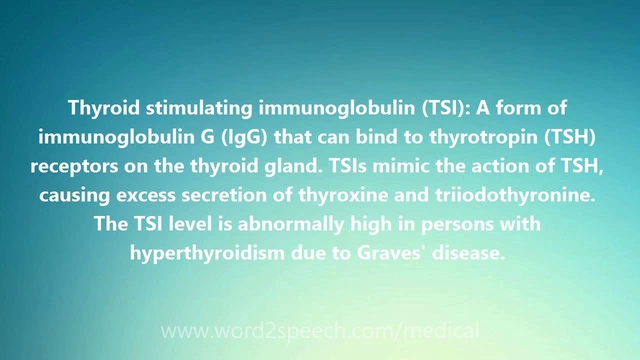
There’s a small group of drugs where tiny changes in how the body absorbs the medicine can matter. These are called narrow therapeutic index (NTI) drugs. Think warfarin (a blood thinner), levothyroxine (for thyroid disease), and certain seizure medications like phenytoin. For these, even a 5% difference in absorption could push you out of the safe range.
A 2017 Canadian study of over 136,000 seniors found that after generic versions of three blood pressure drugs hit the market, there was a spike in emergency visits and hospitalizations. For one drug, the rate of adverse events jumped 14%. The same thing happened with levothyroxine. On Reddit, users report TSH levels going from 1.2 to 8.7 after switching to a generic-even though the dose stayed the same. That’s a huge change. Your thyroid isn’t working right anymore.
These aren’t common. But they’re real. And they’re why doctors and pharmacists sometimes recommend staying on the same version-brand or generic-once you’ve found what works.
What Patients Actually Experience
A 2021 survey by the National Community Pharmacists Association found that 67% of pharmacists had seen patients report side effects or reduced effectiveness after switching to a generic. The most common complaints? Fatigue, headaches, or a feeling that the drug “just doesn’t feel the same.”
But here’s the flip side: Consumer Reports’ 2022 survey of 10,000 people found that 89% saw no difference at all. For most people taking statins, antibiotics, or antidepressants, the switch was seamless. One user wrote: “I’ve been on Lipitor for 10 years. Switched to generic. Cholesterol levels? Same. Side effects? None.”
The FDA’s own adverse event database shows almost no difference in reported problems between brand and generic versions of 15 common drugs. The numbers are nearly identical-13.2 reports per million prescriptions for brands, 12.7 for generics.

Why Do Some People Feel Different?
It’s not always the drug. Sometimes it’s the mind. If you’ve been told generics are “inferior,” your brain might start noticing every little change-fatigue, a headache, a bad night’s sleep-and blame the pill. That’s the nocebo effect: expecting something to go wrong makes it more likely you’ll feel it.
But that doesn’t mean the concerns are imaginary. For people with chronic conditions like epilepsy or thyroid disease, even a tiny shift in how the drug works can throw off their entire balance. That’s why the American Thyroid Association recommends sticking with one version-brand or generic-and not switching back and forth.
What You Should Do
For most people, generics are the smart choice. They’re cheaper, just as effective, and backed by decades of real-world use. But here’s what to keep in mind:
- If you’re on a narrow therapeutic index drug-warfarin, levothyroxine, phenytoin, or some seizure meds-ask your doctor if staying on one version is better for you.
- If you switch and feel worse-fatigue, dizziness, mood changes, or worsening symptoms-tell your provider. Don’t assume it’s “all in your head.”
- Ask your pharmacist if the generic you’re getting is from the same manufacturer each time. Some companies make better versions than others.
- Never stop or change your dose because of a switch. Always talk to your doctor first.
The bottom line? Generics aren’t a compromise. They’re a win. They save the U.S. healthcare system over $300 billion a year. They make life-saving drugs accessible to millions who couldn’t afford the brand. And for most people, they work just as well.
That said, medicine isn’t one-size-fits-all. If your body reacts differently, it’s not because generics are unsafe-it’s because your body is unique. Listen to it. Work with your doctor. And know that the science is on your side: for the vast majority, generic drugs are just as safe, and often just as effective, as the brand names.
Frequently Asked Questions
Are generic drugs as safe as brand-name drugs?
Yes, for the vast majority of medications, generic drugs are just as safe as brand-name versions. The FDA requires them to have the same active ingredient, strength, dosage form, and route of administration. They must also prove bioequivalence-meaning your body absorbs them at nearly the same rate and level as the brand. Studies involving millions of patients show no meaningful difference in safety outcomes for most drugs.
Can generic drugs cause more side effects?
Generic drugs don’t cause more side effects because of the active ingredient-they’re identical. But they can have different inactive ingredients (like fillers or dyes), which may trigger rare allergic reactions in sensitive people. For example, someone allergic to lactose might react to a generic version that uses it, while the brand uses cornstarch. These reactions are uncommon and not due to the drug’s effectiveness.
Why do some people say generic drugs don’t work as well?
Some patients report feeling different after switching, especially with narrow therapeutic index drugs like levothyroxine or warfarin. Tiny differences in absorption can matter here. Studies show a small percentage of people experience changes in lab values or symptoms after switching. This isn’t because generics are inferior-it’s because these drugs require precise dosing. For these cases, sticking with one version-brand or generic-is often recommended.
Are generic drugs tested as thoroughly as brand-name drugs?
They don’t repeat full clinical trials, but they undergo the same rigorous testing for bioequivalence. The FDA requires pharmacokinetic studies showing the generic delivers the same amount of medicine into the bloodstream at the same rate as the brand. This is scientifically validated and meets international standards. The FDA inspects manufacturing facilities for generics just like those for brand-name drugs.
Should I avoid generic drugs if I have a chronic illness?
Not necessarily. For most chronic conditions-like high blood pressure, diabetes, or cholesterol-generics are safe and effective. But for drugs with a narrow therapeutic index (like thyroid meds, seizure drugs, or blood thinners), consistency matters. Talk to your doctor about whether staying on one version (brand or generic) is better for you. Never switch without medical advice.