Have you ever looked at your arms and felt like your skin has a permanent case of goosebumps? Or noticed tiny, rough bumps on your thighs that don’t go away no matter how much you scrub? You’re not alone. Millions of people deal with keratosis pilaris - a harmless but frustrating skin condition that makes skin feel like sandpaper. It’s not acne. It’s not eczema. And no, it’s not caused by poor hygiene. It’s just your skin doing something it’s genetically programmed to do.
What Exactly Is Keratosis Pilaris?
Keratosis pilaris (KP) happens when dead skin cells - specifically keratin - build up around hair follicles instead of shedding normally. This creates small, hard bumps that look like little pimples or goosebumps. They’re usually skin-colored, red, or brown, and they show up most often on the upper arms (in 92% of cases), thighs, and sometimes the buttocks. The texture is what people notice most: rough, dry, and bumpy - like chicken skin, which is why it’s often called that.
It’s not contagious. It doesn’t hurt. And it’s not dangerous. But for many, it’s embarrassing. Studies show that 50 to 70% of teenagers and about 40% of adults have it. It often starts in childhood and gets worse during puberty. For most, it fades by age 30, but for nearly one in three people, it sticks around longer.
Genetics play a big role. If one of your parents had it, you have a 50-70% chance of having it too. It’s linked to mutations in the filaggrin gene, which affects how your skin barrier works. People with eczema or ichthyosis are also more likely to have KP - about half of eczema patients have it.
Why Does It Get Worse in Winter?
If you notice your bumps get rougher and redder during cold months, you’re not imagining it. Low humidity - especially below 40% - dries out your skin and makes keratin buildup worse. Indoor heating makes it even worse. That’s why KP flares up in winter and improves in summer.
Hot showers and harsh soaps don’t help either. They strip natural oils from your skin, leaving it more vulnerable to dryness and irritation. That’s why dermatologists recommend lukewarm water and short showers - no more than 10 minutes - to keep your skin barrier intact.
What Treatments Actually Work?
There’s no cure for keratosis pilaris. But you can make it look and feel dramatically better. The goal isn’t perfection - it’s smoother, softer skin. And the science backs up a few key approaches.
1. Exfoliate with acids - not scrubs
Physical scrubs, loofahs, and harsh brushes make KP worse. A 2022 study found that 68% of people who used aggressive exfoliation ended up with more redness and dark spots. Instead, use chemical exfoliants that gently dissolve dead skin.
- Lactic acid (10-12%): Found in products like AmLactin. Studies show 40-60% improvement in texture after 4-6 weeks. Users on Reddit report noticeable smoothing after 8-12 weeks of daily use.
- Urea (10-20%): Works by drawing moisture into the skin and breaking down keratin. In clinical trials, 65% of users saw less scaling after 8 weeks.
- Glycolic acid (8-12%): Another alpha-hydroxy acid that helps slough off dead cells. Improvement shows up around week 12.
- Salicylic acid: A beta-hydroxy acid that penetrates oil better. Good for KP on the back or chest.
Apply these once a day, usually at night. Don’t layer them with other actives - that can irritate your skin.
2. Moisturize with ceramides
Exfoliation alone isn’t enough. You need to rebuild your skin barrier. Ceramides are lipids your skin naturally makes - but KP patients often have less of them. Using a moisturizer with ceramides helps lock in moisture and reduces flakiness.
Dr. Hadley King, a clinical dermatologist, says consistent moisturizing with ceramides gives 30% better long-term results than exfoliants alone. Products like CeraVe SA Lotion, which combines salicylic acid with ceramides, are top-rated. Over 79% of users on DermStore say it works best when applied right after bathing - while skin is still damp.
Pro tip: Apply moisturizer within 3 minutes of getting out of the shower. At that point, your skin is 50% more absorbent, according to Mayo Clinic guidelines.
3. Prescription retinoids - for stubborn cases
If over-the-counter products aren’t cutting it, a dermatologist might prescribe tretinoin (0.025-0.1%). Retinoids speed up cell turnover and can reduce bumps by 70% in patients who stick with them. But here’s the catch: 40% of users get redness, peeling, or burning in the first few weeks. And 73% of people in one survey quit within 6 weeks because of irritation.
If you try this, start slow - every other night. Use a thin layer. And always follow with moisturizer. It takes 3-6 months to see results. Patience is key.
What About Laser or Light Therapy?
For people with red, inflamed KP, pulsed-dye laser therapy can reduce redness by 50-75% after 3-4 sessions. It doesn’t remove bumps, but it calms the inflammation that makes KP look worse.
But here’s the reality: these treatments cost $300-$500 per session and aren’t covered by public health systems. The NHS and other public health agencies don’t recommend them routinely because there’s no proof they last long-term.
Newer options are emerging. In 2023, the FDA cleared LED light devices for KP. Early studies show a 35% reduction in follicular plugging after 8 weeks. And researchers are testing microbiome-balancing creams and genetic tests to personalize treatment. But these aren’t widely available yet.
What Doesn’t Work (And What to Avoid)
There are a lot of products claiming to “cure” KP. The FDA issued 17 warning letters in 2022-2023 to companies making false claims. If a product says “permanent solution” or “cure,” walk away.
Also avoid:
- Hot showers or baths
- Harsh soaps or body washes with sulfates
- Scrubs, loofahs, or exfoliating gloves
- Wearing tight synthetic clothing
Instead, wear loose cotton clothes. They reduce friction and irritation. Studies show 72% of people feel less discomfort when they switch to breathable fabrics.
Realistic Expectations: What You Can Actually Achieve
A 2023 study tracked over 2,000 KP patients. Only 28% saw complete clearance by age 30. 41% had significant improvement. And 31% still had noticeable bumps into adulthood.
Dr. Caroline Robinson put it best: “The goal isn’t flawless skin. It’s comfortable, smoother skin.”
Most people who stick with a routine - gentle exfoliation, daily moisturizing, and humidity control - see 40-60% improvement. That’s enough to feel confident in shorts or sleeveless tops. But it requires consistency. Only 22% of patients in one study kept up their routine after six months.
How to Build a Simple Daily Routine
You don’t need a 10-step routine. Here’s what works:
- Morning: Wash with a gentle, fragrance-free cleanser. Pat skin dry. Apply a ceramide-rich moisturizer.
- Evening: Wash again. While skin is still damp, apply your exfoliant (lactic acid, urea, or glycolic acid). Wait 5 minutes. Then apply moisturizer.
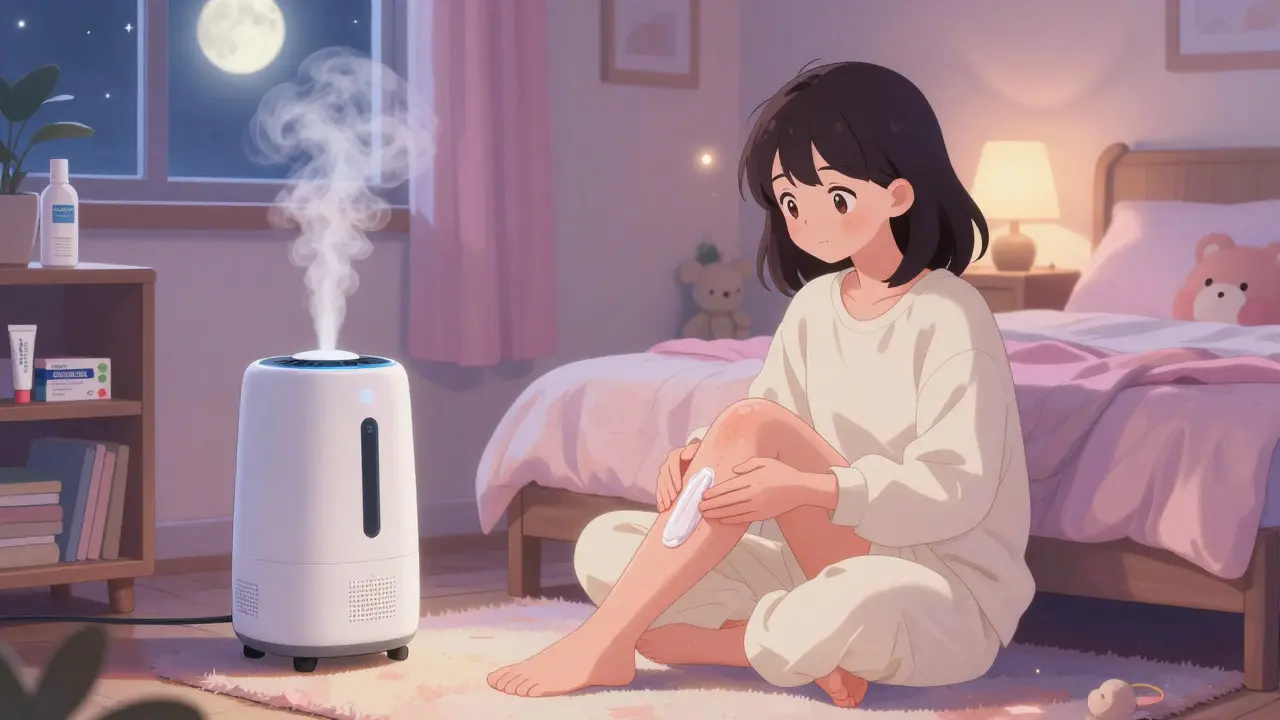
- Weekly: Use a humidifier in your bedroom. Keep humidity between 40-50%. This cuts winter flare-ups by 60%.
- Every 2-3 months: Reassess. If your skin feels smoother, keep going. If it’s getting worse, check your products or talk to a dermatologist.
It’s not glamorous. But it works.

Top Products People Actually Use (And Why)
Based on over 4,000 reviews from real users and dermatologist recommendations:
| Product | Active Ingredient | Key Benefit | Price Range | Best For |
|---|---|---|---|---|
| AmLactin Daily Moisturizing Lotion | 12% lactic acid | Fast texture improvement | $15-$20 | Arms, legs |
| CeraVe SA Lotion for Rough & Bumpy Skin | 3% salicylic acid + ceramides | Exfoliates and repairs barrier | $18-$25 | Full body, sensitive skin |
| Paula’s Choice 8% AHA Lotion | 8% glycolic acid | Smooths over time | $35 | Face, chest, back |
| Generic Tretinoin Cream 0.025% | Tretinoin | Long-term cell turnover | $45-$65 | Stubborn, persistent KP |
AmLactin and CeraVe SA are the most recommended. Both are affordable, widely available, and backed by real data. Avoid expensive “miracle” creams - they rarely outperform these.
Final Thoughts: It’s Manageable, Not a Life Sentence
Keratosis pilaris isn’t something you fix. It’s something you manage. Like dry skin or dandruff, it comes and goes. But with the right routine, you can live with it without feeling self-conscious.
The key? Be gentle. Be consistent. And don’t chase perfection. Smooth skin is the goal - not flawless skin. And with the right products and habits, that’s totally achievable.
Is keratosis pilaris contagious?
No, keratosis pilaris is not contagious. It’s a genetic condition caused by excess keratin buildup in hair follicles. You can’t catch it from touching someone’s skin or sharing towels.
Can keratosis pilaris go away on its own?
Yes, for many people it does. About 28% of people see complete clearance by age 30. Around 41% experience significant improvement. But 31% continue to have visible bumps into adulthood. It’s not guaranteed to disappear, but it often gets milder over time.
Why do KP bumps turn red or darker?
Redness comes from mild inflammation around the blocked follicle. Dark spots (post-inflammatory hyperpigmentation) happen when the skin overreacts to irritation - often from scrubbing or picking. Avoid harsh exfoliation to prevent this.
Can I use KP treatments on my face?
Yes, but be careful. Facial skin is thinner and more sensitive. Use lower concentrations - like 5-8% lactic acid or a gentle AHA toner. Avoid retinoids on the face unless prescribed. Always patch test first.
Do I need to see a dermatologist for KP?
Not usually. Most cases can be managed with OTC products. But if your skin is very red, itchy, or inflamed, or if OTC treatments don’t help after 3 months, see a dermatologist. They can rule out eczema, psoriasis, or other conditions and prescribe stronger options.
What’s the fastest way to see results?
There’s no instant fix. Most people see noticeable improvement in 4-8 weeks with consistent use of lactic acid or urea. Retinoids take 3-6 months. The key is daily routine - not quick fixes. Skip the scrubs, moisturize right after showers, and use a humidifier. That’s your fastest path to smoother skin.
What’s Next?
If you’ve tried a few products and still feel stuck, consider a telehealth dermatology visit. Between 2019 and 2023, telehealth consultations for KP jumped from 5% to 32% of first-time visits. It’s faster, cheaper, and just as effective as in-person visits for routine cases.
And if you’re curious about the science behind it, look into filaggrin gene testing. Companies like 23andMe are starting to offer genetic insights that may help tailor your skincare. It’s still emerging - but it’s the future of personalized dermatology.
Remember: your skin doesn’t need to be perfect. It just needs to feel comfortable. And with a little patience and the right routine, it can.